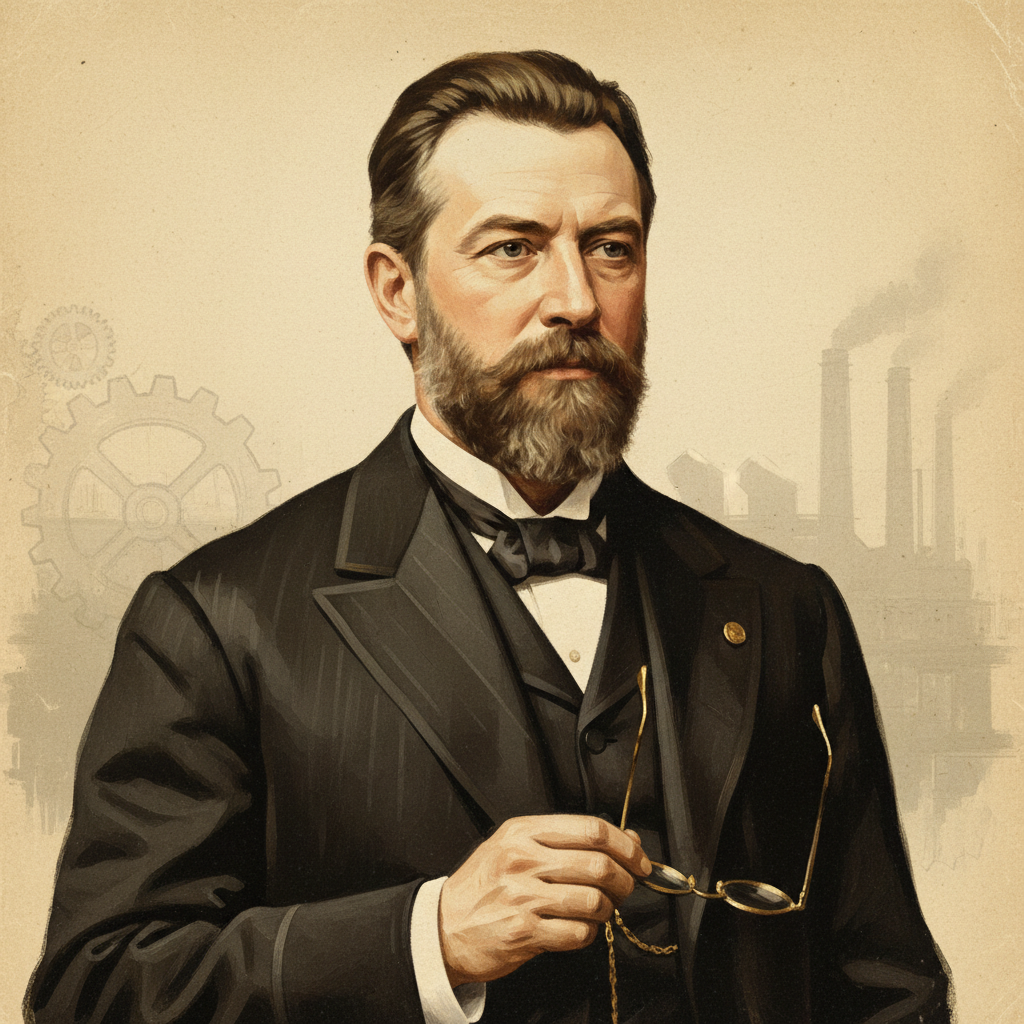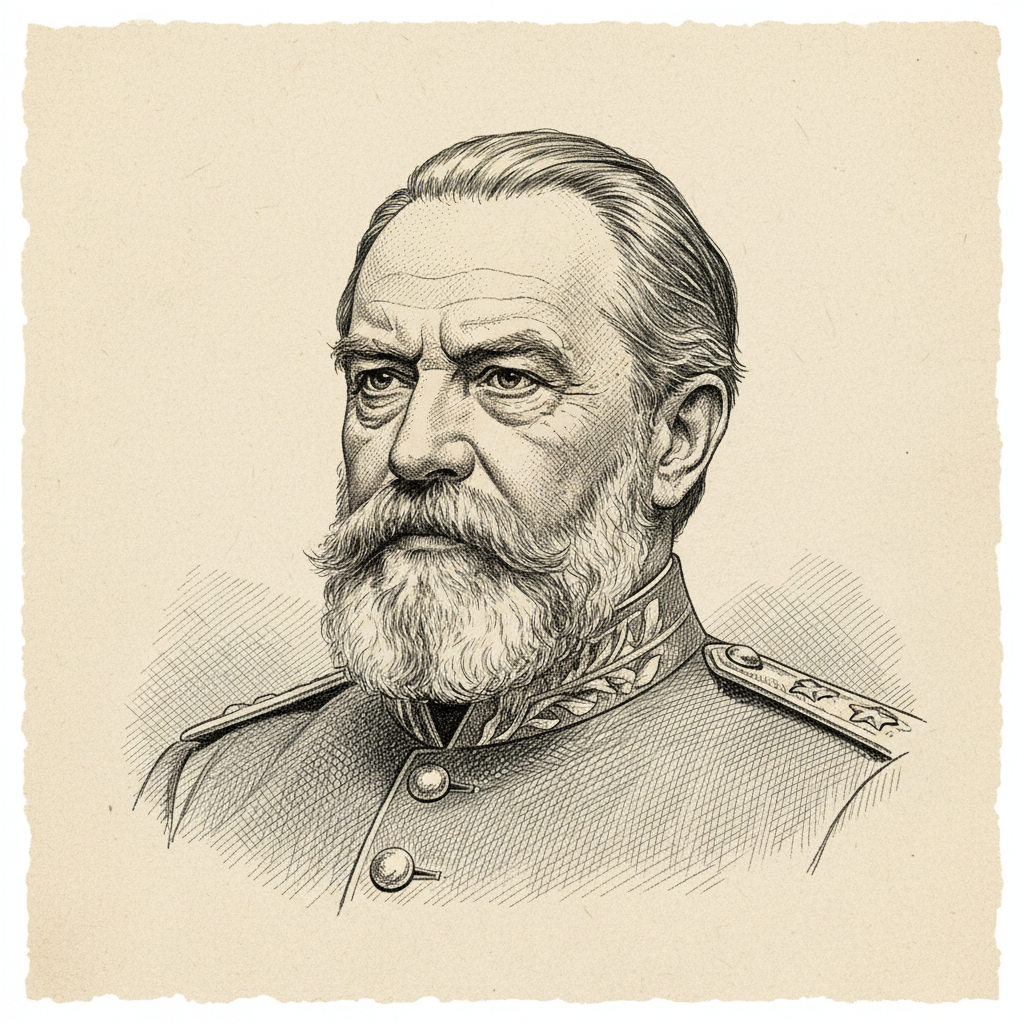
Otto von Bismarck
The Iron Chancellor: Unifier of Germany through Realpolitik and Strategic Statecraft.
Otto von Bismarck was a Prussian statesman who orchestrated the unification of numerous German states into a powerful German Empire under Prussian leadership. Serving as the first Chancellor from 1871 to 1890, he employed realpolitik—a pragmatic, power-driven approach to foreign policy—to redefine European geopolitical dynamics.
Biography
Accomplishments
- 01Orchestrated the unification of Germany through a series of tactical wars and diplomatic maneuvers, culminating in the establishment of the German Empire in 1871.
- 02Instituted groundbreaking social welfare legislation, including health insurance (1883), accident insurance (1884), and old-age pensions (1889), creating the world's first comprehensive state-sponsored social security system.
- 03Formulated a sophisticated alliance system (e.g., the Three Emperors' League 1873, the Dual Alliance 1879) that maintained European peace for nearly two decades by strategically isolating potential adversaries like France.
- 04Successfully navigated parliamentary opposition and royal prerogative to centralize power and modernize the Prussian state apparatus, demonstrating exceptional political resilience and administrative acumen.
- 05Led Prussia to victory in the Second Schleswig War (1864), Austro-Prussian War (1866), and Franco-Prussian War (1870-1871), expanding territory and securing Prussian hegemony over German states.
- 06Developed and implemented 'Kulturkampf' (Culture Struggle) from 1871 to 1878 to curb the power of the Catholic Church in Germany, asserting state authority over religious institutions.
Lessons for Operators
Key Takeaways
Practical lessons distilled for operators, investors, C-levels, and capital allocators.
Realpolitik as a Business Strategy
Bismarck's realpolitik emphasizes pragmatic self-interest over ideology or sentiment in foreign policy. In business, this translates to data-driven decisions, strategic alliances, and ruthless efficiency focused on market dominance and shareholder value, often requiring difficult choices.
The Power of Premeditated Conflict
Bismarck's wars were not accidental but carefully planned instruments of policy. Companies must recognize that competitive conflicts are inevitable. Proactive planning, resource allocation, and a clear 'end state' vision for market battles are essential for victory, whether through M&A, market share battles, or intellectual property disputes.
Alliance Building for Market Stability
His complex web of alliances kept Europe stable for decades. In business, this means forging strategic partnerships, joint ventures, and supply chain agreements that not only strengthen your position but also neutralize potential threats by integrating them into your ecosystem or isolating competitors.
Internal Reform Fuels External Strength
Bismarck's domestic policies, including social welfare, stabilized society and strengthened the state. For enterprises, investing in employee well-being, robust internal processes, R&D, and cultural cohesion builds a strong foundation necessary for aggressive external expansion and market resilience.
Mastering the Art of the Possible
Bismarck defined politics as 'the art of the possible.' Business leaders must realistically assess capabilities, market conditions, and competitor actions to set achievable goals and execute strategies, rather than pursuing idealistic but unattainable visions.
Frameworks & Principles
Named frameworks and strategic principles they popularized or embodied.
Realpolitik Decision Matrix
A framework for evaluating strategic options based purely on national interest, power implications, and practical outcomes, devoid of moral or ideological considerations. It focuses on cost-benefit analysis of power acquisition and preservation.
When to useWhen evaluating market entry strategies, M&A targets, competitive responses, or significant resource allocations where pragmatic outcomes and power dynamics outweigh other factors. Useful for high-stakes operational decisions where sentiment must be sidelined.
Bismarckian Alliance System (Strategic Partnership Model)
A model for constructing a network of interconnected alliances and partnerships designed to achieve a specific strategic goal (e.g., market dominance, competitive isolation) by creating mutual dependencies and balanced power structures among partners and rivals.
When to useWhen orchestrating complex ecosystem plays, forming industry consortia, or when attempting to isolate a major competitor by building alliances around them. Applicable for long-term strategic positioning and risk mitigation through diversified partnerships.
Iron and Blood Doctrine (Decisive Action Imperative)
A principle asserting that significant objectives are achieved through decisive, often forceful, action and resource commitment rather than protracted negotiation or passive observation. Emphasizes execution and the mobilization of resources to achieve a strategic aim.
When to useWhen a market opportunity requires swift and substantial investment, when faced with an aggressive competitor requiring a strong counter-measure, or when internal resistance threatens a critical strategic pivot. Best for situations demanding robust implementation.
Recent Appearances
Latest interviews, keynotes, and press from the past half year.
 youtube.com
 youtube.com
 youtube.com
 youtube.com
 youtube.com
 youtube.com
 youtube.com
 youtube.com
Sources & Further Reading
Profiles, interviews, podcasts, and articles used to compile and verify this entry. Each link opens at the original publisher.
Explore Related Titans
Other figures in the archive who share Otto von Bismarck's domain, geography, or era.
More in Other









From Germany









Contemporaries — 19th century