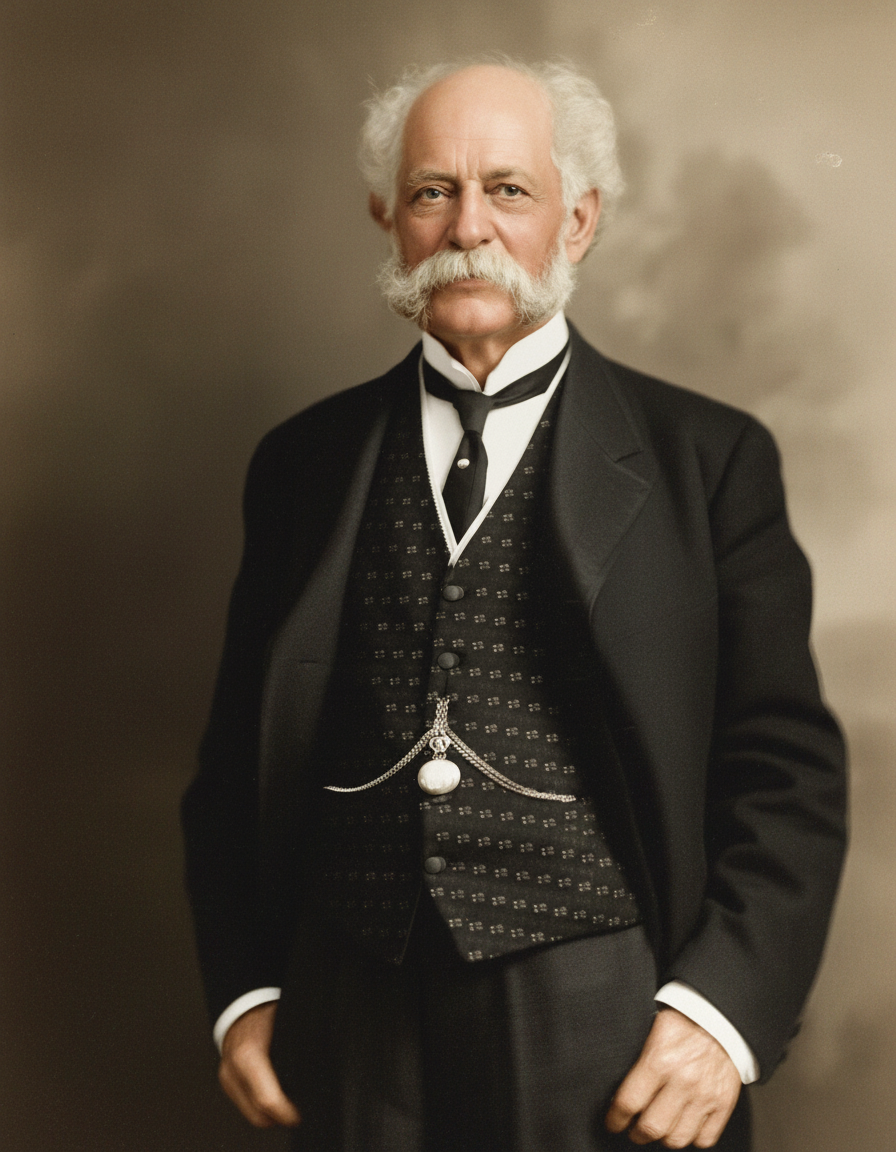
J. Pierpont Morgan
The architect of American industrial capitalism and financial stability.
J. Pierpont Morgan was an American financier who dominated corporate finance and industrial consolidation during the Gilded Age. He orchestrated the formation of several major corporations, including General Electric and U.S. Steel, and played a pivotal role in stabilizing the American financial system during crises.
Biography
Accomplishments
- 01Orchestrated the formation of General Electric in 1892 through the merger of Edison General Electric and Thomson-Houston Electric Company, creating a dominant force in the nascent electrical industry.
- 02Formed the U.S. Steel Corporation in 1901 by consolidating Andrew Carnegie's steel holdings with others, creating the world's first billion-dollar corporation and a vertically integrated behemoth.
- 03Led the banking syndicate that successfully sold 62 million gold bonds to raise $62 million for the U.S. Treasury in 1895, averting a national bankruptcy during the Panic of 1893.
- 04Personally organized and led a consortium of bankers to inject over $25 million into the New York banking system during the Panic of 1907, effectively preventing a total collapse of the U.S. financial system.
- 05Financed and reorganized numerous railroad companies in the late 19th century, imposing order, consolidating routes, and improving efficiencies across a fragmented and often cutthroat industry.
Lessons for Operators
Key Takeaways
Practical lessons distilled for operators, investors, C-levels, and capital allocators.
Industrial Rationalization
Morgan demonstrated that strategic consolidation and rigorous operational overhaul could convert disparate, competitive entities into highly efficient, profitable industry leaders. This involved identifying synergies, eliminating redundancy, and imposing centralized control.
The Lender of Last Resort (Private Sector)
In an era without a central bank, Morgan's ability to mobilize private capital during financial crises showcased the critical role of well-capitalized institutions and strong leadership in stabilizing markets. Understand how private capital can fill critical gaps when public institutions are absent or ineffective.
Building Enduring Enterprises
His ventures, like General Electric and U.S. Steel, were not merely financial plays but foundational to 20th-century American industry. Focus on building enterprises with sound governance, efficiency, and market dominance that can withstand economic cycles.
Moral Authority in Finance
Morgan's personal reputation and perceived integrity were instrumental in his ability to command respect and compliance from other leading financiers, crucial for orchestrating large-scale financial interventions. Cultivate a reputation for trustworthiness and decisive action.
Capital as a Tool for Transformation
Morgan viewed capital not just as a means to generate profit, but as a lever to reshape entire industries, improve national infrastructure (e.g., railroads), and drive technological adoption (e.g., electricity). Capital allocators should consider the transformative potential of their investments.
Frameworks & Principles
Named frameworks and strategic principles they popularized or embodied.
Morganization (Industrial Integration)
A strategy involving the acquisition of fragmented and often inefficient companies within an industry, followed by their stringent reorganization, standardization, and consolidation into a single, dominant entity. The goal is to achieve economies of scale, eliminate 'disorderly competition,' and maximize profitability and stability.
When to useApplicable for operators and investors seeking to rationalize mature, fragmented, or overly competitive industries; identifying targets for vertical or horizontal integration; or when aiming to create dominant market positions through efficiency gains and strategic control.
Crisis Cohort Capitalization
A methodology where influential financial leaders or institutions form a coordinated consortium to inject capital and restore confidence during a financial downturn or liquidity crisis. This involves pooling resources, setting terms for intervention, and often demanding operational changes from distressed entities.
When to useRelevant for fund managers, capital allocators, or institutional leaders when a specific market or major entity is facing systemic risk and requires a coordinated, swift capital injection to prevent a broader contagion. Requires significant trust and leadership among participants.
Investment Banking as an Engine of Growth
A model where investment banking is not merely transactional, but acts as a strategic partner in fostering industrial development. This involves providing capital for expansion, facilitating mergers, and imposing managerial discipline to ensure the efficient utilization of funds and the long-term viability of enterprises.
When to useApplicable for investment bankers, private equity firms, and venture capital funds aiming to not just finance, but actively sculpt industries and create enduring corporate structures. Focus on long-term value creation through strategic guidance and capital deployment.
Quotations
"Go as far as you can see; when you get there you will be able to see further."
Sources & Further Reading
Profiles, interviews, podcasts, and articles used to compile and verify this entry. Each link opens at the original publisher.
Explore Related Titans
Other figures in the archive who share J. Pierpont Morgan's domain, geography, or era.
More in Finance & Investing








From United States






Contemporaries — 19th century