Sam Altman
Architect of Artificial General Intelligence and Venture Capital Visionary.
Sam Altman is an American entrepreneur, investor, and programmer. He is best known as the CEO of OpenAI, a leading artificial intelligence research and deployment company. Previously, he served as the president of Y Combinator, a prominent startup accelerator, from 2014 to 2019.
Biography
Accomplishments
- 01Co-founded Loopt, a successful mobile social networking startup, in 2005, which was acquired by Green Dot Corporation for $43.4 million in 2012.
- 02Served as President of Y Combinator from 2014 to 2019, scaling its impact and portfolio valuation to over $80 billion, backing thousands of startups.
- 03Co-founded OpenAI in 2015 with a mission to ensure AGI benefits all humanity, securing significant funding and strategic partnerships, notably with Microsoft.
- 04Led OpenAI through the development and public release of transformative AI models including GPT-3, DALL-E, and ChatGPT, catalyzing the generative AI boom and driving mainstream AI adoption.
- 05Raised substantial capital for OpenAI, notably a multi-billion dollar investment from Microsoft, accelerating research and deployment efforts.
- 06Pioneered a unique capped-profit structure for OpenAI to balance profit motives with societal benefit amidst rapid AGI development.
Lessons for Operators
Key Takeaways
Practical lessons distilled for operators, investors, C-levels, and capital allocators.
Strategic Patience in Deep Tech
Altman's career illustrates that substantial, long-term value in deep technology is built through sustained investment and development, not immediate quarterly returns. OpenAI's journey from a research lab to a product powerhouse validates this. Operational leaders should fund R&D with a multi-year horizon.
Ecosystem Orchestration
His tenure at Y Combinator and role at OpenAI highlight the power of building and nurturing an ecosystem of talent, capital, and innovation. For enterprise leaders, this means fostering internal innovation hubs, strategic partnerships, and active participation in industry-specific accelerators or consortia.
Leveraging Platform Shifts
Altman consistently identified and capitalized on platform shifts, from mobile computing with Loopt to the current generative AI wave with OpenAI. CIOs and C-levels must actively monitor emerging tech paradigms and strategically allocate resources to participate early, even if the path to profitability is unclear initially.
Mission-Driven Capital Structures
OpenAI’s capped-profit model is a novel approach to align commercial pursuits with a broader societal mission. Investors and fund managers can seek out or even structure ventures where financial returns are balanced with ethical considerations and long-term societal impact, particularly in high-stakes fields like AI.
Aggressive, Iterative Deployment
The public rollout of ChatGPT demonstrated the power of releasing transformative technology early and iterating based on real-world usage. Enterprise product managers should consider controlled, wide-scale betas to rapidly gather data and refine offerings for market fit, rather than prolonged internal development cycles.
Influence through Early-Stage Investing
Altman's early angel investments and leadership at YC show that influencing future technological directions often starts at the seed stage. Capital allocators should maintain a diverse portfolio that includes nascent, high-potential technologies through dedicated venture funds or direct investments.
Frameworks & Principles
Named frameworks and strategic principles they popularized or embodied.
Minimum Viable Product (MVP) for Research
Applying the MVP concept not just to software products but to technological research and deployment, releasing early versions (like GPT-3 APIs or ChatGPT) to gather vital feedback and inform subsequent development.
When to useWhen developing foundational technologies with broad potential applications, or when public interaction is crucial for understanding user needs and identifying unforeseen consequences.
Non-Profit to Capped-Profit Transition
A strategic shift from a purely non-profit research entity to a capped-profit subsidiary designed to attract significant capital for computing power while ring-fencing the core mission from unbridled commercial pressure.
When to useFor mission-driven organizations requiring substantial capital investment that cannot be solely sustained by philanthropic donations, particularly in capital-intensive research or infrastructure.
Ecosystem and Talent Magnet Strategy
Beyond direct employment, creating an environment (e.g., YC's network, OpenAI's research community) that attracts, nurtures, and retains top talent and innovative ideas, even if they're not directly part of the core company.
When to useWhen a company or industry needs to foster a broader innovation landscape, requiring talent beyond its direct payroll, or to establish itself as a central hub for a particular technology.
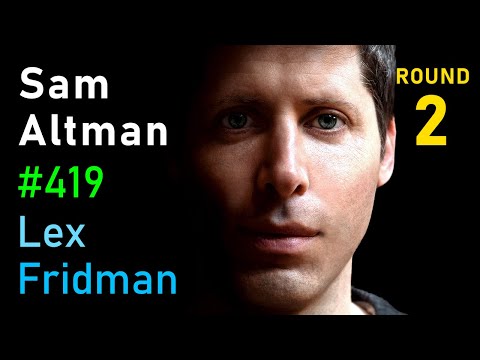
Evergreen Talks & Interviews
Foundational talks, lectures, and interviews worth revisiting.

Sources & Further Reading
Profiles, interviews, podcasts, and articles used to compile and verify this entry. Each link opens at the original publisher.
Explore Related Titans
Other figures in the archive who share Sam Altman's domain, geography, or era.
More in Finance & Investing










From United States







Contemporaries — born 1980s