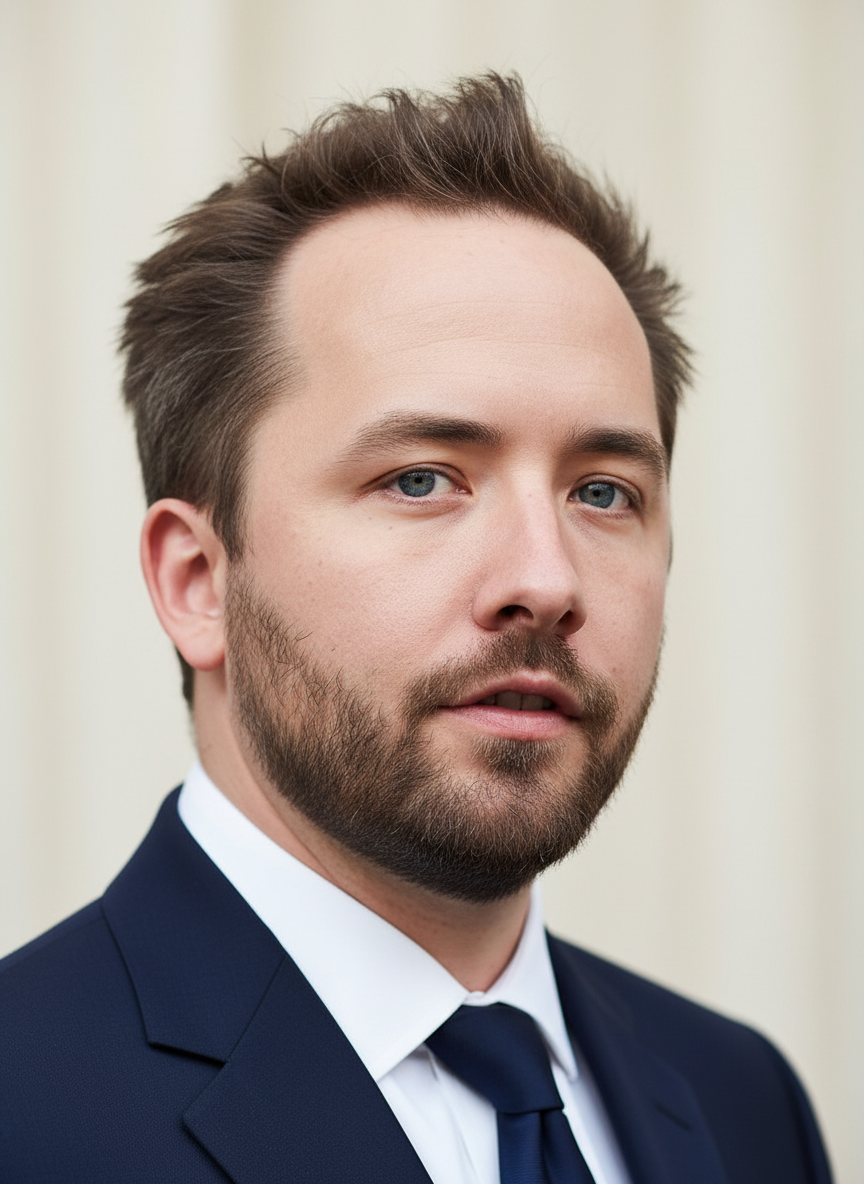
Ivan Zhao
Co-founder and CEO of Notion, pioneering the 'all-in-one workspace' in productivity software.
Ivan Zhao is the co-founder and CEO of Notion Labs Inc., the company behind the popular productivity software Notion. Prior to Notion, he co-founded another startup, Ink & Switch, focusing on creative software research. Notion, launched in 2016, gained widespread adoption for its flexible, customizable workspace that integrates notes, databases, wikis, project management, and more into a single application.
Biography
Accomplishments
- 01Co-founded Notion Labs Inc. in 2013, overseeing its growth into a $10 billion valued company by 2021 as CEO.
- 02Successfully executed a critical product pivot in 2016 from a complex visual programming tool to a modular, block-based 'all-in-one workspace,' saving Notion from near-failure.
- 03Raised over $300 million in venture capital for Notion, including a $275 million Series C in 2021, demonstrating significant investor confidence.
- 04Scaled Notion's user base to millions globally, establishing it as a leader in the productivity and collaboration software market.
- 05Cultivated a strong brand and user community around Notion's customizable and flexible approach to digital workspace management.
- 06Pioneered a 'tool-making' philosophy, empowering users to build their own systems within the software, shifting paradigms away from static applications.
Lessons for Operators
Key Takeaways
Practical lessons distilled for operators, investors, C-levels, and capital allocators.
Pivot or Perish
Zhao's experience with Notion underscores that early market rejection isn't necessarily the end, but often a signal for fundamental re-evaluation. A willingness to pivot significantly can precede market-defining success.
User as Creator
Empowering users to build and customize their own workflows and tools within a platform (e.g., Notion's block metaphor) can unlock immense value, fostering highly engaged communities and use cases beyond initial developer intent.
Design as a Strategic Imperative
In competitive SaaS markets, exceptional design and user experience are not just features but strategic differentiators that can drive adoption and brand loyalty.
Modularity Fuels Adaptability
Building software with modular components (like Notion's blocks) allows for vast customization without sacrificing simplicity for any single user, making the product highly adaptable to diverse individual and organizational needs.
The Power of an Ecosystem
By enabling users to create and share templates, Notion built an organic ecosystem that rapidly amplified its utility and reach, demonstrating the power of community-driven content within a flexible platform.
Frameworks & Principles
Named frameworks and strategic principles they popularized or embodied.
The 'Blocks' Metaphor
Notion's core mechanism where every piece of content (text, image, table, etc.) is a 'block' that can be endlessly combined, rearranged, and embedded. This allows users to construct highly customized pages and databases.
When to useApplicable when designing software or platforms that require extreme flexibility and user customization, enabling users to build their own tools and structures rather than being limited to predefined templates. Useful for empowering 'citizen developers' within an application.
Product-Led Growth (PLG) through Empowerment
Notion's growth largely came from users adopting the product organically due to its intuitive design and powerful customization features, empowering them to solve their own problems without extensive sales involvement. The product itself is the primary driver of acquisition, conversion, and expansion.
When to useIdeal for SaaS products that can offer immediate value to individual users or small teams, have a low barrier to entry, and whose utility compounds with usage and customization. Focuses on enabling users to 'discover' the deeper value.
Radical Product Re-invention (Pivot)
The strategic decision to fundamentally re-design and re-launch a product based on critical market feedback, even if it means discarding years of prior work. Zhao's near-bankruptcy and subsequent successful pivot with Notion is a prime example.
When to useNecessary when an initial product fails to achieve market fit, despite significant effort. It requires a deep understanding of why initial assumptions were wrong and a bold vision for a new direction, rather than incremental iteration.
Recent Appearances
Latest interviews, keynotes, and press from the past half year.
 youtube.com
 youtube.com
 youtube.com
 youtube.com
 youtube.com
 youtube.com
 youtube.com
 youtube.com
 youtube.com
Sources & Further Reading
Profiles, interviews, podcasts, and articles used to compile and verify this entry. Each link opens at the original publisher.
- interviewNotion's Ivan Zhao: The Refounder | Sequoia Capitalsequoiacap.com→
- interviewNotion CEO Ivan Zhao wants you to demand better from your toolstheverge.com→
- interviewNotion CEO Ivan Zhao wants you to demand better from your toolsrogerwong.me→
- interviewIvan Zhao of Notion has a good line about AI: agency is like muscle ...linkedin.com→
- interviewNotion launches AI agent as it crosses $500 million in annual revenuecnbc.com→
- interview10. Notion - CNBCcnbc.com→
- interviewNotion: 2025 CNBC Disruptor 50cnbc.com→
- interviewForbes Cloud 100 2025 List - Largest Cloud Computing Companies ...forbes.com→
- interviewCutting-Edge AI Was Supposed to Get Cheaper. It's More Expensive ...wsj.com→
- interviewThe AI Gold Rush Is Breaking a Silicon Valley Taboo: Cashing Out ...wsj.com→
- interviewApprenticeships get a glow up - Financial Timesft.com→
Explore Related Titans
Other figures in the archive who share Ivan Zhao's domain, geography, or era.
More in Technology










From China








Contemporaries — born 1980s