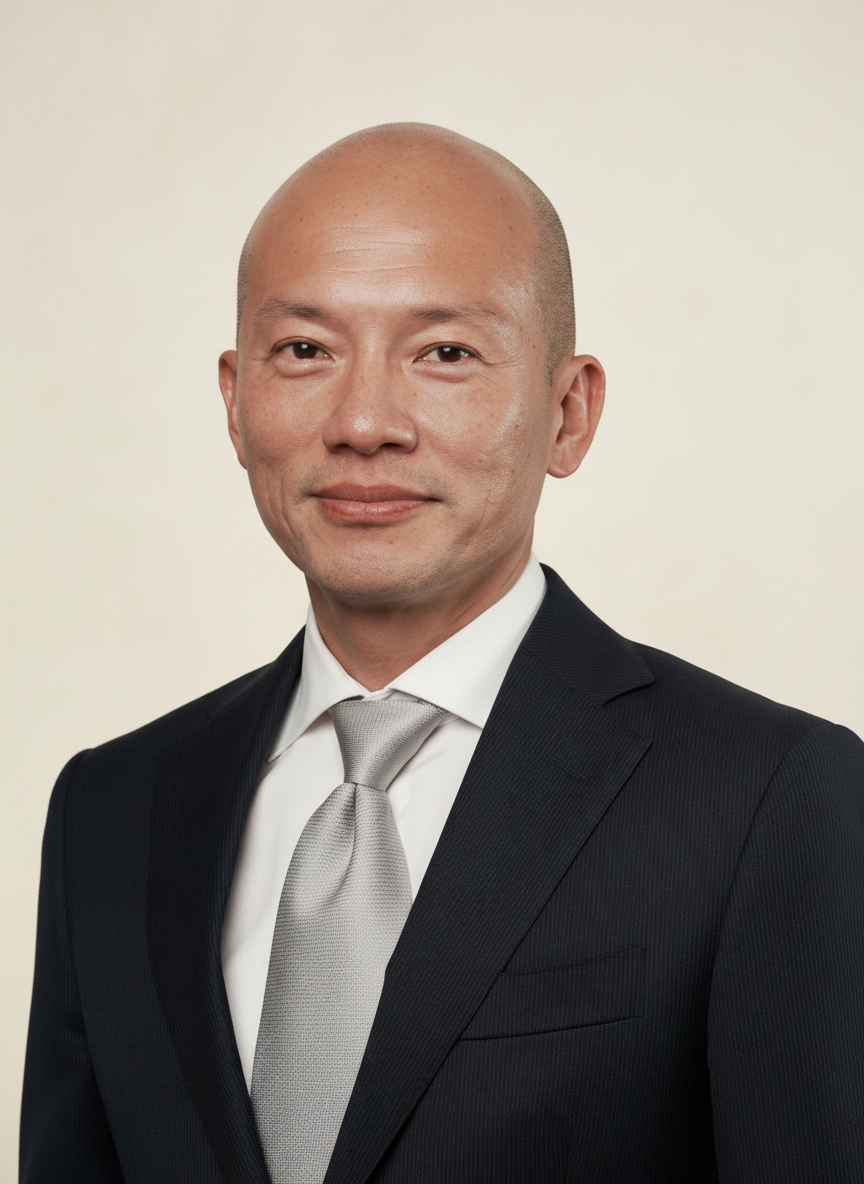
Kimin Tanoto
Second-generation leader driving expansion and sustainability initiatives within a diversified resource-based manufacturing conglomerate.
Kimin Tanoto is a key figure in the second generation of leadership at Royal Golden Eagle (RGE), a global conglomerate founded by his father, Sukanto Tanoto. As Co-founder of RGE, he is instrumental in strategy and governance across various business groups. He chairs APRIL Group, one of the world's largest pulp and paper producers, and is actively involved in RGE's sustainability transformations and global expansion efforts.
Biography
Accomplishments
- 01Co-founded Royal Golden Eagle (RGE), positioning him as a principal in the conglomerate's ongoing strategic development and governance structure.
- 02Assumed Chairmanship of Asia Pacific Resources International Holdings (APRIL) Group, guiding one of the world's largest pulp and paper companies.
- 03Oversaw the implementation and evolution of APRIL's 'Sustainable Forest Management Policy 2.0,' committing APRIL to no deforestation and peatland protection.
- 04Led strategic capital investments within APRIL Group to enhance manufacturing efficiency, broaden product offerings (e.g., dissolving pulp), and ensure market competitiveness.
- 05Facilitated RGE's continued global expansion, leveraging its integrated supply chains and diversified asset base across pulp, paper, palm oil, and specialty cellulose.
Lessons for Operators
Key Takeaways
Practical lessons distilled for operators, investors, C-levels, and capital allocators.
Generational Transition as Strategic Reset
Kimin Tanoto's ascension was not merely an inheritance but an opportunity to recalibrate RGE's strategic direction, particularly in sustainability. Leaders can leverage generational shifts to launch significant policy changes and redefine corporate identity, even in established enterprises.
Sustainability as a Business Imperative, Not Just Compliance
APRIL's commitment to 'no deforestation' and peatland protection, though driven by external pressure, evolved into a core business strategy. For resource-intensive businesses, proactive sustainability measures attract capital, talent, and consumer preference, transforming operational costs into long-term value creation.
Integrated Value Chain Optimization
RGE's success stems from deep integration across its various business units (e.g., forestry, pulp mills, paper production, palm oil refineries). This allows for internal efficiencies, quality control, and quicker adaptation to market changes. C-levels should perpetually seek synergies across their corporate ecosystems.
Anticipate and Adapt to Regulatory & Societal Shifts
The intense scrutiny on resource sectors mandates continuous monitoring of environmental regulations, public sentiment, and scientific advancements. Kimin Tanoto's leadership in advocating for sustainability within APRIL illustrates the necessity of anticipating these shifts and building adaptive capacity into business models.
Frameworks & Principles
Named frameworks and strategic principles they popularized or embodied.
Triple Bottom Line (TBL) Accounting
A framework that emphasizes measuring not just financial performance, but also social and environmental performance (People, Planet, Profit). RGE's and APRIL's sustainability commitments align with this holistic view.
When to useApplicable when evaluating the comprehensive impact of a business, particularly for resource-intensive industries where environmental and social externalities are significant. Use to guide strategic planning and reporting beyond pure financial metrics.
Stakeholder Theory
Posits that a company's success depends on managing its relationships with a wide array of stakeholders, not just shareholders. Kimin Tanoto's engagement with NGOs, communities, and governments reflects this.
When to useCrucial for companies operating in complex regulatory and social environments. Employ when developing corporate social responsibility (CSR) strategies, navigating public opinion, or preparing for significant operational changes that impact diverse groups.
Vertical Integration Strategy
A strategy where a company controls multiple stages of its supply chain, from raw material sourcing to final product distribution. RGE's diverse portfolio, from plantations to manufacturing, exemplifies this.
When to useConsider when seeking to enhance supply chain control, reduce costs, improve quality, or gain a competitive advantage in industries with volatile raw material prices or complex production processes. Requires significant capital investment and management expertise.
Explore Related Titans
Other figures in the archive who share Kimin Tanoto's domain, geography, or era.
More in Energy & Resources






From Indonesia
Contemporaries — born 1980s