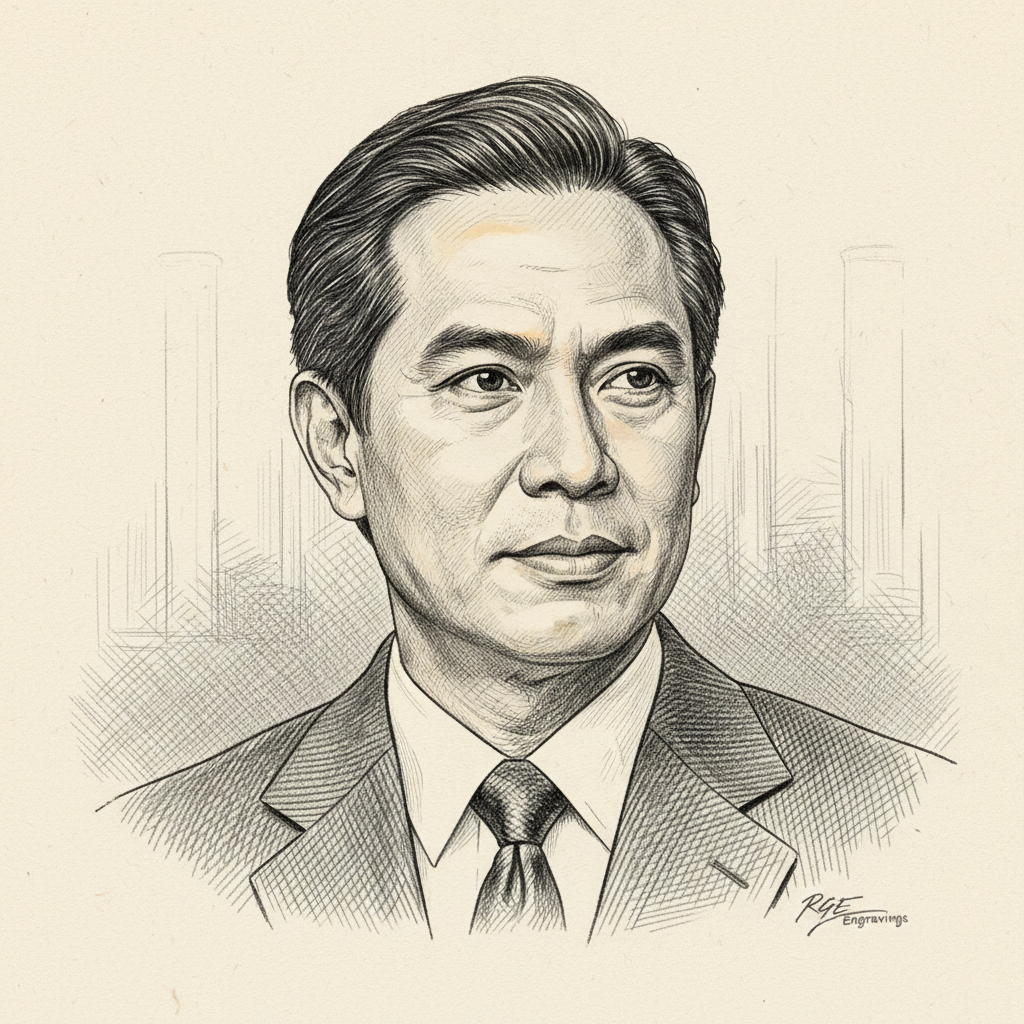
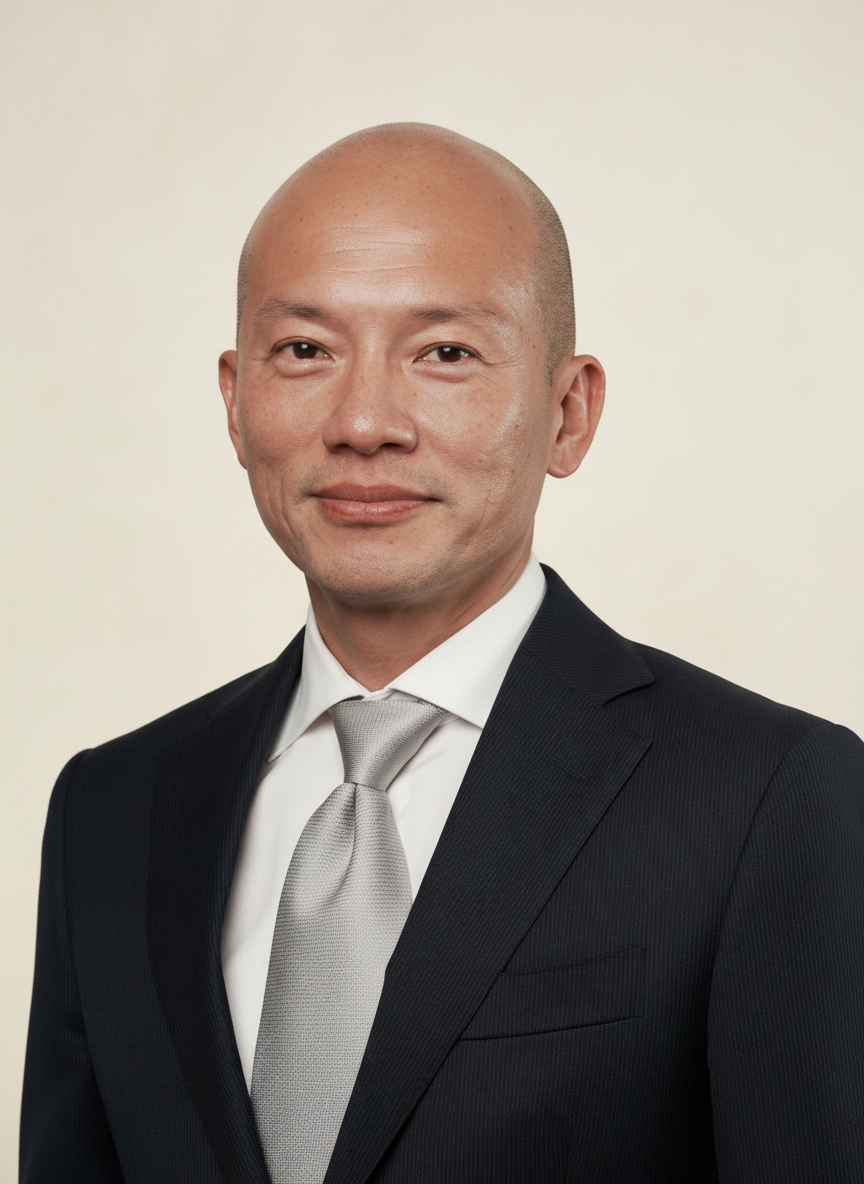
Sukanto Tanoto
From commodity trader to global resource-based manufacturing magnate, Sukanto Tanoto built a vertically integrated empire.
Sukanto Tanoto, born Tan Kang Hoo, is an Indonesian businessman who transformed from a spare parts supplier for Pertamina into a global leader in resource-based manufacturing. His business interests are consolidated under the Royal Golden Eagle (RGE) group, encompassing diverse sectors such as pulp and paper, palm oil, specialty cellulose, and viscose.
Biography
Accomplishments
- 01Founded Royal Golden Eagle (RGE) group (formerly Raja Garuda Mas), establishing it as a global leader in resource-based manufacturing across multiple sectors.
- 02Established APRIL Group (Asia Pacific Resources International Holdings) in 1993, growing it into one of the largest pulp and paper companies globally.
- 03Developed Asian Agri, a significant player in the Indonesian palm oil industry with substantial plantation land and crude palm oil production capacity.
- 04Integrated operations from upstream natural resource management (plantations and forests) to downstream manufacturing (pulp, paper, palm oil derivatives, viscose fibers).
- 05Expanded RGE's global footprint with manufacturing operations and market reach across Asia, North America, and Europe.
- 06Pioneered the '5Cs' business philosophy (Good for Community, Country, Climate, Customer, and Company) as a strategic framework for sustainable development.
Lessons for Operators
Key Takeaways
Practical lessons distilled for operators, investors, C-levels, and capital allocators.
Mastery of Vertical Integration
Tanoto's success is rooted in establishing complete control, from raw material extraction (forests, oil palm plantations) to final product manufacturing (pulp, paper, cooking oil, specialty fibers). This minimizes external dependencies, optimizes cost structures, and ensures product quality and consistent supply. Operators should identify core inputs and explore opportunities to control critical supply chain nodes.
Resource-Based Value Creation
His approach was to take indigenous resources (wood, oil palm) and invest heavily in technology and infrastructure to transform them into higher-value manufactured goods. This strategy allows for wealth creation from natural assets rather than just raw export. Investors should seek companies that demonstrate strong capabilities in transforming commodities into differentiated or processed products.
Long-Term Strategic Patience
Developing large-scale plantations and industrial facilities in resource sectors requires multi-year, even multi-decade, investment horizons before significant returns materialize. Tanoto demonstrated this patience. C-levels must articulate and gain stakeholder alignment for long-term strategies, especially in industries with extended gestation periods.
Global Market Penetration
While originating in Indonesia, RGE's products are sold worldwide. This global outlook dictates product specifications, operational efficiency, and adherence to international sustainability standards. Enterprise leaders should design products and operations with global market demands and regulatory landscapes in mind from inception.
Adaptability and Diversification (within a core theme)
Beginning as a supplier, Tanoto adapted to seize opportunities in forestry, then expanded into palm oil, and further into specialty cellulose and viscose. This diversification, while remaining within the broader theme of resource-based manufacturing, mitigated sector-specific risks. Fund managers should look for companies with a proven ability to strategically diversify into related, high-growth adjacencies.
Frameworks & Principles
Named frameworks and strategic principles they popularized or embodied.
Vertical Integration Model
A strategy where a company controls multiple stages of its supply chain, from production to distribution. For RGE, this means owning forests and plantations, processing mills, and distribution networks.
When to useApplicable when seeking greater control over quality, costs, and supply certainty, especially in industries with volatile raw material prices or complex supply chains. Useful for mitigating risks and capturing more value within the production lifecycle.
Resource-Based View (RBV)
Focuses on developing and leveraging unique, inimitable internal resources and capabilities (e.g., extensive land holdings, advanced processing technology, talent in resource management) as the primary source of sustainable competitive advantage.
When to useEmploy when identifying and exploiting core competencies derived from proprietary assets or unique operational capabilities. Particularly relevant for businesses in commodity or resource-intensive sectors where differentiation is challenging.
Global Scale-Up Strategy
Involves achieving significant economies of scale in production and distribution to become a cost leader and large-volume supplier in international markets, thereby driving down per-unit costs and increasing market power.
When to useBest suited for industries where volume dictates profitability and global competition. Essential when aiming to serve a vast, international customer base and needing to maintain competitive pricing.
Recent Appearances
Latest interviews, keynotes, and press from the past half year.
 youtube.com
 youtube.com
 youtube.com
 youtube.com
 youtube.com
 youtube.com
 youtube.com
 youtube.com
 youtube.com
 youtube.com
 youtube.com
 youtube.com
 youtube.com
 youtube.com
Sources & Further Reading
Profiles, interviews, podcasts, and articles used to compile and verify this entry. Each link opens at the original publisher.
Explore Related Titans
Other figures in the archive who share Sukanto Tanoto's domain, geography, or era.
More in Energy & Resources



From Indonesia
Contemporaries — born 1940s