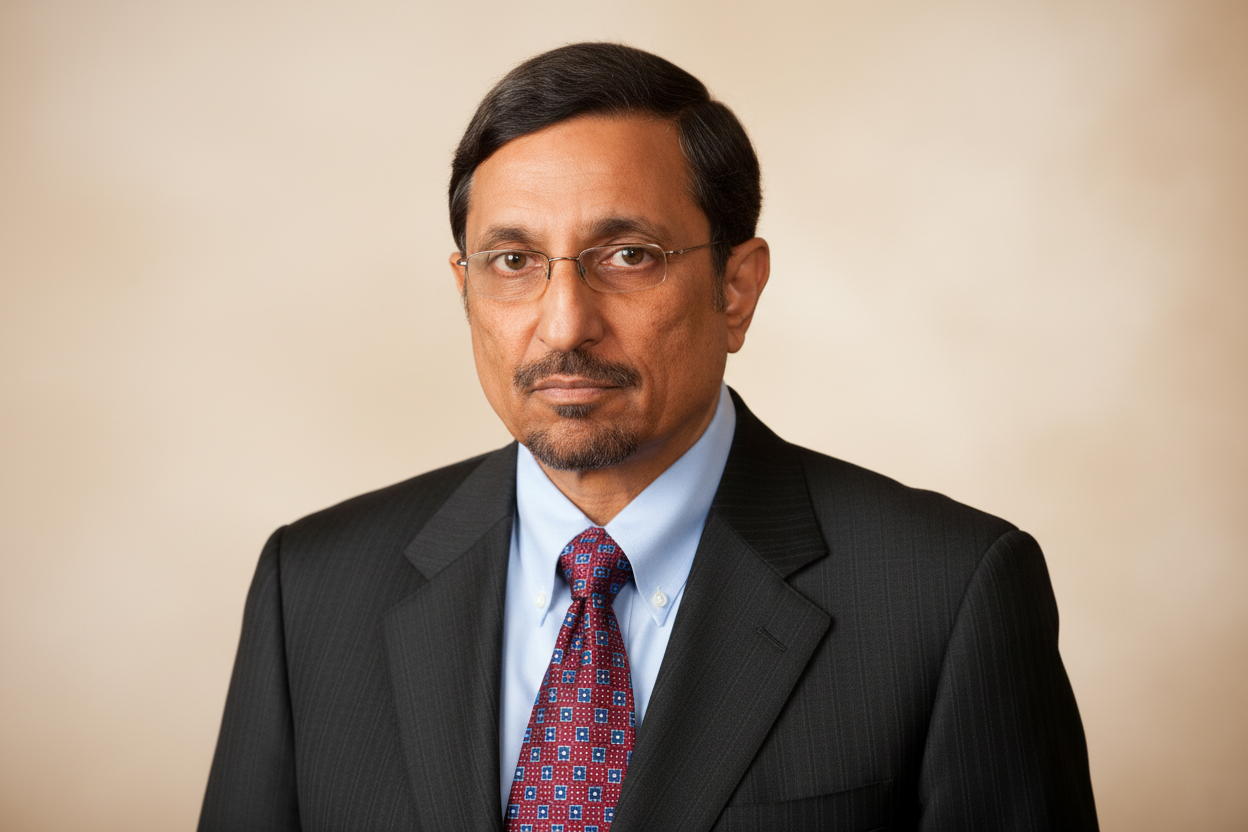
Mohammed Al-Mady
Architect of Global Petrochemical Expansion and Diversification.
Mohammed Al-Mady served as the CEO of Saudi Basic Industries Corporation (SABIC) from 1998 to 2015, transforming it into one of the world's largest petrochemical companies through aggressive international expansion, strategic acquisitions, and a focus on technology and diversification. His leadership was pivotal in establishing SABIC's global footprint and enhancing its product portfolio.
Biography
Accomplishments
- 01Orchestrated the acquisition of DSM Petrochemicals (Europe) in 2002 for approximately $2.2 billion, enhancing SABIC's European market presence and technology base.
- 02Led the strategic acquisition of GE Plastics from General Electric in 2007 for $11.6 billion, positioning SABIC as a global leader in engineering plastics.
- 03Expanded SABIC's global production footprint, including major investments in new facilities and joint ventures across Asia, Europe, and the Americas.
- 04Diversified SABIC's product portfolio beyond basic petrochemical commodities into higher-value specialty chemicals, polymers, and innovative material solutions.
- 05Increased SABIC's annual revenue from approximately $10 billion at the start of his tenure to over $50 billion by the end, solidifying its financial strength and market position.
- 06Established a strong institutional framework for research and development within SABIC, fostering technological advancements and product innovation.
Lessons for Operators
Key Takeaways
Practical lessons distilled for operators, investors, C-levels, and capital allocators.
Strategic M&A for Diversification
Al-Mady's tenure highlights how targeted, large-scale acquisitions (e.g., GE Plastics) can fundamentally alter a company's product mix and market standing, moving it from a commodity producer to a diversified industrial leader. Investors should look for management teams capable of identifying and integrating such transformative assets, especially in mature industries.
Global Footprint Imperative
SABIC's expansion from a regional player to a global entity under Al-Mady underscores the necessity of international presence for scale, market access, and hedging against regional economic fluctuations. Companies seeking sustainable growth in globalized sectors must develop robust international strategies for manufacturing, sales, and distribution.
Value Chain Ascent
The shift towards specialty chemicals and engineering plastics demonstrates the strategic wisdom of moving up the value chain. This reduces exposure to volatile commodity prices and allows for higher margins and greater differentiation. Capital allocators should favor businesses actively pursuing such value-added transformations in their product portfolios.
Catalyst for National Industrialization
Al-Mady's leadership at SABIC was instrumental not just for the company, but also for Saudi Arabia's broader industrial development and economic diversification. This illustrates how large state-affiliated enterprises can act as powerful engines for national economic strategy, attracting foreign investment and developing indigenous capabilities.
Operational Excellence and Innovation
While expanding, SABIC also maintained a focus on operational efficiency and technological innovation in its core processes and products. This dual focus ensures that growth is not just acquisitive but also rooted in strong internal capabilities and sustainable competitive advantages.
Frameworks & Principles
Named frameworks and strategic principles they popularized or embodied.
Portfolio Diversification through M&A
Utilizing mergers and acquisitions to acquire new technologies, market shares, and product lines, thereby reducing reliance on a single commodity or market segment. SABIC's acquisition of GE Plastics is a prime example.
When to useWhen seeking to rapidly expand into new product categories or geographic markets, acquire advanced technologies, or mitigate risk associated with a concentrated product portfolio.
Global Manufacturing and Sales Network
Establishing production facilities and sales operations in key international markets to serve diverse customer bases, optimize supply chains, and gain access to local resources and talent.
When to useWhen a company aims to achieve economies of scale, reduce logistics costs, expand market access, and become less susceptible to regional economic downturns or trade barriers.
Value Chain Integration (Downstream Focus)
Moving from the production of basic raw materials (upstream) to manufacturing more complex, higher-value finished or semi-finished products (downstream) that command better margins and offer greater differentiation.
When to useApplicable for commodity producers looking to improve profitability, reduce price volatility exposure, and develop proprietary product lines in competitive markets.
Explore Related Titans
Other figures in the archive who share Mohammed Al-Mady's domain, geography, or era.
More in Industrial & Manufacturing







From Saudi Arabia

Contemporaries — born 1950s