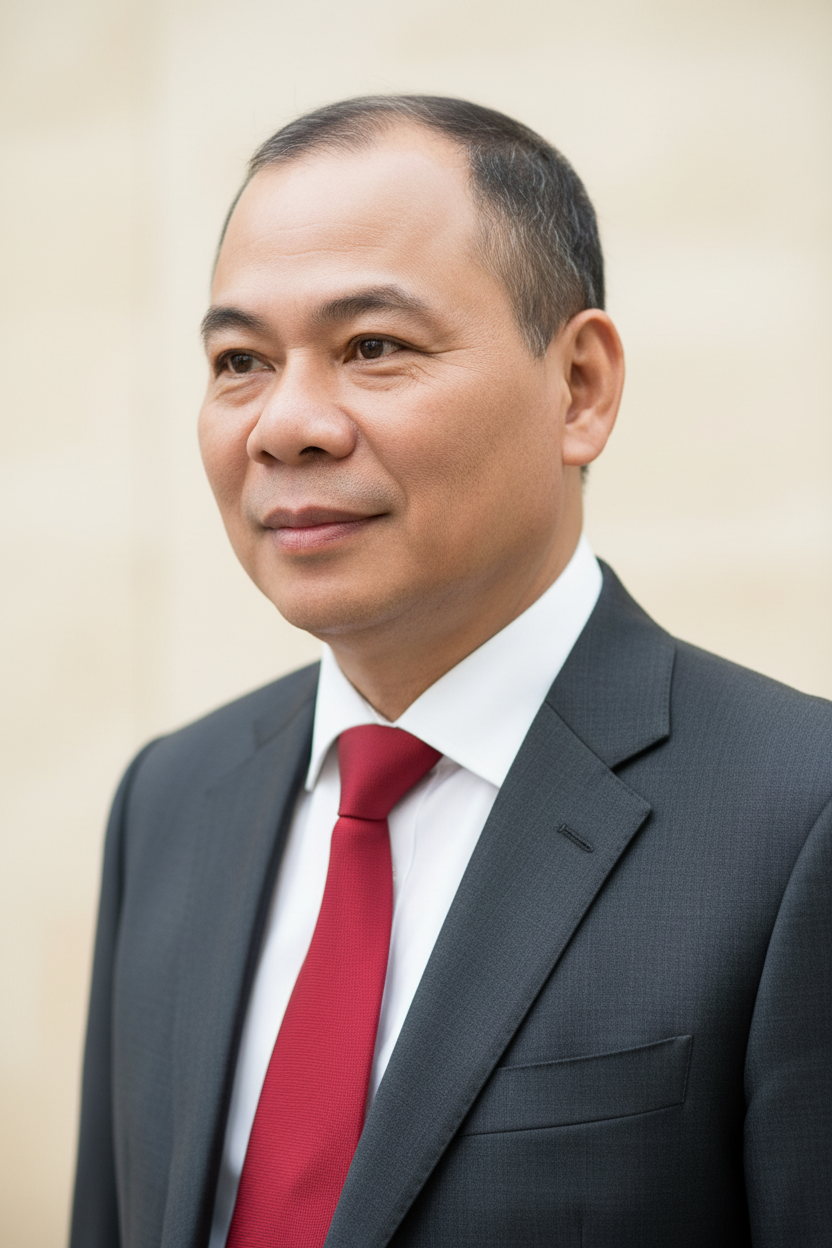
Pham Nhat Vuong
The architect of Vietnam's largest diversified conglomerate, Vingroup, pivotal in shaping modern Vietnamese consumer markets and industrial capabilities.
Pham Nhat Vuong is the founder and chairman of Vingroup, Vietnam's largest private conglomerate. Starting with an instant noodle business in Ukraine in the 1990s, he returned to Vietnam to build an empire across real estate, retail, healthcare, education, hospitality, and notably, automotive and technology under the VinFast brand, driving industrialization and consumer market development.
Biography
Accomplishments
- 01Established Technocom in Ukraine in 1993, building it into a leading instant noodle manufacturer before selling it to Nestlé in 2010.
- 02Founded Vinpearl (2000) and Vincom (2002), which merged to form Vingroup (2012), growing it into Vietnam's largest diversified private conglomerate.
- 03Pioneered large-scale urban development projects in Vietnam, such as Vinhomes residential complexes and Vincom Retail shopping malls, redefining urban landscapes.
- 04Launched VinFast in 2017, establishing Vietnam's first indigenous mass-market car manufacturer, and aggressively pivoting to electric vehicles with global ambitions.
- 05Expanded Vingroup into critical social infrastructure sectors including healthcare (Vinmec) and education (Vinschool), impacting millions of Vietnamese citizens.
- 06Led Vingroup to become a consistently dominant player in the Vietnamese stock market, attracting significant domestic and international investment.
Lessons for Operators
Key Takeaways
Practical lessons distilled for operators, investors, C-levels, and capital allocators.
Ecosystem Building
Vingroup's strategy demonstrates the power of an interconnected business ecosystem. By owning development, retail, healthcare, education, and even manufacturing, Vingroup captures a greater share of consumer spending and creates synergistic advantages, fostering brand loyalty and cross-selling opportunities. This reduces reliance on external suppliers and partners within their primary markets.
Aggressive Diversification & Vertical Integration
Pham Nhat Vuong's career illustrates a willingness to aggressively diversify from proven cash cows into ambitious new ventures. The move from real estate to healthcare, education, and then automotive (VinFast) shows a strategic expansion driven by both market opportunity and a vision for national industrial development. This involves calculated risks and significant capital allocation into often high-growth, high-barrier-to-entry sectors.
National Ambition & Branding
VinFast's genesis as a 'Made in Vietnam' automotive brand targeting global markets showcases a commitment to national industrialization and elevating Vietnam's economic standing. This strategy can garner significant government support, domestic pride, and consumer loyalty, but requires substantial investment in R&D, manufacturing infrastructure, and international marketing.
Capital Recycling and Reinvestment
The sale of Technocom to Nestlé provided substantial capital that was strategically redeployed into Vietnam's burgeoning real estate and tourism sectors. This demonstrates a clear pattern of monetizing mature assets to fund bold new initiatives, highlighting a flexible and opportunistic capital allocation strategy rather than holding onto all ventures indefinitely.
Speed to Market & Execution
Vingroup is known for rapid project execution and scaling. Whether it's developing massive urban centers or launching a car brand in just two years, the emphasis is on speed to achieve market dominance and seize first-mover or fast-follower advantages in nascent but promising markets.
Frameworks & Principles
Named frameworks and strategic principles they popularized or embodied.
Ecosystem Strategy (Vingroup Model)
Develop a comprehensive suite of products and services that cater to multiple needs of a target demographic, creating an interdependent network of businesses under a single brand. This generates cross-selling opportunities, brand loyalty, and significant market capture.
When to useWhen operating in emerging markets with rapidly growing middle classes and opportunities to integrate multiple consumer-facing services (e.g., housing, retail, education, healthcare, mobility) under one trusted brand.
Strategic Asset Monetization & Reinvestment
Systematically identify and divest mature or non-core assets to free up capital. This capital is then strategically re-allocated towards high-growth, often more capital-intensive, and visionary projects that align with long-term strategic objectives and national development.
When to useWhen an organization has established profitable, but perhaps growth-limited, ventures and seeks to enter new, higher-potential, or strategically important industries requiring substantial upfront investment.
National Champion Industrialization
Invest heavily in developing domestic industrial capabilities, often in advanced manufacturing or technology sectors, with explicit ambitions to compete globally. This strategy leverages national pride and may attract government support and incentives.
When to useApplicable for conglomerates in developing economies with strong state backing or nationalistic consumer sentiment, aiming to create 'made-in-country' products that can compete internationally in high-value sectors.
Sources & Further Reading
Profiles, interviews, podcasts, and articles used to compile and verify this entry. Each link opens at the original publisher.
Explore Related Titans
Other figures in the archive who share Pham Nhat Vuong's domain, geography, or era.
More in Industrial & Manufacturing






Contemporaries — born 1960s