Satya Nadella
Architect of Microsoft's cloud-first, AI-driven renaissance, shifting culture and strategy to drive sustained growth and market leadership.
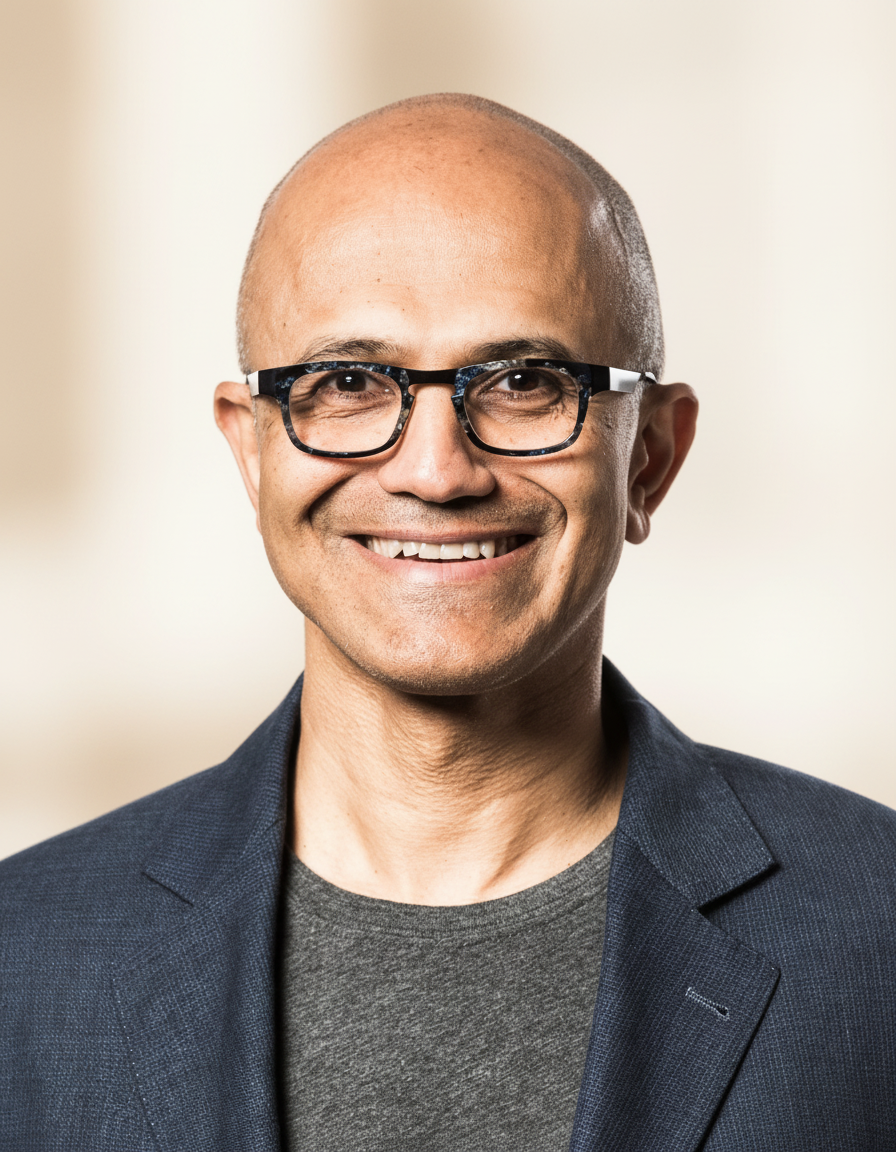
Satya Nadella is the current Chairman and CEO of Microsoft. Appointed CEO in 2014, he orchestrated a dramatic strategic and cultural pivot, moving Microsoft from a Windows-centric company to a cloud-first, AI-driven organization. Under his leadership, Microsoft's market capitalization surged, driven by the success of Azure, Office 365, and a renewed focus on enterprise solutions and intelligent experiences. He was appointed Chairman in 2021.
Biography
Accomplishments
- 01Orchestrated Microsoft's strategic pivot to a cloud-first company, leading to Azure's exponential growth and becoming a dominant public cloud provider, surpassing initial competitors.
- 02Successfully transitioned Microsoft Office from a perpetual license model to the subscription-based Office 365, generating recurring revenue and expanding market reach.
- 03Cultivated a 'growth mindset' culture across Microsoft, improving employee morale, fostering collaboration, and positioning the company for innovation and adaptability.
- 04Executed key strategic acquisitions including LinkedIn (2016), GitHub (2018), and Nuance Communications (2021), significantly expanding Microsoft's enterprise solutions and developer ecosystem.
- 05Led Microsoft to become the most valuable company globally at various points, consistently increasing market capitalization from approximately $300 billion in 2014 to over $3 trillion by 2024.
- 06Reinvigorated Microsoft's presence in the gaming sector with the successful launch of Xbox Game Pass and strategic expansion into cloud gaming.
- 07Championed Microsoft's leadership in Artificial Intelligence, integrating AI capabilities across its product portfolio and investing heavily in advanced research and development.
- 08Elevated Microsoft's reputation as a responsible technology leader through emphasis on privacy, security, and digital ethics.
Lessons for Operators
Key Takeaways
Practical lessons distilled for operators, investors, C-levels, and capital allocators.
The Growth Mindset Transformation
Nadella actively shifted Microsoft's internal culture from a 'fixed mindset' (knowing it all) to a 'growth mindset' (learning it all). This involved encouraging curiosity, embracing failures as learning opportunities, and fostering collaboration across previously siloed divisions. For operators, this means consciously designing feedback loops, rewarding experimentation, and explicitly de-risking failure.
Cloud-First, Not Cloud-Only
While pivoting to the cloud, Nadella recognized the enduring need for hybrid solutions. Azure's strength lies in its ability to seamlessly integrate on-premises infrastructure with cloud services, catering to diverse enterprise needs. Leaders should identify where a pure-play strategy might alienate core customers and build bridges to new paradigms.
Ecosystem and Platform Plays
Microsoft under Nadella focused on building platforms and fostering ecosystems rather than just selling standalone products. The acquisitions of GitHub and LinkedIn, and the success of Xbox Game Pass, illustrate this. Investors should seek companies that build sticky platforms that attract third-party developers and users, creating network effects and high switching costs.
Strategic AI Integration
Rather than treating AI as a separate product, Nadella's strategy integrated AI capabilities across the entire Microsoft portfolio, from Office 365 and Dynamics 365 to Azure services and GitHub Copilot. This ubiquitous approach ensures AI enhances existing value propositions, rather than requiring users to adopt entirely new workflows. Leaders should prioritize embedding AI into core offerings.
Empathetic Leadership and Purpose-Driven Strategy
Nadella often connects Microsoft's mission to empowering individuals and organizations. This human-centered approach to technology helps align employees, resonate with customers, and guide product development towards solving real-world problems. Enterprise leaders can use a clear, empathetic purpose to drive engagement and differentiate in competitive markets.
Open Source Embrace
Microsoft, once an antagonist to open source, became one of its largest contributors and advocates under Nadella. This strategic shift recognized the power of community-driven development and broadened Microsoft's appeal to developers. Investors should favor companies that can adapt their stance on industry trends, even if it means reversing long-held positions, to capture new growth.
Redefining Productivity
Beyond traditional Office applications, Nadella redefined productivity to include tools for collaboration, communication, and intelligence (e.g., Microsoft Teams, Dynamics 365). This expansion addresses the evolving nature of work and the hybrid environment. C-levels should constantly re-evaluate what 'productivity' means for their workforce and invest in holistic solutions.
Consistent Long-Term Vision with Adaptable Tactics
Nadella's overarching vision for Microsoft as a 'platform and productivity company for the mobile-first, cloud-first world' (later AI-first) remained consistent, but the tactics (e.g., acquisitions, product focus) were highly adaptable to market shifts. Fund managers should assess leadership's ability to maintain a clear long-term direction while remaining agile in execution.
Frameworks & Principles
Named frameworks and strategic principles they popularized or embodied.
Cloud-First Strategy
A strategic prioritization of cloud computing services and infrastructure across all product development, deployment, and business models. This involves migrating existing applications, building new cloud-native solutions, and shifting revenue models to subscriptions.
When to useWhen an organization needs to modernize its infrastructure, improve scalability, reduce operational costs, and access cutting-edge technologies like AI and machine learning. Applicable for large enterprises and startups alike seeking agility and global reach.
Growth Mindset Culture
An organizational culture based on Carol Dweck's concept, where individuals and the organization believe abilities and intelligence can be developed through dedication and hard work. It emphasizes learning from mistakes, continuous improvement, and embracing challenges.
When to useEssential for any organization seeking sustained innovation, adaptability to change, and improved employee engagement. Particularly effective in fast-evolving industries like technology, where continuous learning is paramount for relevance.
Platform Ecosystem Development
A strategy focused on building a core platform that attracts and enables third-party developers, partners, and users to create complementary products or services, thereby increasing the platform's value and network effects.
When to useRelevant for companies that can provide foundational technology or infrastructure. Ideal for businesses looking to expand market reach beyond their direct offerings, foster innovation, and create a sticky user base (e.g., operating systems, cloud providers, social networks).
AI Integration by Default
The approach of embedding Artificial Intelligence capabilities directly into existing products and services as a fundamental feature, rather than offering AI as a separate, optional add-on. This makes AI ubiquitous and enhances user experience without requiring explicit AI adoption steps.
When to useApplicable for any software or service provider seeking to differentiate, automate tasks, provide intelligent insights, and improve user efficiency. Best used when AI can augment existing workflows rather than completely replace them, making the transition seamless for users.
Quotations
"Move from a know-it-all to a learn-it-all culture."
"Our industry does not respect tradition. It only respects innovation."
Recent Appearances
Latest interviews, keynotes, and press from the past half year.
 youtube.com
 youtube.com
 youtube.com
 youtube.com
 youtube.com
 youtube.com
 youtube.com
 youtube.com
 youtube.com
 youtube.com
 youtube.com
 youtube.com
 youtube.com
 youtube.com
 youtube.com
 youtube.com
 youtube.com
 youtube.com
 youtube.com
 youtube.com
 youtube.com
 youtube.com
 youtube.com
 youtube.com
 youtube.com
 youtube.com
 youtube.com
 youtube.com
 youtube.com
 youtube.com
 youtube.com
 youtube.com
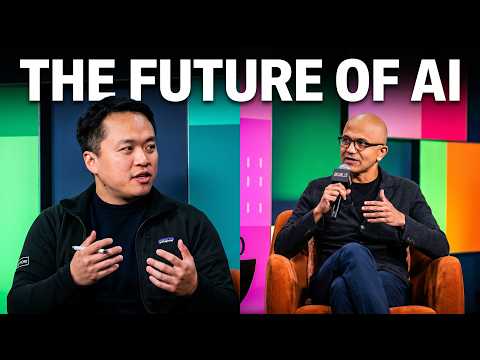 youtube.com
 youtube.com
 youtube.com
 youtube.com
 youtube.com
 m.youtube.com
Sources & Further Reading
Profiles, interviews, podcasts, and articles used to compile and verify this entry. Each link opens at the original publisher.
Explore Related Titans
Other figures in the archive who share Satya Nadella's domain, geography, or era.
More in Technology









From United States




Contemporaries — born 1960s