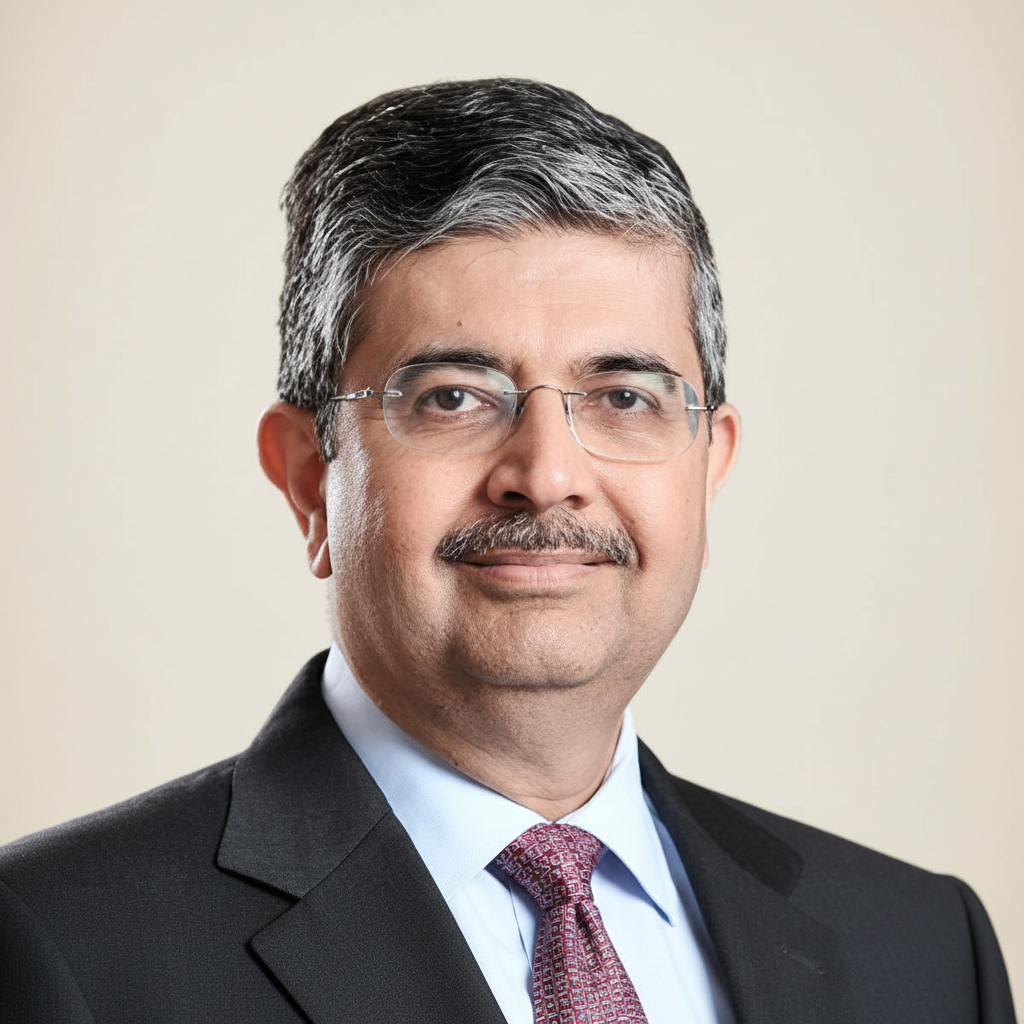
Uday Kotak
Architect of one of India's leading private sector banks, transitioning from a bill discounting startup to a full-service financial conglomerate.
Uday Kotak is an Indian banker who founded Kotak Mahindra Bank in 1985. Under his leadership, the institution grew from a bill discounting enterprise into a diversified financial services group, eventually becoming a full-fledged bank in 2003. He served as its Managing Director and CEO until September 2023, subsequently transitioning to a non-executive director role. His strategic vision positioned Kotak Mahindra Bank as a prominent player in India's financial sector.
Biography
Accomplishments
- 01Founded Kotak Capital Management Finance Ltd. in 1985, growing it from a bill discounting operation into a diversified financial services group.
- 02Successfully transformed Kotak Mahindra Finance Ltd. into Kotak Mahindra Bank Ltd. in 2003, making it the first non-banking finance company in India to receive a banking license.
- 03Orchestrated the acquisition of ING Vysya Bank in 2014 for $2.4 billion, significantly expanding Kotak Mahindra Bank's footprint and market share.
- 04Implemented a robust risk management framework, enabling the bank to maintain strong asset quality and achieve sustained profitability.
- 05Chaired the special board of Infrastructure Leasing & Financial Services (IL&FS) from 2018, leading the complex resolution of the distressed conglomerate.
- 06Built Kotak Mahindra Bank into India's third-largest private sector bank by market capitalization, with a consistent track record of growth and shareholder value creation.
Lessons for Operators
Key Takeaways
Practical lessons distilled for operators, investors, C-levels, and capital allocators.
Build a Diversified Financial Ecosystem
Starting with a niche like bill discounting, then systematically expanding into investment banking, asset management, insurance, and finally full-service banking, creates a robust and resilient business model less susceptible to individual market fluctuations. This sequential expansion allowed Kotak Mahindra to capture various segments of the financial value chain.
Master Regulatory Transitions
Anticipating and adeptly navigating regulatory shifts, such as securing the first banking license for an Indian NBFC, is critical for unlocking new growth avenues and competitive advantages. Proactive engagement with regulators and meticulous compliance are paramount.
Leverage Strategic M&A for Scale
Acquisitions like ING Vysya Bank demonstrate how targeted M&A can dramatically accelerate market penetration, customer acquisition, and geographic reach, bypassing slower organic growth. Evaluators should seek out companies with a proven track record of value-accretive integrations.
Prioritize Prudent Risk Management
Despite rapid growth, maintaining conservative lending practices and a strong balance sheet shields an institution from economic volatility. This approach ensures long-term sustainability and stakeholder trust, crucial for financial services firms.
Cultivate a Culture of Entrepreneurship
From its inception, Kotak Mahindra fostered an entrepreneurial spirit, allowing it to innovate and adapt quickly in a dynamic market. This culture encourages new ventures within the organization and attracts talent aligned with growth objectives.
Plan for Seamless Leadership Transition
The founder's planned transition from executive leadership to a non-executive role, coupled with the involvement of the next generation (e.g., Jay Kotak in digital banking), ensures institutional continuity and fresh perspectives for future challenges. This minimizes disruption and maintains strategic alignment.
Frameworks & Principles
Named frameworks and strategic principles they popularized or embodied.
Market Gap Analysis & Niche Exploitation
Identifying and capitalizing on underserved market segments or inefficiencies. Kotak began by addressing the lack of efficient bill discounting services in India's regulated banking environment.
When to useWhen entering a new market, launching a new product, or seeking differentiated growth strategies. Useful for startups and established players looking for innovative avenues.
Sequential Diversification Model
A strategic approach where a company starts with a core offering and systematically expands into related financial services (e.g., from lending to investment banking, then insurance). This minimizes initial capital outlay and mitigates risk while building expertise.
When to useFor financial institutions looking to expand their product portfolio and customer segments over time, balancing growth with risk management. Applicable to fintech startups aiming for broader financial ecosystems.
Regulatory Arbitrage & Foresight
The ability to anticipate regulatory changes and strategically position the business to benefit from new regulations or avoid potential pitfalls. Kotak's pursuit of a banking license exemplifies proactive regulatory engagement.
When to useEssential for highly regulated industries (e.g., finance, healthcare, energy). Leaders must incorporate regulatory intelligence into their long-term strategic planning.
Founder-Led to Professional Management Transition
A structured process for a founder to hand over executive operational control while maintaining strategic influence (e.g., as non-executive chair/director). This ensures continuity while leveraging professional management for scale.
When to useCrucial for family-owned businesses or founder-led companies reaching maturity, to ensure long-term viability, attract professional talent, and prepare for future growth without over-reliance on the founder.
Sources & Further Reading
Profiles, interviews, podcasts, and articles used to compile and verify this entry. Each link opens at the original publisher.
Explore Related Titans
Other figures in the archive who share Uday Kotak's domain, geography, or era.
More in Finance & Investing









From India




Contemporaries — born 1950s