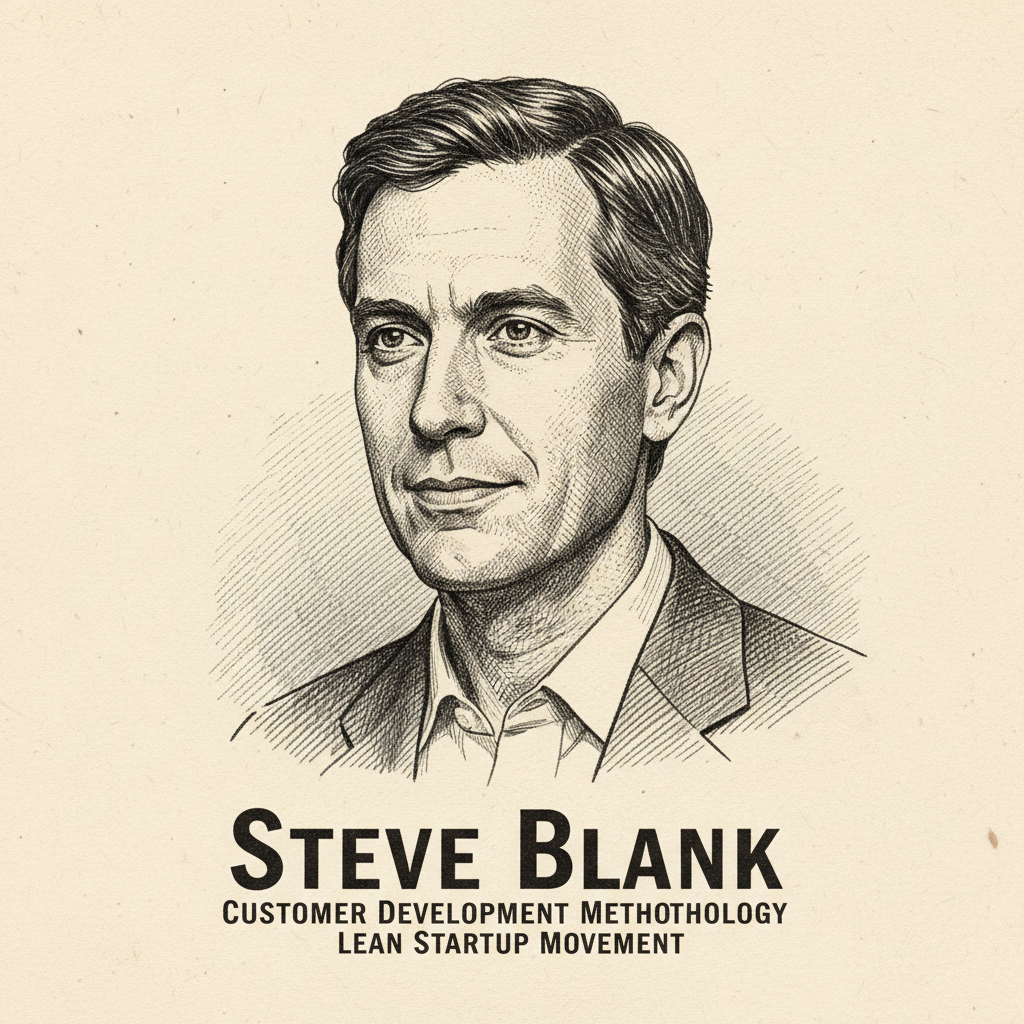
Jim Collins
Jim Collins is a seminal management researcher, author, and lecturer known for his rigorous, empirically-driven analysis of what makes great companies endure and excel.
Jim Collins is an American business consultant, author, and lecturer focusing on company longevity and success. His research-based books, including "Built to Last," "Good to Great," and "Great by Choice," analyze what enables certain companies to achieve superior, sustainable performance. Collins' work is distinguished by its empirical methodology, often involving extensive historical data analysis and comparison groups.
Biography
Accomplishments
- 01Co-authored "Built to Last: Successful Habits of Visionary Companies" (1994) with Jerry I. Porras, a landmark study that introduced concepts like BHAG and the Clock-Building, Not Time-Telling principle.
- 02Authored "Good to Great: Why Some Companies Make the Leap... and Others Don't" (2001), which became a national bestseller and defined concepts like Level 5 Leadership, the Hedgehog Concept, and the Flywheel Effect.
- 03Authored "Great by Choice: Uncertainty, Chaos, and Luck – Why Some Thrive Despite Them All" (2011) with Morten T. Hansen, exploring how companies achieve exceptional performance in turbulent environments.
- 04Established a management research laboratory in Boulder, Colorado, enabling long-term, independent research into corporate performance and leadership.
- 05Authored "How the Mighty Fall: And Why Some Companies Never Give In" (2009), analyzing the stages of decline in companies and offering insights on preventing institutional collapse.
- 06Became a thought leader whose frameworks are widely adopted by Fortune 500 companies, startups, and non-profits, evidenced by his ongoing speaking engagements and consulting with top-tier organizations.
Lessons for Operators
Key Takeaways
Practical lessons distilled for operators, investors, C-levels, and capital allocators.
Empirical Rigor Over Anecdote
Collins' work is predicated on extensive, multi-decade data analysis comparing successful companies to carefully selected comparator companies. Action for leaders: Base strategic decisions on rigorous data and thorough investigation, not just intuition or fashionable trends. Challenge assumptions with evidence.
People First, Strategy Second
The concept of 'First Who, Then What' emphasizes the primacy of talent. Great companies first get the right people in place (and the wrong people out) before charting a course. Action for leaders: Prioritize talent acquisition and development. Ruthlessly remove underperformers and those who don't align with core values. A great team can figure out the right strategy.
Disciplined Thought and Action
Collins highlights the critical role of disciplined thought (e.g., Hedgehog Concept, confronting brutal facts) and disciplined action (e.g., Flywheel, 20-Mile March). Action for leaders: Instill a culture of disciplined execution. Clearly define your Hedgehog Concept and apply the Stockdale Paradox to navigate crises with clear-eyed optimism.
Building for Enduring Greatness
His research consistently points to companies that understand the difference between 'clock-building' (creating mechanisms for sustained success) and 'time-telling' (having a charismatic leader or single great product). Action for leaders: Focus on building robust systems, culture, and leadership development programs that can outlast any single product, market cycle, or individual leader. Think institution, not just transaction.
Leadership Character is Paramount
Level 5 Leadership underscores that ego-driven leaders rarely build enduringly great companies. Humility, combined with unwavering professional will, is key. Action for leaders: Self-assess your leadership style. Foster a culture where results are celebrated and attributed to the team, and shortcomings are owned personally by leadership. Seek leaders who possess both humility and fierce resolve.
Greatness is a Choice Under Any Conditions
"Great by Choice" demonstrates that even in turbulent, unpredictable environments, certain companies achieve extraordinary results. This is due to specific, disciplined behaviors like the 20-Mile March and productive paranoia. Action for leaders: Don't use external volatility as an excuse for underperformance. Implement consistent, disciplined performance metrics (20-Mile March) and anticipate multiple failure scenarios (productive paranoia).
Frameworks & Principles
Named frameworks and strategic principles they popularized or embodied.
Level 5 Leadership
Leaders who possess a paradoxical blend of extreme personal humility and intense professional will. They are fiercely ambitious, but their ambition is channeled into the company's success rather than personal gain.
When to useWhen evaluating or developing leadership. Applicable at all levels, but particularly crucial for CEO and executive committee appointments. Use it to understand and cultivate leadership that builds enduring value rather than transient success.
The Hedgehog Concept
An organization's clear, simple concept that flows from understanding the intersection of three circles: 1) what you can be the best in the world at, 2) what you are deeply passionate about, and 3) what drives your economic engine.
When to useWhen defining or refining your organization's core strategy and focus. Essential for startups and established enterprises seeking clarity, avoiding diversification, and focusing resources to achieve world-class distinction. Use it during strategic planning cycles.
The Flywheel Effect
A concept where a series of small, consistent efforts compound over time, building momentum incrementally and creating a self-reinforcing loop that ultimately leads to breakthrough results.
When to useWhen designing or analyzing business models and growth strategies. Helps articulate how different initiatives connect and build on one another. Use it to explain how consistent, disciplined effort, rather than a single 'big bang,' drives long-term success, and to identify the sequence of actions that generate momentum.
First Who, Then What
The principle that great companies first get the right people 'on the bus,' the wrong people 'off the bus,' and the right people in the right seats, and only then figure out where to drive the bus.
When to useWhen making hiring decisions, team structuring, or organizational restructuring. Prioritize talent assessment and cultural fit above all else. Use it to ensure that your strategic plans are built upon a foundation of capable and aligned individuals.
The 20-Mile March
Consistent, disciplined performance over a long period, characterized by setting a clear, difficult, but achievable performance target (e.g., growing 20% every year) and sticking to it, whether conditions are favorable or unfavorable.
When to useWhen establishing performance goals and operational rhythms, particularly in volatile or unpredictable environments. Useful for instilling discipline, preventing overreach during boom times, and maintaining momentum during downturns. Apply it to financial targets, product development cycles, or any key operational metric.
Explore Related Titans
Other figures in the archive who share Jim Collins's domain, geography, or era.
More in Other

From United States









Contemporaries — born 1950s