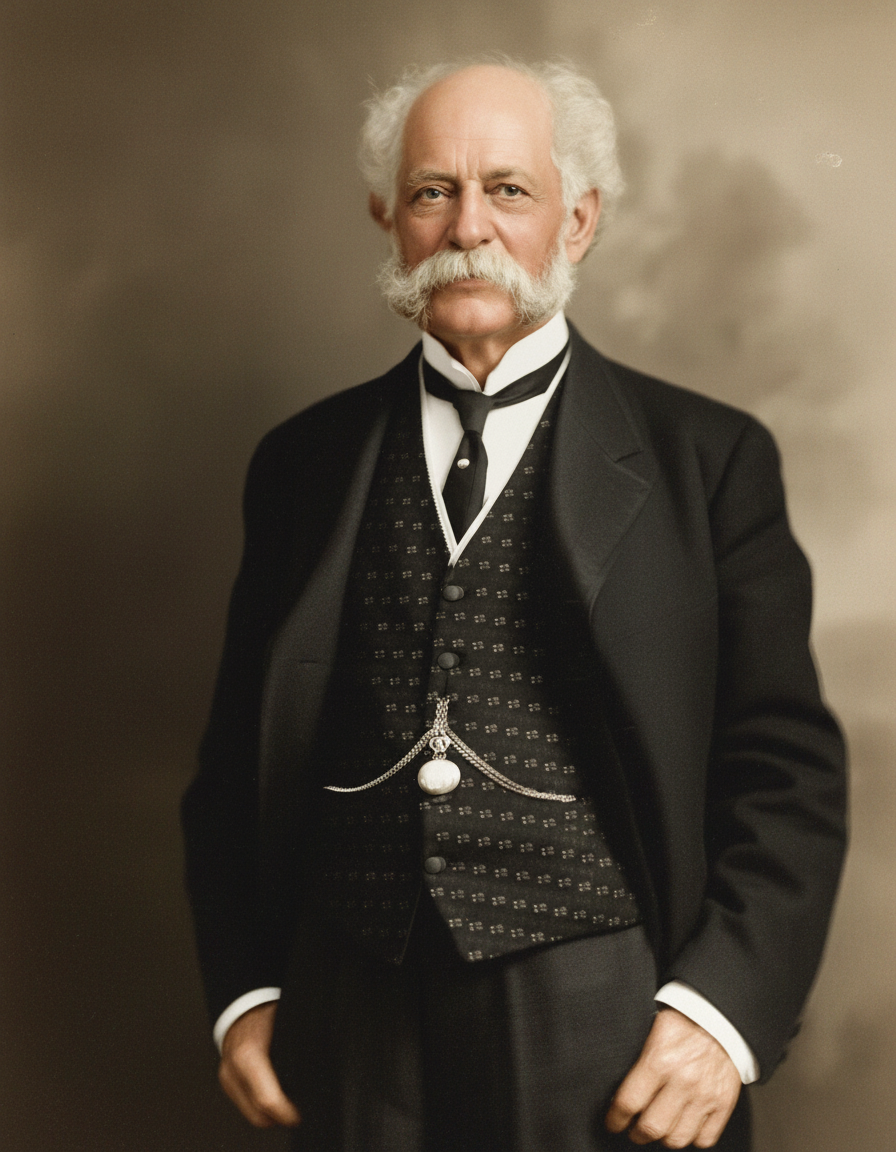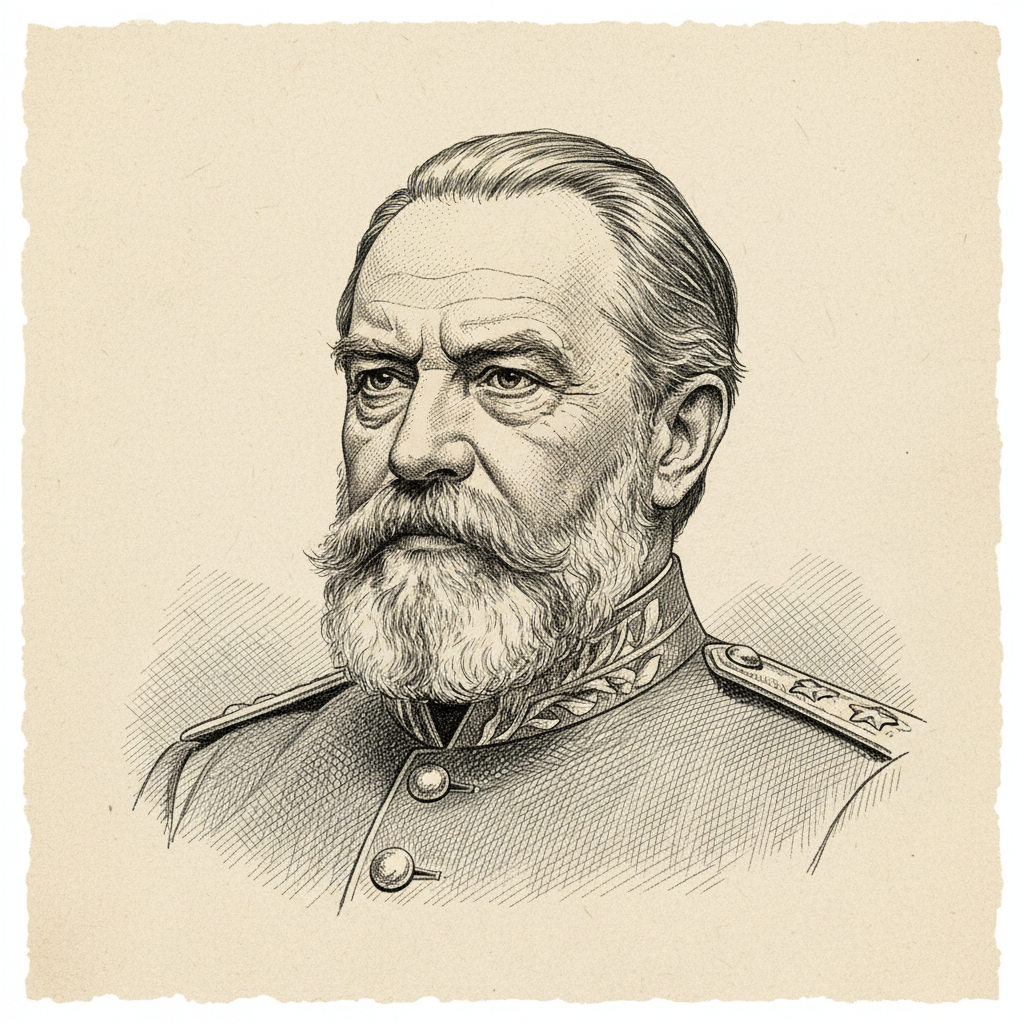
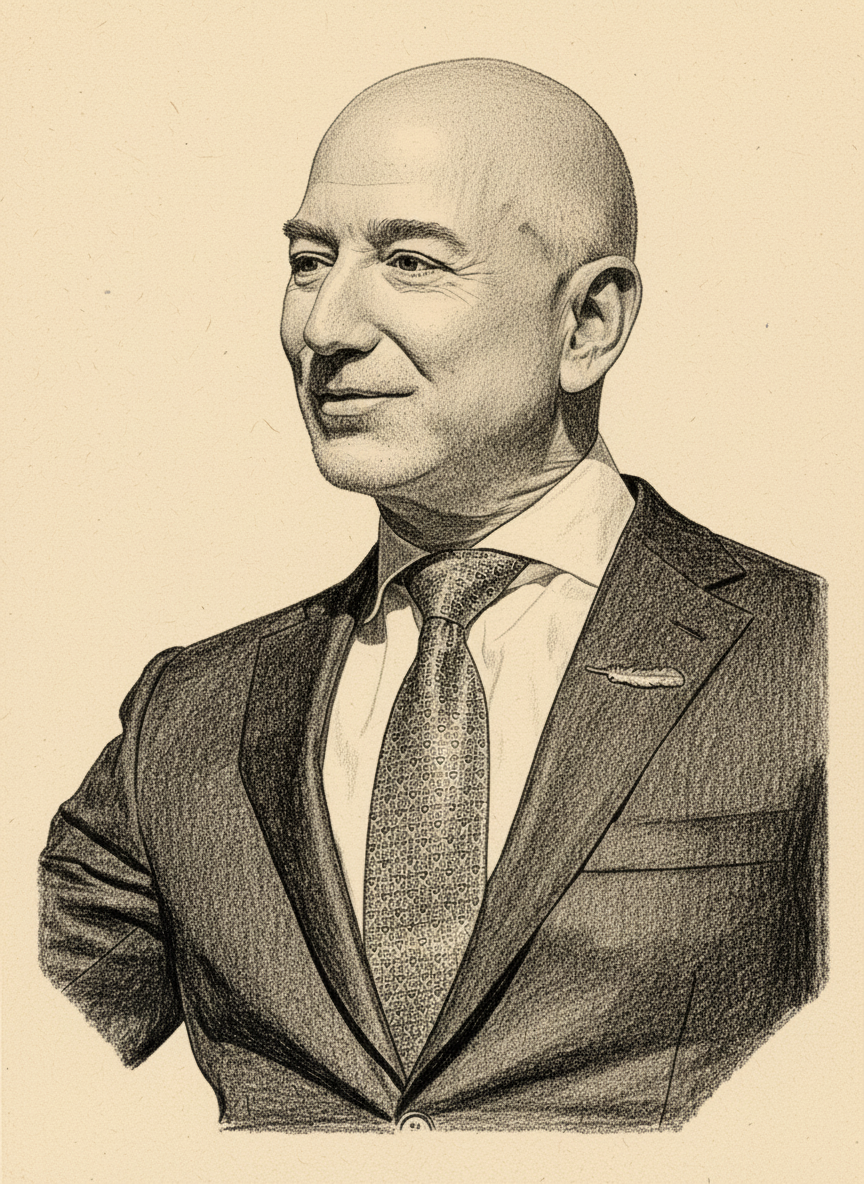
Henry Ford
The architect of mass production, democratizing the automobile through efficiency and scale.
Henry Ford revolutionized industrial manufacturing with the introduction of the assembly line, transforming the automobile from a luxury item to a necessity for the average American family. His dedication to efficiency, cost reduction, and fair wages defined an era of unprecedented economic growth and established enduring principles of modern industry.
Biography
Accomplishments
- 01Founded Ford Motor Company in 1903, growing it into one of the world's largest and most influential industrial enterprises.
- 02Pioneered the moving assembly line for automobile production in 1913, drastically reducing manufacturing time and costs.
- 03Introduced the Model T in 1908, making the automobile accessible to the middle class and catalyzing the automotive industry's growth.
- 04Implemented the 'Five-Dollar Day' in 1914, doubling worker wages and reducing the workday to eight hours, establishing new standards for industrial labor practices.
- 05Achieved unprecedented vertical integration within Ford Motor Company, controlling raw material production and transportation to optimize efficiency and cost.
- 06Established a global manufacturing presence, setting up plants in numerous countries, including England (1911) and France (1908), enabling international market penetration.
Lessons for Operators
Key Takeaways
Practical lessons distilled for operators, investors, C-levels, and capital allocators.
Democratization through Efficiency
Ford's core strategy was to make a product so affordable that nearly everyone could own it. This was achieved not through sacrificing quality, but by revolutionary efficiency gains in production. This demonstrates that market expansion often occurs at the intersection of innovation and accessibility.
The Strategic Wage
The 'Five-Dollar Day' was not merely altruistic; it was a calculated investment. It reduced turnover, attracted skilled labor, boosted worker morale, and, crucially, created a new demographic of consumers who could afford Ford's very own products. This illustrates how labor policy can be a powerful market and operational strategy.
Power of the Production System
While the Model T was a good product, the moving assembly line was the true game-changer. Ford understood that the 'how' of production was as critical, if not more so, than the 'what.' Leaders should scrutinize and optimize their operational systems as fiercely as their product offerings.
Vertical Integration for Control
Ford's aggressive vertical integration, from mines to transportation, allowed him unparalleled control over his supply chain, costs, and quality. While less common today due to globalization and specialization, the principle of securing critical inputs remains vital for managing risk and achieving competitive advantage.
Iteration and Persistence
Ford's success was not immediate; he founded two prior automotive companies that failed. This underscores the necessity of iterative learning, adapting from failures, and persistent pursuit of a vision, even when initial ventures do not succeed.
Frameworks & Principles
Named frameworks and strategic principles they popularized or embodied.
Fordism (Mass Production, Standardization, High Wages)
A paradigm of industrial manufacturing characterized by large-scale production of standardized goods using assembly lines, coupled with high wages for workers to enable mass consumption. It emphasizes efficiency, division of labor, and cost reduction.
When to useApplicable for businesses seeking to achieve significant economies of scale, reduce per-unit costs, and penetrate mass markets with standardized products. Useful when labor stability and consumer purchasing power are critical success factors.
Moving Assembly Line
A manufacturing process where items are moved from one workstation to another in a continuous flow, with each station performing a specific, specialized task. This minimizes wasted motion and time, significantly increasing production speed and efficiency.
When to useIdeal for industries requiring high-volume manufacturing of identical or highly similar products. Useful for optimizing throughput, reducing labor costs, and maintaining consistent quality in repetitive tasks.
Strategic Wage Policy
The practice of paying workers wages significantly above market rates, not just for ethical reasons, but as a deliberate business strategy to reduce turnover, increase productivity, attract top talent, and stimulate consumer demand for the company's products.
When to useConsidered when employee retention is critical, attracting skilled labor is competitive, and when workers' disposable income can directly translate into demand for the company's own offerings. Requires analysis of the cost-benefit trade-off between higher wages and increased productivity/reduced recruitment costs.
Sources & Further Reading
Profiles, interviews, podcasts, and articles used to compile and verify this entry. Each link opens at the original publisher.
Explore Related Titans
Other figures in the archive who share Henry Ford's domain, geography, or era.
More in Transportation & Logistics








From United States








Contemporaries — 19th century