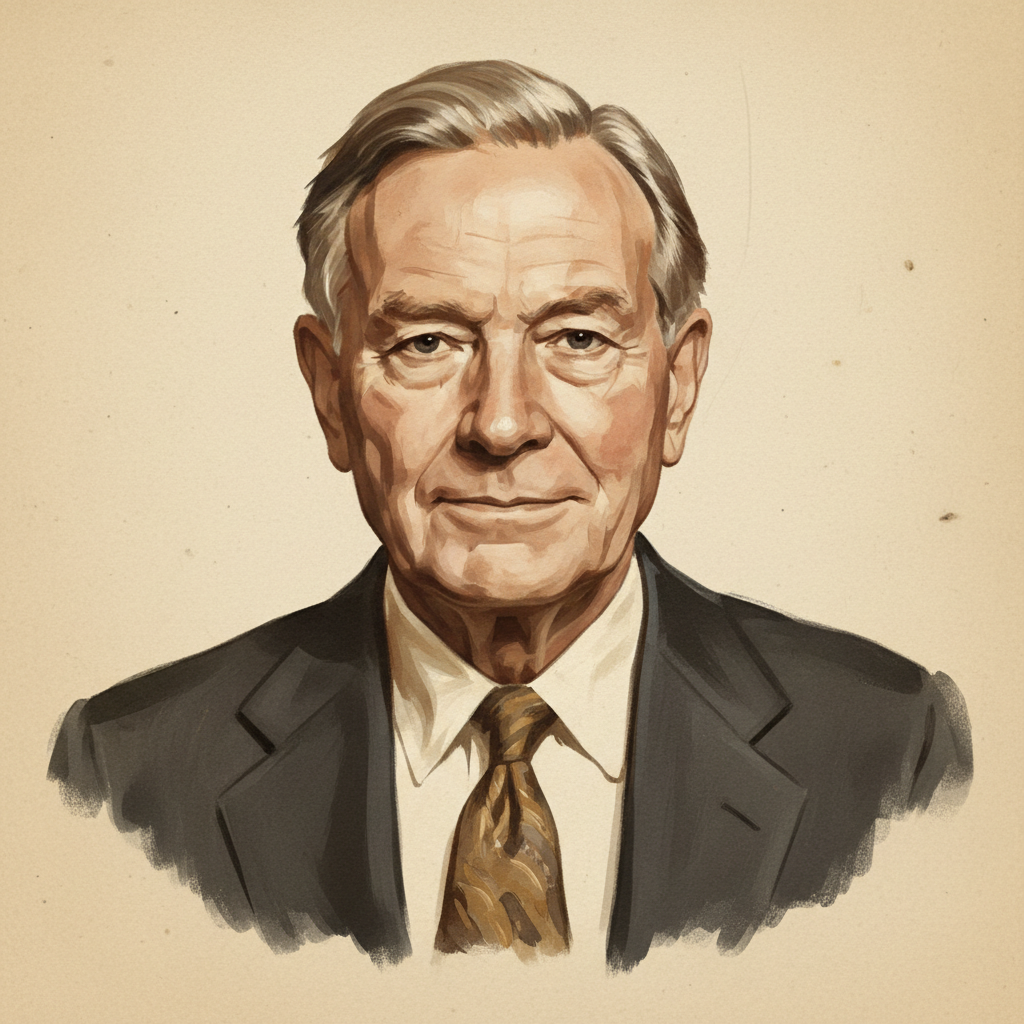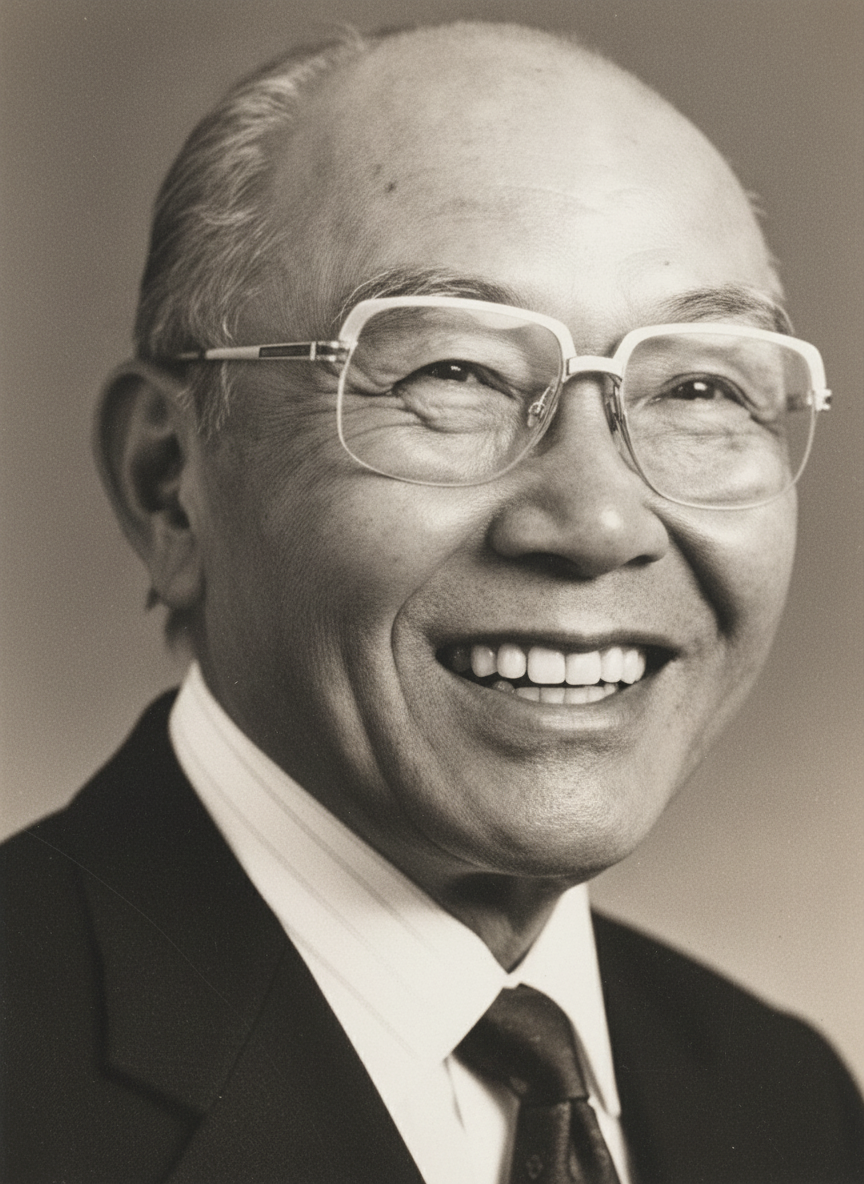
Soichiro Honda
From garage mechanic to global automotive titan, Soichiro Honda built a legacy grounded in engineering prowess and entrepreneurial zeal.
Soichiro Honda was a Japanese engineer and industrialist. In 1948, he established Honda Motor Co., Ltd. and oversaw its expansion from a wooden shack manufacturing bicycle motors to a multinational automobile and motorcycle manufacturer.
Biography
Accomplishments
- 01Established Honda Motor Co., Ltd. in 1948, evolving it from a bicycle motor manufacturer into a global automotive and motorcycle powerhouse.
- 02Led Honda to become the world's largest motorcycle manufacturer by 1959, demonstrating rapid scaling and market dominance.
- 03Successfully entered the highly competitive U.S. automotive market with models like the Honda 600 and the Civic, establishing a reputation for fuel efficiency and reliability.
- 04Championed the development of the Compound Vortex Controlled Combustion (CVCC) engine in 1972, which met stringent U.S. Clean Air Act standards without a catalytic converter, showcasing pioneering environmental engineering.
- 05Oversaw Honda's sustained global expansion, establishing manufacturing and sales operations across North America, Europe, and Asia.
- 06Cultivated a strong engineering culture within Honda, emphasizing hands-on development and problem-solving.
Lessons for Operators
Key Takeaways
Practical lessons distilled for operators, investors, C-levels, and capital allocators.
Engineering as the Core Differentiator
Honda's continuous investment in sophisticated engineering and R&D (e.g., CVCC engine) provided distinct competitive advantages. Organizations should view R&D not as a cost center, but as a strategic asset for sustained leadership and market disruption.
Adapt Through Market Observation
Honda adapted from piston rings to motorcycles to automobiles, always identifying gaps or emerging needs. Leaders must possess acute market observation skills and the agility to pivot their business model or product offerings in response to evolving demand.
Global Ambition from Inception
Despite humble beginnings, Honda built an enterprise with global aspirations, evidenced by early motorcycle racing and subsequent international automobile sales. Businesses should plan for scalability and international reach from their foundational stages, rather than treating it as an afterthought.
Empower Technical Talent
Honda's success was inextricably linked to empowering his engineers and fostering a 'hands-on' approach. For modern enterprises, this translates to creating autonomous teams, investing in continuous learning, and recognizing technical contributions as central to corporate success.
Quality and Efficiency as Brand Pillars
Honda's brand became synonymous with durable, efficient, and reliable products. Enterprises seeking long-term customer loyalty and market share must embed quality control and efficiency throughout their operations and product development cycles.
Frameworks & Principles
Named frameworks and strategic principles they popularized or embodied.
The Honda Way (Core Values)
A set of guiding principles, including 'Respect for the Individual' and 'The Three Joys' (the joy of buying, the joy of selling, and the joy of creating). It emphasizes human-centric management, innovation, and global perspective.
When to useApplicable for C-levels and enterprise leaders when establishing corporate culture, designing HR policies, or defining organizational purpose, especially in R&D-intensive industries.
Genchi Genbutsu (Go and See)
Although more associated with Toyota, Soichiro Honda embodied this principle by being directly involved in engineering, visiting factories, and understanding problems firsthand. It advocates for going to the source to gather facts and make informed decisions.
When to useOperators and project managers should use this when troubleshooting, conducting root cause analysis, or making critical operational decisions, rather than relying solely on secondhand reports or data.
Kaizen (Continuous Improvement)
A philosophy focusing on continuous improvement of processes, operations, and products. Honda's iterative development, from early piston rings to advanced engines, exemplifies this. It champions small, ongoing positive changes.
When to useApplicable across all levels – from individual contributors improving their tasks to strategic leaders optimizing organizational workflow or product lines. Essential for maintaining competitiveness and adapting to market shifts.
Sources & Further Reading
Profiles, interviews, podcasts, and articles used to compile and verify this entry. Each link opens at the original publisher.
Explore Related Titans
Other figures in the archive who share Soichiro Honda's domain, geography, or era.
More in Transportation & Logistics


From Japan

Contemporaries — 20th century