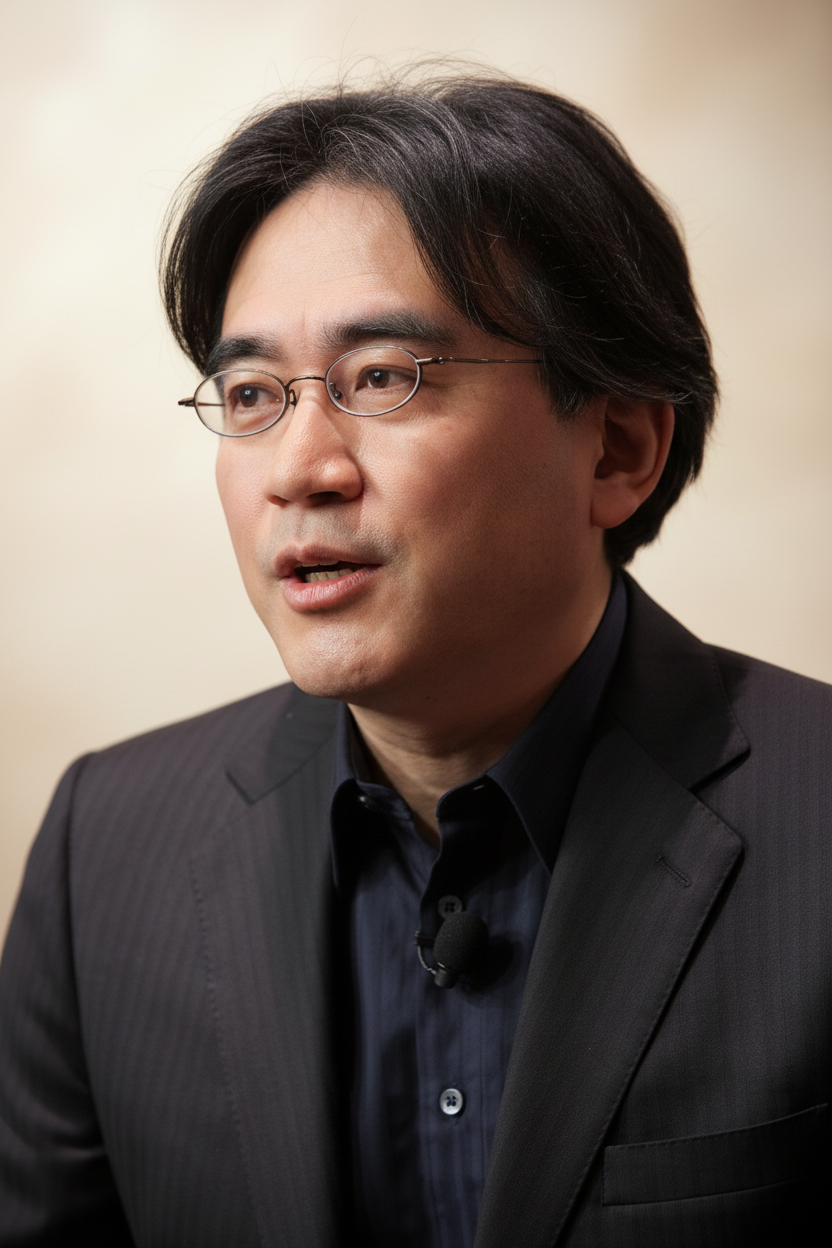
Satoru Iwata
The programmer-CEO who prioritized joy and accessibility, revitalizing Nintendo through innovation in game design and hardware.
Satoru Iwata was a visionary Japanese programmer and business leader who served as the fourth President and CEO of Nintendo from 2002 until his death in 2015. Starting his career at HAL Laboratory, he was instrumental in developing iconic games like 'Kirby' and 'EarthBound.' At Nintendo, he orchestrated the company's remarkable turnaround with the Nintendo DS and Wii, focusing on expanding the gaming audience beyond traditional enthusiasts through intuitive design and innovative hardware.
Biography
Accomplishments
- 01Orchestrated the development and launch of the Nintendo DS (2004), selling over 154 million units globally and pioneering dual-screen handheld gaming.
- 02Led the creation and release of the Nintendo Wii (2006), which sold over 101 million units worldwide and introduced motion-controlled gaming to a mainstream audience.
- 03Successfully expanded the video game market by attracting non-traditional gamers, revitalizing Nintendo's market position against competitors like Sony and Microsoft.
- 04Implemented the 'blue ocean' strategy, focusing on differentiation and creating new market space rather than competing head-on in existing segments.
- 05Pioneered direct-to-consumer communication through 'Nintendo Direct' presentations, enhancing corporate transparency and fan engagement.
- 06Stabilized and grew HAL Laboratory as President (1993-2000), rescuing it from financial distress through strategic product development.
- 07Maintained a strong corporate culture focused on joy, creativity, and unique gameplay experiences throughout his tenure at Nintendo.
- 08Championed internal game development and fostered a collaborative environment between hardware and software teams.
Lessons for Operators
Key Takeaways
Practical lessons distilled for operators, investors, C-levels, and capital allocators.
The Power of Differentiation
Nintendo under Iwata proved that market leadership can be achieved by creating new demand rather than merely capturing existing demand. The Wii's focus on accessibility and motion control carved out a distinct market segment, avoiding direct competition with more powerful consoles.
User-Centric Innovation
Iwata's philosophy prioritized 'fun' and 'accessibility' over raw technical specifications. This led to hardware and software designs that were intuitive and engaging for a wide range of users, demonstrating that understanding user needs is paramount for mass market adoption.
Leadership Through Authenticity
Iwata's direct and humble communication style, epitomized by 'Nintendo Direct' and 'Iwata Asks,' built strong trust with both consumers and employees. This transparency fostered a loyal community and reinforced Nintendo's brand values.
Strategic Market Expansion
Instead of battling for hardcore gamers, Iwata aimed to 'expand the gaming population.' This strategic shift opened up massive new revenue streams and brought gaming into households that traditionally did not engage with video games.
Integrity in Crisis
His decision to take a substantial pay cut during a period of financial difficulty for Nintendo, while ensuring no employee layoffs, exemplified responsible leadership and preserved institutional knowledge and morale.
Hardware-Software Synergy
Iwata ensured tight integration between hardware and software development, a core Nintendo strength. This allowed for unique experiences that fully leveraged the capabilities of platforms like the DS and Wii, creating compelling value propositions.
Visionary Product Leadership
As a former developer, Iwata possessed a deep understanding of product creation, enabling him to personally champion and guide key projects from conception to market, ensuring alignment with his strategic vision.
Long-Term Value Creation
His strategies focused on building long-term brand equity and customer relationships through memorable experiences, rather than short-term gains, positioning Nintendo for sustained success beyond immediate product cycles.
Frameworks & Principles
Named frameworks and strategic principles they popularized or embodied.
Blue Ocean Strategy (Adapted)
A strategic framework for creating new, uncontested market spaces ('blue oceans') by differentiating from competitors and generating new demand, rather than competing in existing, saturated markets ('red oceans'). Nintendo under Iwata exemplified this by targeting non-gamers with the DS and Wii.
When to useWhen facing intense competition in a mature market, or when seeking to expand your total addressable market beyond current customer segments. Focus on non-customers and value innovation to create a new demand curve.
User-Centric Design Thinking
An iterative process focusing on understanding the end-user's needs, behaviors, and motivations. Iwata consistently emphasized 'fun' and 'accessibility' as core design tenets for Nintendo's hardware and software, leading to products like Wii Sports and Brain Age.
When to useWhen developing new products or services, especially in consumer-facing industries. Start with empathy for the user, prototype solutions, and iterate based on feedback to ensure the final product truly meets user needs and desires.
Direct-to-Consumer (D2C) Communication
A communication strategy where a company directly engages its audience without intermediaries. Iwata pioneered this in the video game industry with 'Nintendo Direct' presentations, fostering transparency and building a direct relationship with fans.
When to useTo build brand loyalty, gather direct feedback, control narrative, and communicate product updates or company vision without media gatekeepers. Essential for brands seeking authenticity and community engagement.
Hardware-Software Co-Development
A product development approach where hardware and software teams work in tandem, influencing each other's design choices to create a unified, optimized, and unique user experience. Nintendo’s success with the DS and Wii relied heavily on this synergy.
When to useIn industries where physical products and digital interfaces are intrinsically linked (e.g., consumer electronics, IoT, automotive). Ensures that the full potential of both hardware and software is realized, leading to differentiated products.
Recent Appearances
Latest interviews, keynotes, and press from the past half year.
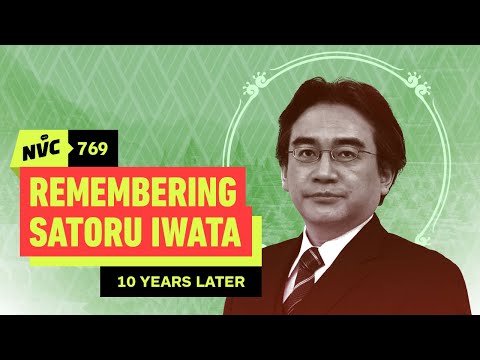 youtube.com
 youtube.com
 youtube.com
 youtube.com
 youtube.com
 youtube.com
 youtube.com
 youtube.com
 youtube.com
 youtube.com
 youtube.com
 youtube.com
 youtube.com
 m.youtube.com
 youtube.com
 youtube.com
 youtube.com
 youtube.com
 youtube.com
 youtube.com
 youtube.com
 youtube.com
 youtube.com
 youtube.com
 youtube.com
 youtube.com
 youtube.com
 youtube.com
 m.youtube.com
 m.youtube.com
 youtube.com
 youtube.com
 m.youtube.com
 m.youtube.com
 youtube.com
 youtube.com
 youtube.com
Sources & Further Reading
Profiles, interviews, podcasts, and articles used to compile and verify this entry. Each link opens at the original publisher.
Explore Related Titans
Other figures in the archive who share Satoru Iwata's domain, geography, or era.
More in Media & Entertainment








From Japan






Contemporaries — born 1950s