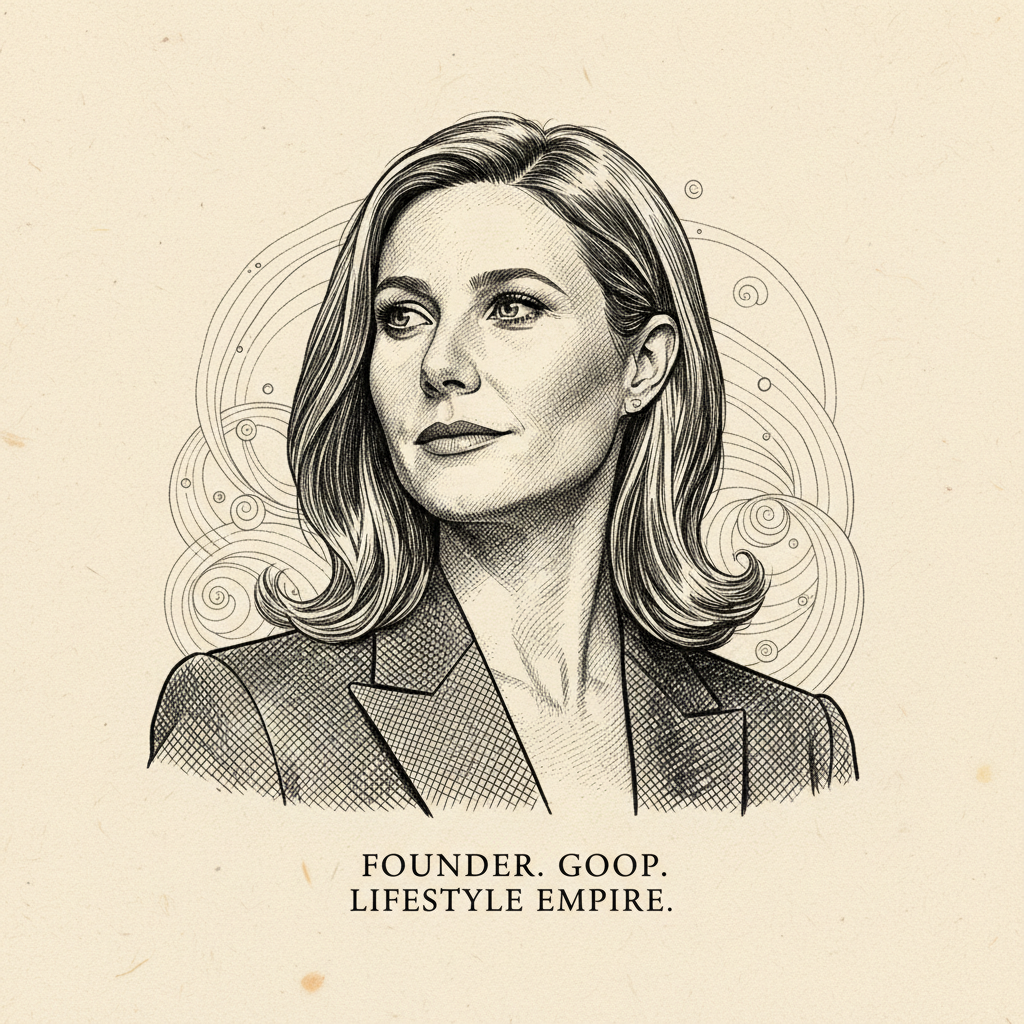
Gwyneth Paltrow
From Oscar-winning actress to pioneering wellness entrepreneur, Gwyneth Paltrow leveraged personal brand into a diversified lifestyle empire, Goop.
Gwyneth Paltrow is an American actress, author, and businesswoman. She founded Goop, a lifestyle brand, in 2008, initially as a weekly newsletter offering health and wellness advice. Under her leadership, Goop evolved into a prominent e-commerce platform, media company, and physical retail presence, securing significant venture capital and establishing Paltrow as a key figure in the wellness industry.
Biography
Accomplishments
- 01Founded Goop in 2008, growing it from a newsletter into a diversified lifestyle brand with e-commerce, media, and retail operations.
- 02Successfully raised significant venture capital funding rounds for Goop, including investments from NEA and Lightspeed Venture Partners.
- 03Expanded Goop into new verticals, including a Netflix series ('The Goop Lab'), print magazines, and a proprietary product line across beauty, supplements, and fashion.
- 04Pioneered the celebrity-as-founder model in the wellness industry, demonstrating effective leveraging of personal brand for commercial enterprise.
- 05Achieved a valuation for Goop exceeding 'mid-nine figures' by 2016, indicative of substantial market penetration and growth potential.
- 06Maintained creative and strategic leadership at Goop, transitioning from CEO to Chief Creative Officer while remaining its public figurehead.
Lessons for Operators
Key Takeaways
Practical lessons distilled for operators, investors, C-levels, and capital allocators.
Leveraging Brand Equity
Paltrow's initial success with Goop demonstrates that significant personal brand equity, cultivated over years in a high-profile field, can be effectively converted into entrepreneurial capital. This allows for rapid market entry and trust-building within a target demographic.
Strategic Market Segmentation
Goop initially targeted an affluent, health-conscious demographic, enabling it to command premium pricing and foster a loyal community. This focused approach allowed for iterative product development and content creation tailored to a receptive audience, before attempting wider market appeal.
Ecosystem Development Over Single Product Focus
Instead of launching a single product, Paltrow built an ecosystem around lifestyle. Goop's progression from editorial content to e-commerce, eventually into media production (Netflix) and physical retail, illustrates the value of creating a holistic brand experience that captures consumer attention across multiple touchpoints.
Navigating Public Scrutiny
Goop frequently faced controversies and regulatory challenges regarding its product claims. Paltrow's persistence and Goop's continued growth underscore the importance of robust legal counsel and a clear communication strategy to sustain a brand amidst public critique, especially in sensitive sectors like wellness.
Founder's Role Evolution
Paltrow's move from CEO to Chief Creative Officer highlights a critical decision point for founders: recognizing when to delegate day-to-day operational leadership to experienced executives, while retaining strategic and brand oversight. This allows for scalability and sustained vision.
Monetization of Trust and Curation
Goop's business model is largely built on its perceived ability to curate and validate products and experiences. The success demonstrates that consumers are willing to pay a premium for trusted recommendations and aesthetically aligned offerings, even in competitive markets.
Frameworks & Principles
Named frameworks and strategic principles they popularized or embodied.
Celebrity-to-CEO Transition Model
A framework for high-profile individuals to effectively transition from celebrity status to business leadership, focusing on leveraging existing brand equity, strategic team building, and long-term vision beyond endorsement deals.
When to useApplicable for public figures seeking to build sustainable enterprises, rather than transient partnerships. Requires understanding of brand dilution risks and the need for genuine product development/market fit.
Lifestyle-as-a-Service (LaaS)
An approach where a brand provides comprehensive content, products, and services that align with and enhance a desired consumer lifestyle, creating a holistic ecosystem rather than individual transactions.
When to useUseful for brands in the wellness, fashion, home goods, or travel sectors aiming to build deep customer loyalty and maximize customer lifetime value by integrating various offerings under a unified aspirational umbrella.
Omnichannel Content-to-Commerce (C2C) Strategy
A strategy emphasizing the seamless integration of compelling editorial or media content across multiple platforms (online, print, video) with direct purchasing pathways, driving sales through education and engagement.
When to useIdeal for e-commerce businesses and consumer brands looking to enhance customer engagement, reduce customer acquisition costs, and build a stronger brand narrative that directly translates into sales, especially in discovery-led categories.
Sources & Further Reading
Profiles, interviews, podcasts, and articles used to compile and verify this entry. Each link opens at the original publisher.
Explore Related Titans
Other figures in the archive who share Gwyneth Paltrow's domain, geography, or era.
More in Media & Entertainment






From United States






Contemporaries — born 1970s