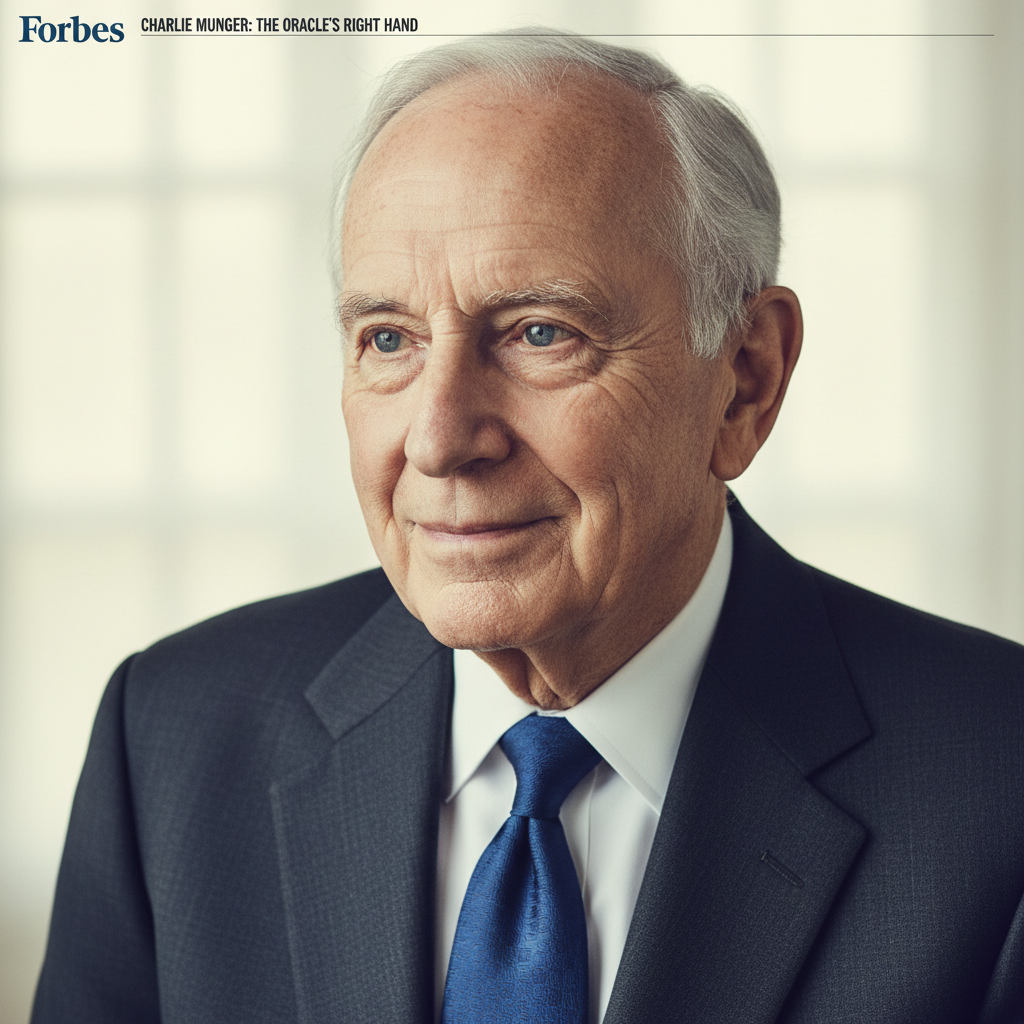
Charlie Munger
The architect of modern value investing at Berkshire Hathaway, known for his multidisciplinary approach and acerbic wit.
Charles 'Charlie' Munger was an American investor, businessman, and former real estate attorney. He served as Vice Chairman of Berkshire Hathaway, the conglomerate controlled by Warren Buffett. Munger was instrumental in shaping Buffett's investment philosophy, advocating for a focus on high-quality businesses with durable competitive advantages rather than purely quantitative 'cigar butt' investing.
Biography
Accomplishments
- 01Co-architect of Berkshire Hathaway's investment philosophy, shifting from 'cigar butt' investing to acquiring high-quality businesses with durable competitive advantages.
- 02Achieved a 19.8% annualized return at Wheeler, Munger, and Co. from 1962-1975, significantly outperforming market indices.
- 03Instrumental in key Berkshire Hathaway acquisitions and investments, including See's Candies (1972), which proved a highly profitable and resilient asset, and the long-term investment in Coca-Cola.
- 04Developed and popularized the 'Latticework of Mental Models' framework, advocating for a multidisciplinary approach to problem-solving and decision-making.
- 05Served as Chairman of Wesco Financial Corporation from 1984 to 2011, which operated successfully as a subsidiary of Berkshire Hathaway, mirroring its investment principles.
- 06Authored 'Poor Charlie's Almanack,' a compilation of his speeches and writings, offering deep insights into investment, business, and human psychology.
Lessons for Operators
Key Takeaways
Practical lessons distilled for operators, investors, C-levels, and capital allocators.
The Power of Compounding Quality
Investing in durable businesses with strong competitive advantages, even if at a seemingly higher initial price, leads to superior long-term returns. Focusing solely on 'cheap' assets often results in acquiring 'lemon' businesses.
Multidisciplinary Thinking for Edge
A broader knowledge base from various fields provides a unique perspective that allows for better problem identification, deeper understanding of value drivers, and the avoidance of common errors. Relying solely on one domain's expertise is limiting.
Rationality as a Competitive Advantage
The ability to think logically and avoid emotional decision-making, particularly during market extremes, is a rare and invaluable asset. Understanding and countering psychological biases is critical for sustained success.
Long-Term Partnership Mentality
Building relationships with exemplary business leaders and holding onto well-run businesses for decades, rather than trading in and out, maximizes the compounding effect and minimizes transaction costs and taxes.
Ruthless Honesty and Learning from Mistakes
A willingness to admit errors, learn from both one's own and others' failures, and adapt one's mental models is essential for continuous improvement and avoiding repeat costly mistakes.
Frameworks & Principles
Named frameworks and strategic principles they popularized or embodied.
Latticework of Mental Models
An approach to understanding the world by applying a combination of fundamental models from diverse academic disciplines (e.g., psychology, economics, mathematics, physics, biology). These models act as tools to analyze complex problems from multiple angles.
When to useWhen making complex business decisions, evaluating investment opportunities, or trying to understand human and market behavior. It prevents narrow thinking and provides a holistic view, helping to anticipate second and third-order consequences.
Inversion Principle
Instead of focusing on how to achieve a desired outcome, think about how to avoid an undesired outcome. By understanding what causes failure, one can minimize the risk of it occurring and thus improve the chances of success.
When to useProblem-solving, risk assessment, and strategic planning. For example, instead of asking 'How can I make this product successful?', ask 'What would make this product fail?' and then address those failure points.
Moat Investing
An investment philosophy focused on identifying businesses with sustainable competitive advantages (economic 'moats') that protect their long-term profits and market share from competitors. These moats can be brand strength, network effects, cost advantages, high switching costs, or intellectual property.
When to useWhen evaluating potential acquisitions or long-term equity investments. It helps identify businesses capable of generating superior returns over an extended period, providing a margin of safety and predictability.
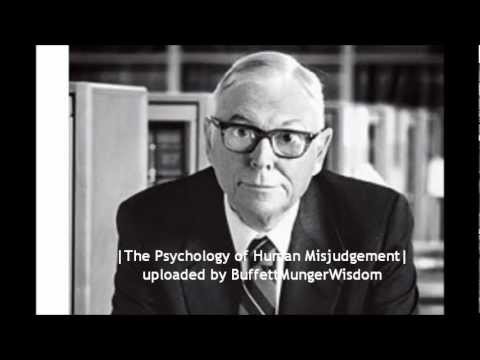
Evergreen Talks & Interviews
Foundational talks, lectures, and interviews worth revisiting.
Sources & Further Reading
Profiles, interviews, podcasts, and articles used to compile and verify this entry. Each link opens at the original publisher.
Explore Related Titans
Other figures in the archive who share Charlie Munger's domain, geography, or era.
More in Finance & Investing









From USA










Contemporaries — 20th century