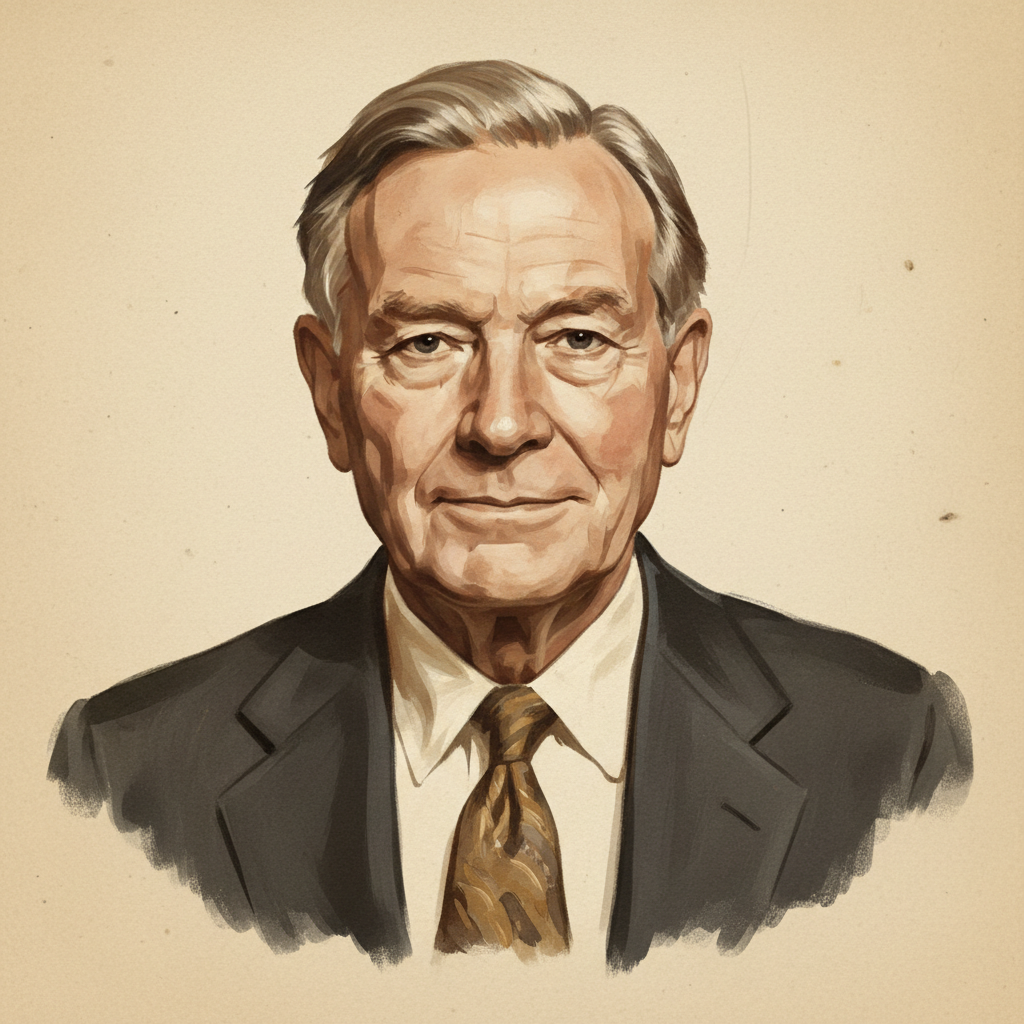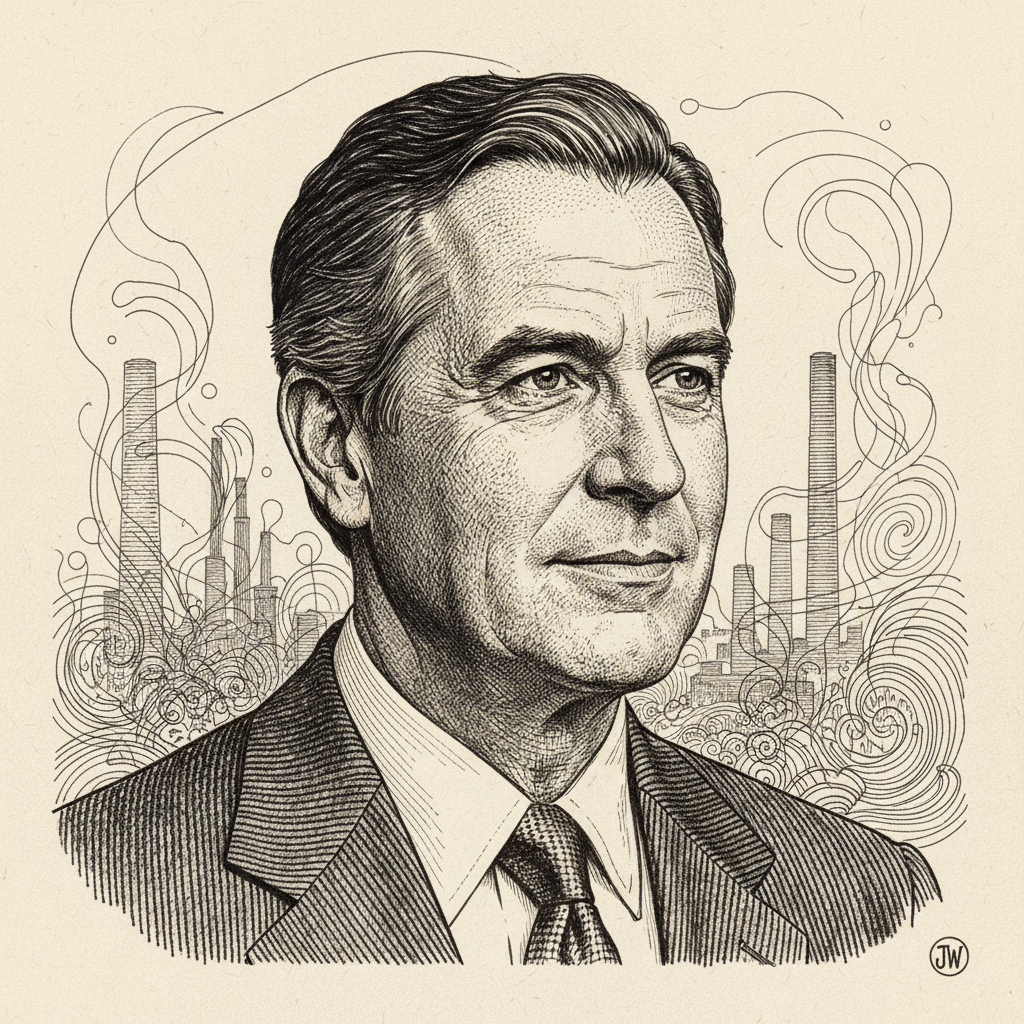
Jack Welch
The architect of modern General Electric, known for radical restructuring and a relentless focus on shareholder value.
John Francis 'Jack' Welch Jr. transformed General Electric (GE) during his 20-year tenure as CEO (1981-2001) from a manufacturing giant into a diversified financial and services powerhouse. He is credited with pioneering aggressive management strategies, including 'rank and Yank,' 'delayering,' and a mandate for GE businesses to be number one or two in their respective markets. Under his leadership, GE's market capitalization grew from $14 billion to over $410 billion.
Biography
Accomplishments
- 01Increased GE's market capitalization from $14 billion in 1981 to over $410 billion by 2001, a 30-fold increase.
- 02Engineered the transformation of GE from primarily a manufacturing concern to a diversified conglomerate with significant presence in financial services (GE Capital) and media (NBC).
- 03Successfully implemented the 'Be No. 1 or No. 2' strategy, leading to the divestiture of over 200 businesses and the acquisition of more than 600.
- 04Integrated Six Sigma quality initiatives across GE, resulting in significant cost reductions and performance improvements throughout the 1990s.
- 05Developed a robust leadership development pipeline through rigorous performance metrics and candid feedback, creating a strong talent pool within GE.
Lessons for Operators
Key Takeaways
Practical lessons distilled for operators, investors, C-levels, and capital allocators.
Portfolio Pruning and Growth
Regularly assess every business unit on its market position and growth potential. Drastically divest those that don't meet strict criteria, and aggressively invest in or acquire those that do. This maintains a lean, high-performing portfolio.
Unleash Human Potential (and Cull Underperformers)
Create a culture of candor and accountability. Empower top talent with significant autonomy and rewards, but be decisive in removing poor performers. This 'vitality curve' approach aims to continually elevate the talent pool.
The Power of Scale and Diversification
Leverage a conglomerate structure to spread risk, cross-fertilize ideas, and provide stable cash flows. However, ensure each unit remains focused on being a market leader within its niche, allowing synergies without diluting focus.
Financial Acumen for Industrialists
Understand how a strong financial services arm can bolster industrial operations through customer financing, project funding, and alternative revenue streams. However, maintain strict risk controls and transparency to prevent excessive leverage or opacity.
Culture Eats Strategy for Breakfast
Welch meticulously crafted GE's culture around performance, speed, and boundarylessness. A strong, shared culture can drive strategic execution far more effectively than top-down directives alone.
Frameworks & Principles
Named frameworks and strategic principles they popularized or embodied.
Be No. 1 or No. 2
A strategic imperative for every business unit within GE: each unit must be either the market leader or a strong second-place contender in its respective market. If a unit couldn't achieve this, it was either fixed, sold, or closed.
When to useApplicable for diversified companies or portfolio managers evaluating business unit performance. Use to force difficult strategic decisions on resource allocation and divestment/acquisition targets.
Rank and Yank (Vitality Curve)
An annual employee performance review system where employees are categorized into top 20% (A players), middle 70% (B players), and bottom 10% (C players). The bottom 10% were typically terminated or reassigned, while A players received significant rewards. This was later softened and rebranded as 'differentiation'.
When to useConsider for organizations aiming to rigorously improve talent quality and foster a high-performance culture. Implement with careful consideration of cultural impact, legal implications, and ethical concerns, ensuring clarity in performance expectations and feedback.
Boundaryless Organization
Welch advocated for breaking down traditional internal barriers (organizational, functional, and hierarchical) and external barriers (between GE and its customers/suppliers) to foster open communication, knowledge sharing, and speed.
When to useUtilize when an organization is hindered by silos, slow decision-making, or a lack of innovation. Implement strategies like cross-functional teams, direct communication channels, and open-source collaboration initiatives to encourage fluid information flow.
Sources & Further Reading
Profiles, interviews, podcasts, and articles used to compile and verify this entry. Each link opens at the original publisher.
Explore Related Titans
Other figures in the archive who share Jack Welch's domain, geography, or era.
More in Industrial & Manufacturing









From USA








Contemporaries — 20th century