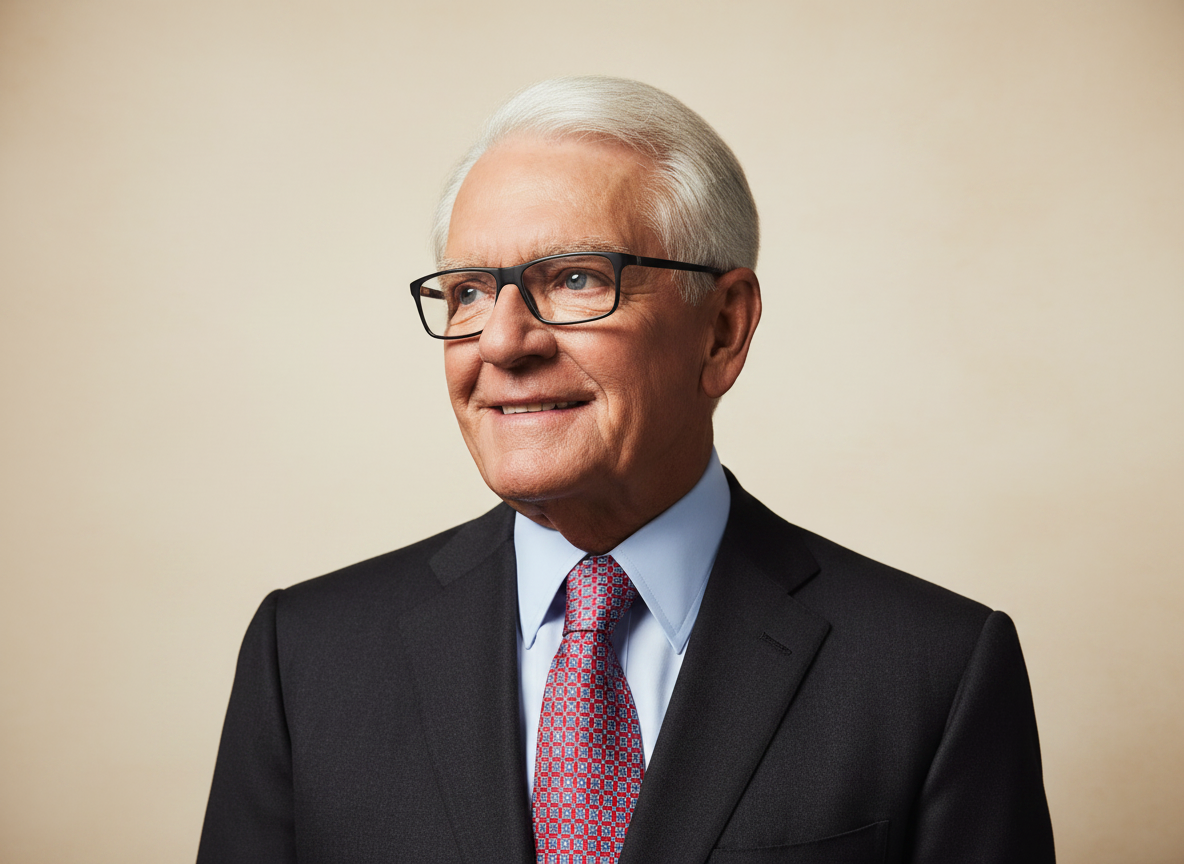
Charles Schwab
Pioneering Discount Brokerage and Democratizing Wealth Management.
Charles R. Schwab revolutionized the financial services industry by democratizing access to investing through discount brokerage, pioneering fee-based advisory services, and leveraging technology to empower individual investors.
Biography
Accomplishments
- 01Founded Charles Schwab & Co. in 1971 and pioneered the discount brokerage model in 1975, fundamentally altering the retail investment landscape by offering low-cost trading after the deregulation of fixed commissions.
- 02Led the company's IPO in 1987, successfully listing on the New York Stock Exchange and securing significant capital for expansion.
- 03Championed the adoption of digital technology in financial services, introducing 24/7 order entry terminals in the 1980s and being among the first to offer online trading in 1996, dramatically expanding accessibility and convenience.
- 04Developed the 'Schwab Mutual Fund Marketplace' in the 1990s, offering investors access to thousands of mutual funds from various providers without transaction fees, creating an open architecture model.
- 05Expanded the company beyond discount brokerage into a full-service financial ecosystem, including banking (Schwab Bank), wealth management, and independent advisor solutions, establishing a diversified revenue stream.
- 06Successfully navigated numerous economic cycles, including the dot-com bust of the early 2000s, by maintaining strong risk management and focusing on core customer value propositions.
Lessons for Operators
Key Takeaways
Practical lessons distilled for operators, investors, C-levels, and capital allocators.
Cost Advantage as a Strategic Weapon
Schwab demonstrated that a sustained focus on reducing costs for the end-user can disrupt entrenched industries and capture significant market share. Operators should constantly evaluate their cost structure relative to the value delivered and look for opportunities to pass savings to customers.
Technology as a Scaler and Enabler
Early and aggressive adoption of technology was central to Schwab's ability to scale operations efficiently, reduce friction, and enhance the customer experience. Leaders should view technology not merely as a support function but as a primary driver of competitive advantage and growth.
Customer-Centric Innovation
Schwab continually innovated with the customer in mind, offering services like 24/7 trading and commission-free mutual funds. This focus on simplifying and democratizing access fosters strong brand loyalty and expands the total addressable market. Understand your customer's pain points and build solutions around them.
Ecosystem Development and Diversification
Beyond brokerage, Schwab built a comprehensive financial ecosystem (banking, advisory, asset management). This diversification creates multiple revenue streams, increases customer stickiness, and provides resilience against market volatility. Consider how to expand adjacent services to deepen customer relationships.
Entrepreneurial Agility in Established Markets
Schwab consistently displayed the agility to pivot and innovate within a highly regulated and established industry. This includes challenging conventional fee structures and embracing new distribution models. Leaders must foster a culture of calculated risk-taking and adaptability.
Brand Building through Transparency
The Schwab brand became synonymous with transparency and putting the customer first, especially in contrast to traditional brokers. A strong, trust-based brand is an invaluable asset that reduces customer acquisition costs and increases lifetime value.
Frameworks & Principles
Named frameworks and strategic principles they popularized or embodied.
Disruption Strategy (Clayton Christensen)
Schwab exemplifies 'low-end market disruption' by offering a simpler, lower-cost alternative to existing complex and expensive full-service brokerage models, initially targeting underserved segments of the market.
When to useApplicable when identifying over-served customers in an existing market with high-cost, high-margin products/services, and creating a simpler, more affordable alternative to gain market entry and eventually move up-market.
Platform Business Model
The Schwab Mutual Fund Marketplace, for instance, operates as a platform connecting mutual fund providers with individual investors, reducing transaction costs and offering choice, similar to a two-sided market.
When to useRelevant when considering how to create value by facilitating interactions between two or more distinct groups (e.g., producers and consumers) while reducing friction and increasing efficiency.
Customer Lifetime Value (CLTV) Optimization
By expanding services beyond trading into banking, advisory, and asset management, Schwab aimed to increase the value derived from each customer over their entire financial journey, reducing churn and maximizing revenue per client.
When to useUseful when designing product roadmaps and marketing strategies to extend customer engagement, cross-sell/up-sell, and foster long-term loyalty rather than focusing solely on single-transaction profitability.
Explore Related Titans
Other figures in the archive who share Charles Schwab's domain, geography, or era.
More in Finance & Investing








From USA








Contemporaries — born 1930s