Mikhail Gorbachev
The architect of Soviet reform and unintended dissolution.
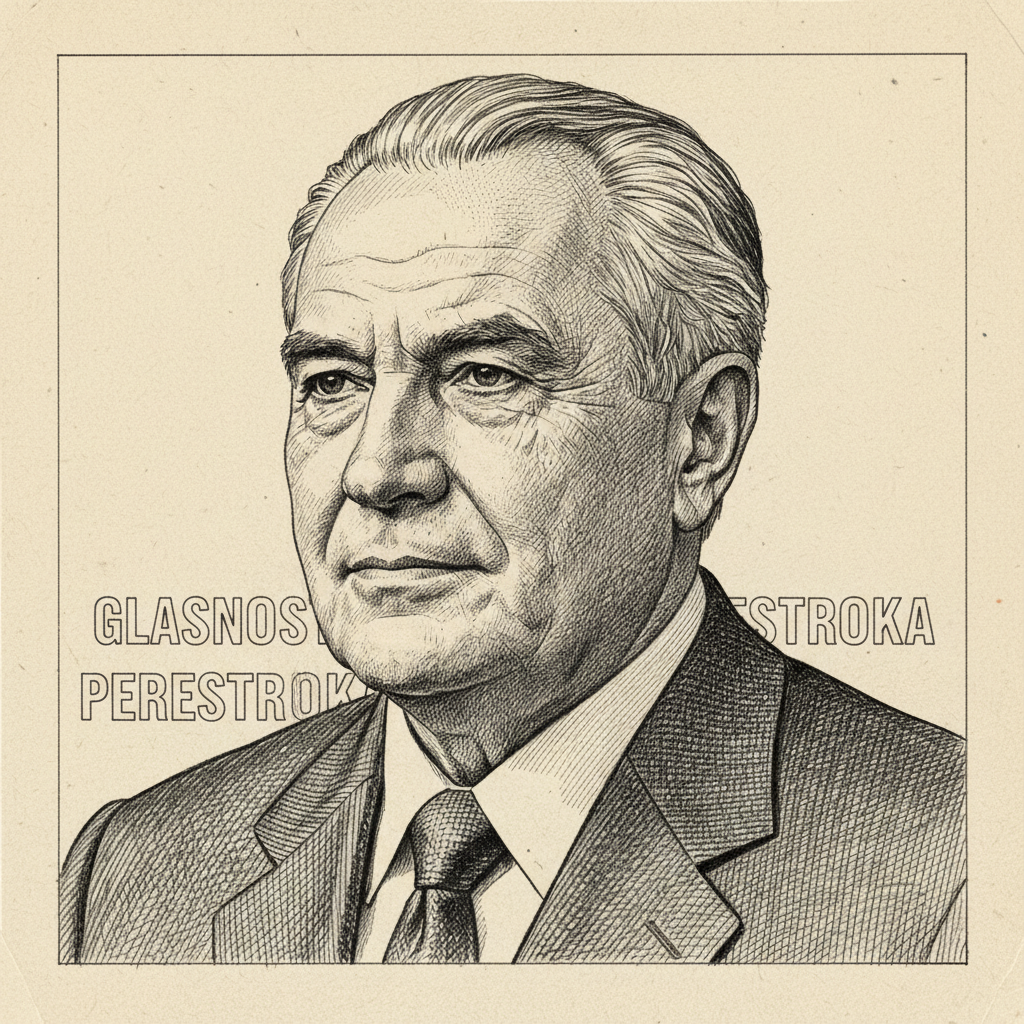
Mikhail Gorbachev was the eighth and final leader of the Soviet Union, serving as General Secretary of the Communist Party of the Soviet Union from 1985 to 1991 and as its first and only President from 1990 to 1991. His policies of 'Glasnost' (openness) and 'Perestroika' (restructuring) aimed to revitalize the Soviet system but ultimately led to its collapse.
Biography
Accomplishments
- 01Initiated 'Glasnost,' significantly reducing state censorship and promoting freedom of speech and information in the Soviet Union (1985-1991).
- 02Launched 'Perestroika,' introducing market-oriented reforms like allowing private cooperatives and granting autonomy to state enterprises, attempting to decentralize economic planning (1987-1991).
- 03Conducted four critical summits with U.S. President Ronald Reagan, leading to improved U.S.-Soviet relations and the signing of the Intermediate-Range Nuclear Forces (INF) Treaty in 1987, reducing nuclear arsenals.
- 04Refused to use force to suppress popular uprisings in Eastern European satellite states in 1989, directly enabling the peaceful collapse of communist regimes there and the reunification of Germany.
- 05Ended the Soviet-Afghan War, withdrawing Soviet troops by February 1989, a major geopolitical shift reducing Cold War tensions.
- 06Oversaw the adoption of a new constitution in 1990, creating a presidential system and multi-candidate elections for the first time in Soviet history.
Lessons for Operators
Key Takeaways
Practical lessons distilled for operators, investors, C-levels, and capital allocators.
Reform often accelerates dissolution in rigid systems
Gorbachev's initiatives, intended to preserve and strengthen the Soviet Union, instead exposed its inherent contradictions and accelerated its collapse. Leaders attempting systemic change must anticipate these destabilizing ripple effects.
Decentralization without clear governance leads to fragmentation
The 'Perestroika' reforms, while aiming for economic improvement, lacked coherent legal and institutional frameworks for a market economy, contributing to chaos and the rise of regional power centers rather than efficient economic growth.
Communication is a double-edged sword in crisis
'Glasnost' allowed crucial information flow and public debate, but it also rapidly eroded the Party's authority and control over the narrative, revealing the depth of systemic problems and amplifying dissent.
External peace does not guarantee internal stability
Gorbachev's success in ending the Cold War did not translate into domestic political or economic triumph. Achieving external objectives might mask or even exacerbate internal vulnerabilities, particularly in centralized economies facing resource constraints.
Leadership transitions are critical junctures for legacy
Gorbachev's reforms, while transformative, culminated in his loss of power and the state's dissolution. Effective leadership during profound change requires not only initiating reform but also a strategy for managing the transition of power and securing the reformed institutions.
Frameworks & Principles
Named frameworks and strategic principles they popularized or embodied.
The Gorbachev Paradox
This concept describes the phenomenon where reforms intended to strengthen or revitalize a system inadvertently trigger its collapse due to the exposure of underlying weaknesses and the unleashing of previously suppressed forces. It highlights the inherent risks of attempting systemic change from within a brittle, centralized structure.
When to useApplicable when analyzing attempts at significant, top-down reform in highly centralized or authoritarian organizations/states; useful for assessing the potential for unintended consequences and accelerated destabilization.
Glasnost/Perestroika Model
A dual-pronged approach to reform involving both 'openness' (transparency, freedom of information/expression) and 'restructuring' (economic and political decentralization). While distinct, these elements often interact, with increased openness often creating demands for deeper structural change.
When to useUseful for leaders considering parallel political and economic reforms in complex entities. Helps to consider the interplay between informational transparency and structural adjustments, and their potential synergistic or antagonistic effects.
External De-escalation as an Internal Catalyst
This framework suggests that significant moves to reduce external threats or engage in international cooperation can redirect domestic attention and resources, inadvertently empowering internal reform movements or exposing vulnerabilities that were previously masked by external conflict.
When to useRelevant for decision-makers in states or large enterprises considering major shifts in foreign policy or external strategic alliances, particularly when internal stability is precarious or competing internal power centers exist.
Sources & Further Reading
Profiles, interviews, podcasts, and articles used to compile and verify this entry. Each link opens at the original publisher.
Explore Related Titans
Other figures in the archive who share Mikhail Gorbachev's domain, geography, or era.
More in Other



Contemporaries — 20th century