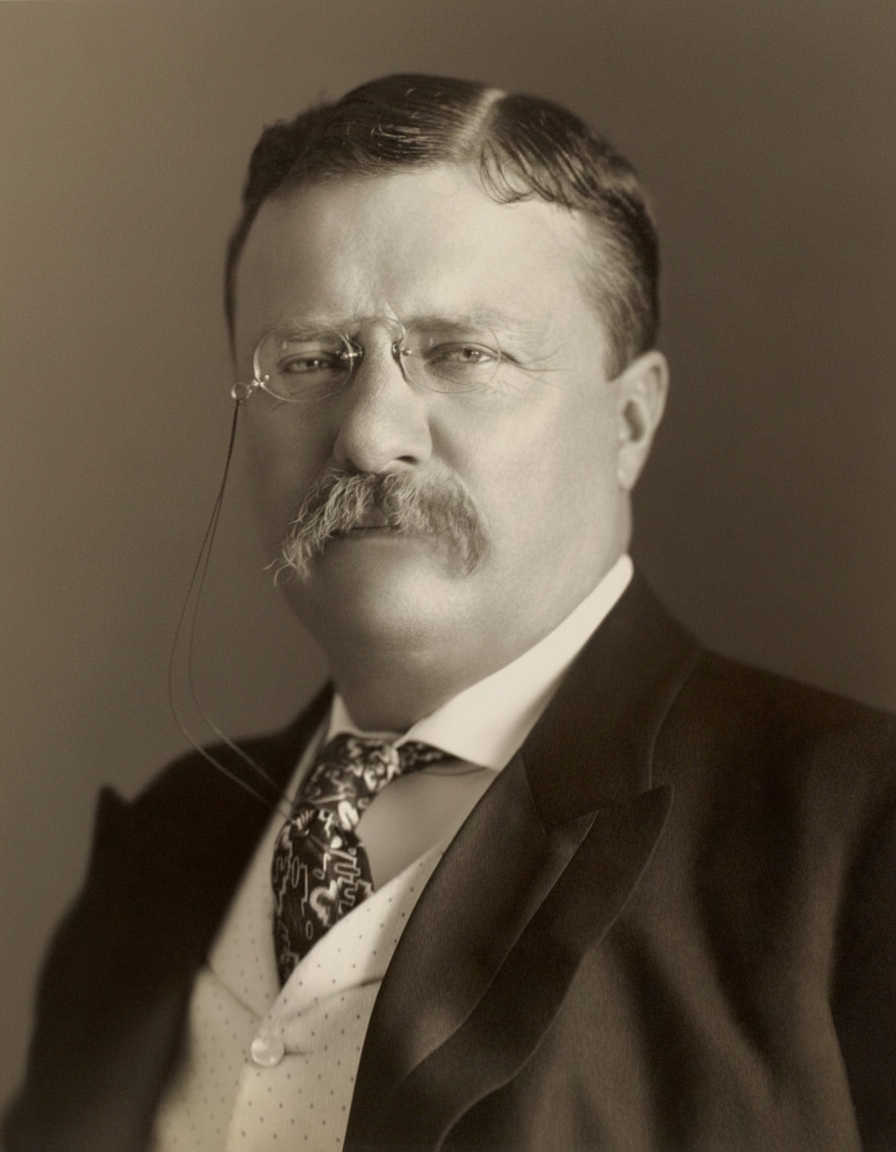
Theodore Roosevelt
Architect of the modern American presidency, trust regulator, and environmental steward.
Theodore Roosevelt, the 26th U.S. President (1901-1909), redefined the executive branch's role through progressive reforms, aggressive antitrust enforcement, and unparalleled conservation efforts. His 'Square Deal' domestic policies aimed to balance corporate power, labor, and consumers, directly shaping modern regulatory frameworks.
Biography
Accomplishments
- 01Initiated the 'trust-busting' era, filing over 40 antitrust suits, including the successful dissolution of the Northern Securities Company in 1904, reasserting government oversight of corporate power.
- 02Mediated the 1902 Coal Strike, a landmark intervention that secured fair terms for both labor and management, avoiding significant economic disruption and setting a precedent for presidential involvement in labor disputes.
- 03Championed and signed the Pure Food and Drug Act and the Meat Inspection Act (1906), establishing federal standards for food and drug safety, fundamentally changing manufacturing and consumer protection.
- 04Formally established the U.S. Forest Service (1905) and oversaw the protection of approximately 230 million acres of federal land, laying the groundwork for modern environmental policy and public land management.
- 05Secured the construction of the Panama Canal, significantly altering global trade routes and enhancing American strategic power, despite initial geopolitical complexities.
- 06Awarded the Nobel Peace Prize in 1906 for his mediation efforts in ending the Russo-Japanese War, demonstrating effective diplomatic leadership on the global stage.
Lessons for Operators
Key Takeaways
Practical lessons distilled for operators, investors, C-levels, and capital allocators.
Assertive Executive Leadership
Roosevelt demonstrated that the executive branch could and should be an active force in policy-making and market regulation, not just an administrator. C-levels should see their role as proactive shapers of their industry's future, anticipating and responding to market shifts, rather than merely reacting.
Regulation as a Market Stabilizer
His actions, particularly with the railroads and food safety, showed that intelligent regulation can correct market failures, protect consumers, and build public trust, leading to more stable and predictable business environments. Operators should view regulatory compliance not just as a cost, but as a commitment to market integrity that can foster long-term growth and resilience.
Strategic Resource Management
Roosevelt's conservation efforts highlight the long-term value of managing critical resources (natural, human, or capital) for sustainable growth. Capital allocators and fund managers must consider the sustainability and ethical impact of their investments, recognizing that responsible resource stewardship can mitigate future risks and enhance long-term value creation.
The 'Bully Pulpit' of Influence
Roosevelt used his office as a 'bully pulpit' to articulate his vision directly to the public, building consensus for ambitious reforms. Enterprise leaders must master communicating their strategic vision and values both internally and externally, influencing stakeholders and aligning their ecosystem towards common goals.
Adaptability in Policy & Strategy
Roosevelt's policies often evolved based on real-world outcomes and public interest, showcasing a pragmatic approach to governance. Leaders should embrace an iterative approach to strategy, with a willingness to adapt plans based on market feedback and changing conditions, rather than rigid adherence to initial assumptions.
Frameworks & Principles
Named frameworks and strategic principles they popularized or embodied.
The Square Deal Mandate
Roosevelt's domestic policy philosophy centered on 'control of corporations, consumer protection, and conservation of natural resources.' It outlined the government's role in ensuring fairness for all Americans, balancing the needs of business, labor, and the public.
When to useApplicable when evaluating corporate social responsibility, developing ethical governance structures, or navigating complex stakeholder interests where balancing profit motive with public good is paramount. Use to frame discussions on equitable resource allocation and regulatory impact.
Trust-Busting as Market Correction
This approach involved using anti-monopoly laws to break up dominant trusts and prevent anti-competitive practices that stifled innovation and harmed consumers. It focused on ensuring fair competition and preventing excessive concentration of power.
When to useRelevant for assessing market concentrations, evaluating competitive landscapes, or considering potential antitrust implications in M&A activities. Enterprise leaders can apply this framework to ensure competitive pricing, foster innovation, and avoid regulatory scrutiny in their specific markets.
The Bully Pulpit Strategy
Roosevelt coined 'bully pulpit' to describe the presidency's unique platform for advocating an agenda, leveraging public opinion to drive policy. It emphasizes the power of clear, consistent communication from a leader to influence behavior and generate support for strategic initiatives.
When to useUtilize when launching new initiatives, driving cultural transformation, or advocating for significant shifts in corporate strategy to internal or external stakeholders. This framework emphasizes proactive communication from leadership to build consensus and momentum.
Sources & Further Reading
Profiles, interviews, podcasts, and articles used to compile and verify this entry. Each link opens at the original publisher.
Explore Related Titans
Other figures in the archive who share Theodore Roosevelt's domain, geography, or era.
More in Other







From United States









Contemporaries — 19th century