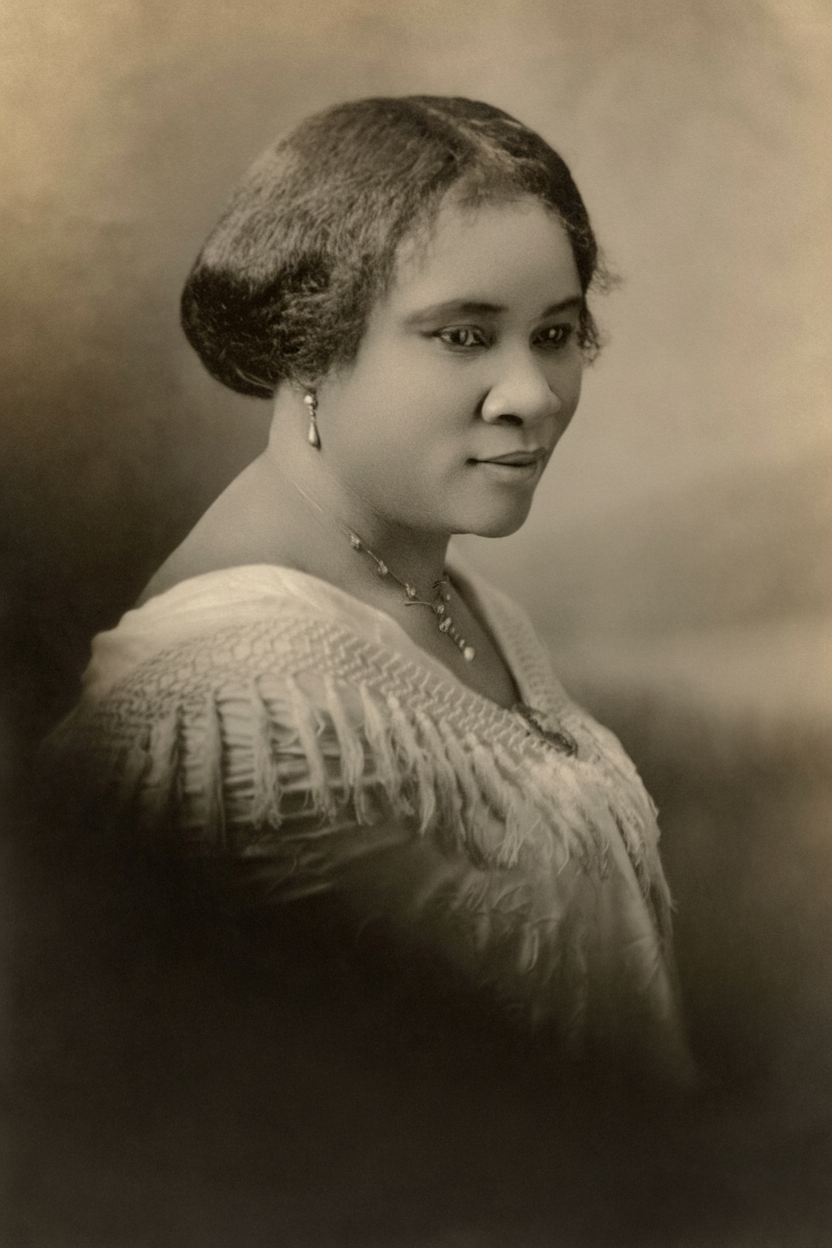
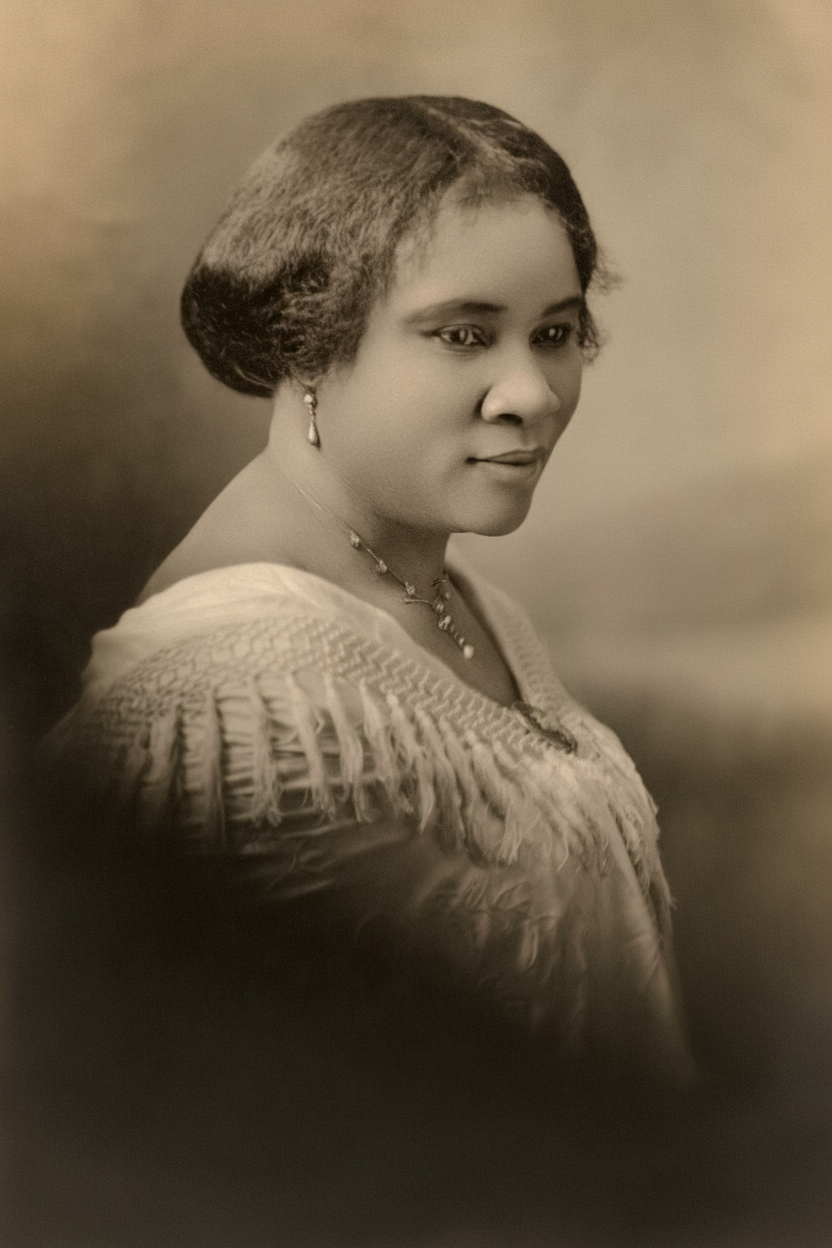
Madam C.J. Walker
America's First Self-Made Woman Millionaire, Founder of a Global Haircare and Cosmetics Empire.
Sarah Breedlove, known as Madam C.J. Walker, overcame poverty and racial discrimination to build a haircare and cosmetics empire. Her innovative product line, direct-sales model, and extensive network of 'Walker Agents' empowered thousands of Black women economically and established her as a pioneering figure in American business.
Biography
Accomplishments
- 01Established The Madam C.J. Walker Manufacturing Company (incorporated 1910 in Indianapolis), developing a proprietary line of hair and scalp conditioning formulas 'for Negro women,' achieving significant market penetration.
- 02Pioneered a direct-sales distribution model employing over 20,000 'Walker Agents' across the United States, Caribbean, and Central America, providing economic self-sufficiency for thousands of Black women.
- 03Created 'Lelia College Walker Beauty Schools' (established 1908-1910) to train agents in the 'Walker haircare system,' standardizing product application and sales techniques, ensuring consistent brand experience.
- 04Achieved status as America's first self-made woman millionaire (net worth estimated between $600,000 and over $1 million by 1919) through entrepreneurial ingenuity and strategic market targeting.
- 05Became a notable philanthropist, donating significant sums to institutions like the NAACP, the YMCA, and various Black colleges, embedding social impact directly into her business model.
- 06Successfully leveraged multi-platform advertising, including Black newspapers and personal appearances, to build brand recognition and connect directly with her target audience.
- 07Constructed an advanced manufacturing facility and headquarters in Indianapolis (1910), centralizing production, distribution, and administrative functions for a growing national and international enterprise.
Lessons for Operators
Key Takeaways
Practical lessons distilled for operators, investors, C-levels, and capital allocators.
Niche Dominance Strategy
Identify and deeply serve a specific, often overlooked, market segment. Walker didn't compete head-on with mainstream beauty brands; she created a category for African American haircare, achieving dominance before others recognized the market's potential.
Decentralized Sales Empowerment
Leverage a distributed, incentivized sales force that feels ownership and purpose. The 'Walker Agents' were not just sellers; they were small business owners themselves, benefiting directly from their efforts and the brand's success.
Continuous Education & Training
Invest in comprehensive training for your sales force or partners to ensure consistent product application, brand message delivery, and customer satisfaction. Walker's 'Lelia College' was fundamental to her system's success and standardization.
Founder as Brand Embodiment
The founder's story and personal engagement can be a powerful marketing tool. Walker's journey from laundress to millionaire inspired her agents and customers, building trust and aspirational alignment with her products.
Integrated Social Impact
Embed philanthropy and community upliftment directly into your business strategy. This not only generates goodwill but can also create a highly motivated workforce and a loyal customer base that resonates with your values.
Scalable Operating Model
Design your operations for growth from the outset. Walker's move from personal sales to a fully integrated manufacturing, training, and distribution network demonstrates strategic foresight in scaling a fast-growing enterprise.
Frameworks & Principles
Named frameworks and strategic principles they popularized or embodied.
Niche Market Penetration
Focus intently on a clearly defined, underserved market segment with tailored products/services, rather than attempting to capture a broad market. Achieve high penetration and loyalty within this niche before broader expansion.
When to useWhen entering competitive markets, launching innovative products for specific demographics, or operating with limited initial capital. Applicable for startups and ventures seeking defensible market positions.
Distributed Sales & Training Ecosystem
Build an extensive network of independent sales agents or partners who are thoroughly trained, incentivized, and empowered to sell and represent the product/service directly to consumers, often with a focus on education.
When to useIdeal for products requiring demonstration or personalized consultation (e.g., beauty, health, home goods), when direct-to-consumer relationships are paramount, or for rapid geographic expansion where local presence is key.
Founder-Led Brand Storytelling
Utilize the founder's personal narrative, expertise, and vision as a central component of brand identity and marketing. This creates authenticity, relatability, and a compelling 'why' for the business.
When to useHighly effective for early-stage ventures, purpose-driven brands, personal care products, or industries where trust and expertise are critical. Helps differentiate in crowded markets by connecting on an emotional level.
Sources & Further Reading
Profiles, interviews, podcasts, and articles used to compile and verify this entry. Each link opens at the original publisher.
Explore Related Titans
Other figures in the archive who share Madam C.J. Walker's domain, geography, or era.
More in Consumer & Retail






From United States








Contemporaries — 19th century