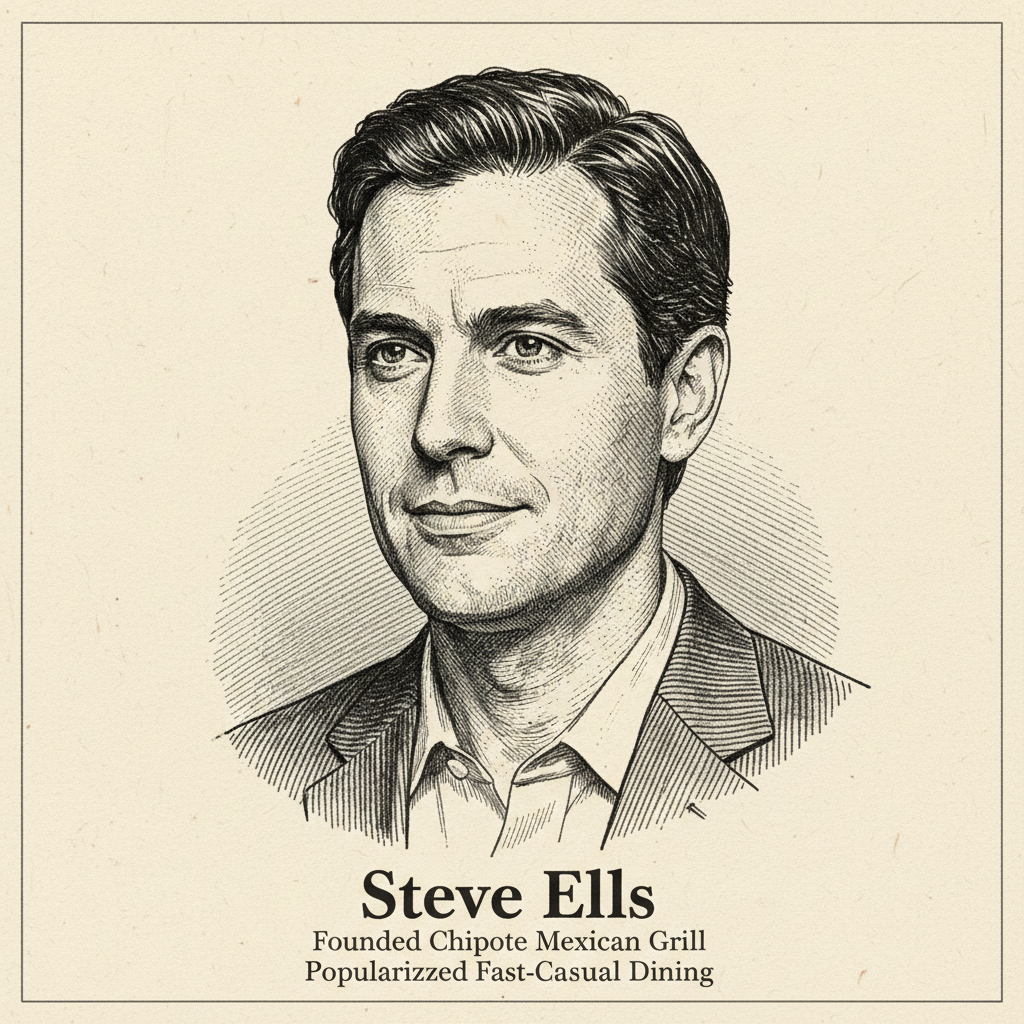
Steve Ells
Steve Ells: Founder of Chipotle, pioneering 'Food With Integrity' and fast-casual dining.
Stephen Ells is an American restaurateur best known as the founder, former CEO, and former Executive Chairman of Chipotle Mexican Grill. He launched Chipotle in 1993 with a focus on fresh, high-quality ingredients and customizable menu items, scaling it from a single Denver location to a national chain that popularized the 'fast-casual' restaurant segment.
Biography
Accomplishments
- 01Founded Chipotle Mexican Grill in 1993, pioneering the 'fast-casual' restaurant segment, which disrupted traditional quick-service and casual dining models.
- 02Led Chipotle through its highly successful IPO in 2006, achieving a market valuation exceeding $1.7 billion, and oversaw its growth to thousands of locations globally.
- 03Instituted and popularized the 'Food With Integrity' program, committing to sustainably sourced, naturally raised ingredients, which became a significant differentiator and consumer draw.
- 04Built a multi-billion dollar enterprise from a single restaurant with an $85,000 personal loan, demonstrating exceptional entrepreneurial vision and execution.
- 05Successfully leveraged a strategic partnership with McDonald's (1998-2006) to fund rapid expansion while maintaining brand identity, before a successful public market exit.
- 06Influenced the broader restaurant industry by demonstrating the viability and profitability of transparent food sourcing and customizable menu formats at scale.
Lessons for Operators
Key Takeaways
Practical lessons distilled for operators, investors, C-levels, and capital allocators.
Build for Scale from Day One
Chipotle's simple, assembly-line model was inherently scalable. New ventures should design their operational workflows and menu architecture with future expansion in mind to avoid costly redesigns later.
Ingredient Sourcing as a Competitive Advantage
Ells's 'Food With Integrity' proved that ethical and quality sourcing could be a powerful differentiator, attracting a loyal customer base willing to pay a premium. Consider how your supply chain can become a core brand asset.
Leverage Strategic Capital, Retain Vision
The McDonald's partnership funded hyper-growth. For founders and C-levels, securing strategic investment is crucial, but ensure governance structures protect the founding vision and culture during rapid expansion.
Customer Experience is Paramount
The transparent kitchen and customizable ordering empowered customers, creating a unique dining experience. Enterprises must continually innovate on customer engagement and service delivery to maintain market relevance.
Reputation Risk Management is Non-Negotiable
Food safety crises severely damaged Chipotle's brand and market cap. Proactive risk assessment, robust quality control systems, and transparent crisis communication plans are critical for all consumer-facing businesses.
Founders' Evolving Roles
Ells transitioned from CEO to Chairman. Founders need to recognize when their skills are best suited for different roles, and companies must plan for smooth leadership transitions, especially during periods of significant challenge or growth.
Frameworks & Principles
Named frameworks and strategic principles they popularized or embodied.
Fast-Casual Model
A restaurant concept pioneered by Chipotle that bridges the gap between fast-food and casual dining, offering higher-quality food and a more upscale ambiance than fast food, but with the speed and convenience of limited-service. Key characteristics include customizable menus, open kitchens, fresh ingredients, and moderate pricing.
When to useApplicable for entrepreneurs and investors exploring new restaurant concepts, particularly those targeting consumers seeking healthier, more customizable, and higher-quality options than traditional fast food, but without the time commitment or cost of full-service dining.
'Food With Integrity' Sourcing Strategy
Chipotle's philosophy of sourcing ingredients that are 'naturally raised' (meat from animals raised without added hormones or non-therapeutic antibiotics), sustainably farmed, and locally sourced where possible. This strategy built significant brand equity and consumer trust.
When to useRelevant for businesses in food, retail, or consumer goods aiming to differentiate through ethical sourcing, sustainability, and transparency. It provides a blueprint for integrating supply chain values directly into brand identity and marketing strategies, appealing to a values-driven consumer base.
Operational Simplicity for Scale
Chipotle's menu is intentionally simple (burritos, bowls, tacos, salads) with a highly efficient, visible assembly-line service model. This standardization allowed for rapid training, consistent product quality across locations, and minimized operational complexity for aggressive expansion.
When to useApplicable for any enterprise looking to expand rapidly across multiple locations or markets. This framework emphasizes streamlining product offerings and service delivery mechanisms to ensure consistency, reduce training costs, and facilitate scalable growth.
Recent Appearances
Latest interviews, keynotes, and press from the past half year.
 youtube.com
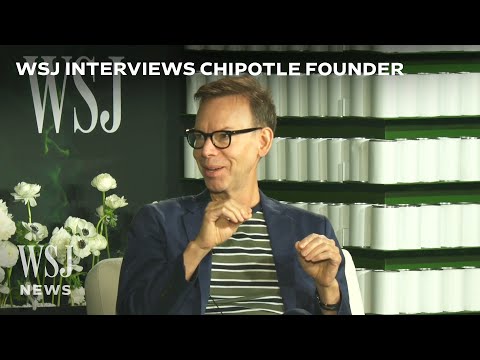 youtube.com
 youtube.com
 youtube.com
 youtube.com
 youtube.com
 youtube.com
 youtube.com
 youtube.com
 youtube.com
 youtube.com
 youtube.com
 youtube.com
 youtube.com
 youtube.com
 youtube.com
Sources & Further Reading
Profiles, interviews, podcasts, and articles used to compile and verify this entry. Each link opens at the original publisher.
Explore Related Titans
Other figures in the archive who share Steve Ells's domain, geography, or era.
More in Consumer & Retail









From United States









Contemporaries — born 1960s