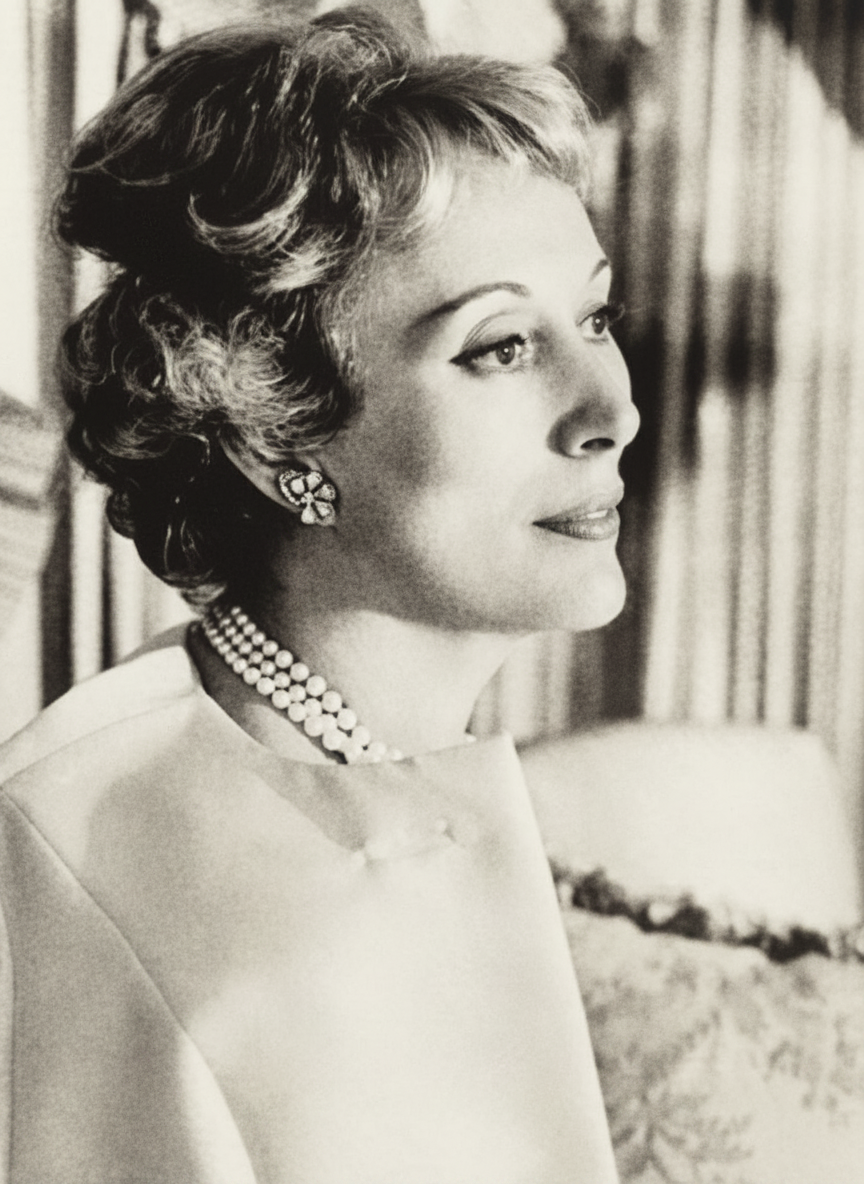
Estée Lauder
The architect of the modern beauty industry, Estée Lauder built a global empire on personalized service, product innovation, and aspirational marketing.
Estée Lauder, born Josephine Esther Mentzer, founded Estée Lauder Companies in 1946. Beginning with four skincare products formulated by her chemist uncle, she pioneered innovative retail strategies, emphasizing direct customer engagement, free samples, and aspirational branding. Her entrepreneurial spirit and relentless focus on product efficacy and presentation transformed a small, family-run business into a multinational beauty conglomerate.
Biography
Accomplishments
- 01Founded Estée Lauder Companies in 1946 with her husband, growing it from a small, family-run business into a global beauty conglomerate.
- 02Pioneered the 'gift with purchase' and 'purchase with purchase' retail strategies, transforming how luxury beauty products were sampled and sold, now industry standards.
- 03Successfully launched iconic and lasting brands and products including Youth-Dew (1953), a revolutionary perfumed bath oil, and Clinique (1968), the first dermatologist-developed, allergy-tested prestige brand.
- 04Expanded the company internationally, establishing a global presence for Estée Lauder brands starting in the UK and Hong Kong in the 1960s.
- 05Maintained direct control over product development, marketing, and distribution for decades, ensuring consistent brand identity and premium positioning.
- 06Drove the company to achieve public listing in 1995 (NYSE: EL), cementing its status as a major player in the global market.
Lessons for Operators
Key Takeaways
Practical lessons distilled for operators, investors, C-levels, and capital allocators.
Product Superiority Drives Initial Traction
Estée Lauder started with exceptional products formulated by her uncle. The quality allowed her to gain initial customers through word-of-mouth and direct demonstration, compensating for limited marketing budgets. Focus on making an outstanding product first; it builds the foundation for everything else.
Innovative Distribution & Sampling as Marketing
The 'gift with purchase' wasn't an advertising cost, but a highly effective, low-risk sampling strategy. It put product in consumers' hands and often yielded repeat purchases. For early-stage companies, consider non-traditional, value-additive ways to get your product experienced by potential customers.
Brand as Lifestyle: Sell the Aspiration, Not Just the Item
Lauder's success wasn't just about selling creams, but selling a vision of beauty and luxury. Her marketing created an aspirational world that consumers wanted to be part of. Understand your customers' desires beyond the functional utility of your product, and craft your brand story accordingly.
Direct Customer Interaction Fuels Insights and Loyalty
Lauder's hands-on approach in department stores provided invaluable direct feedback and built personal connections. This informed product development and cemented customer loyalty. Maintain channels for direct customer engagement across all levels of the organization to stay agile and responsive.
Strategic Brand Expansion for Market Dominance
The company's growth was fueled by astute brand diversification (e.g., Clinique, Aramis) to capture different market segments and consumer needs without diluting the core Estée Lauder brand. Identify adjacent market opportunities that leverage existing operational strengths but address distinct customer profiles.
Frameworks & Principles
Named frameworks and strategic principles they popularized or embodied.
Lauder's 'High-Touch' Sales Model
A retail strategy centered on personalized customer interaction, product demonstration, and immediate gratification (e.g., free samples, gift with purchase). It emphasizes education and experience over overt advertising.
When to useWhen launching products requiring explanation or demonstration, in segments where trust and personal connection are crucial (e.g., luxury goods, complex technology, bespoke services), or when initial marketing budgets are limited.
Aspirational Branding & Lifestyle Marketing
Marketing that sells a desired lifestyle, emotional benefit, or identity promise rather than solely focusing on product features. It creates a dream or ideal that the consumer can buy into.
When to useWhen building a premium brand, entering a competitive market where differentiation is key, or targeting consumers motivated by status, self-improvement, or emotional fulfillment rather than just utility.
Strategic Brand Portfolio Management
Developing or acquiring a distinct set of brands, each targeting specific market segments or consumer needs, to maximize market coverage and reduce cannibalization of core offerings. Each brand has its own identity and value proposition.
When to useFor established companies looking to expand into new segments, reduce reliance on a single brand, or address evolving consumer demands without diluting the primary brand's image. Requires clear differentiation between brands.
Sources & Further Reading
Profiles, interviews, podcasts, and articles used to compile and verify this entry. Each link opens at the original publisher.
Explore Related Titans
Other figures in the archive who share Estée Lauder's domain, geography, or era.
More in Consumer & Retail




From United States








Contemporaries — 20th century