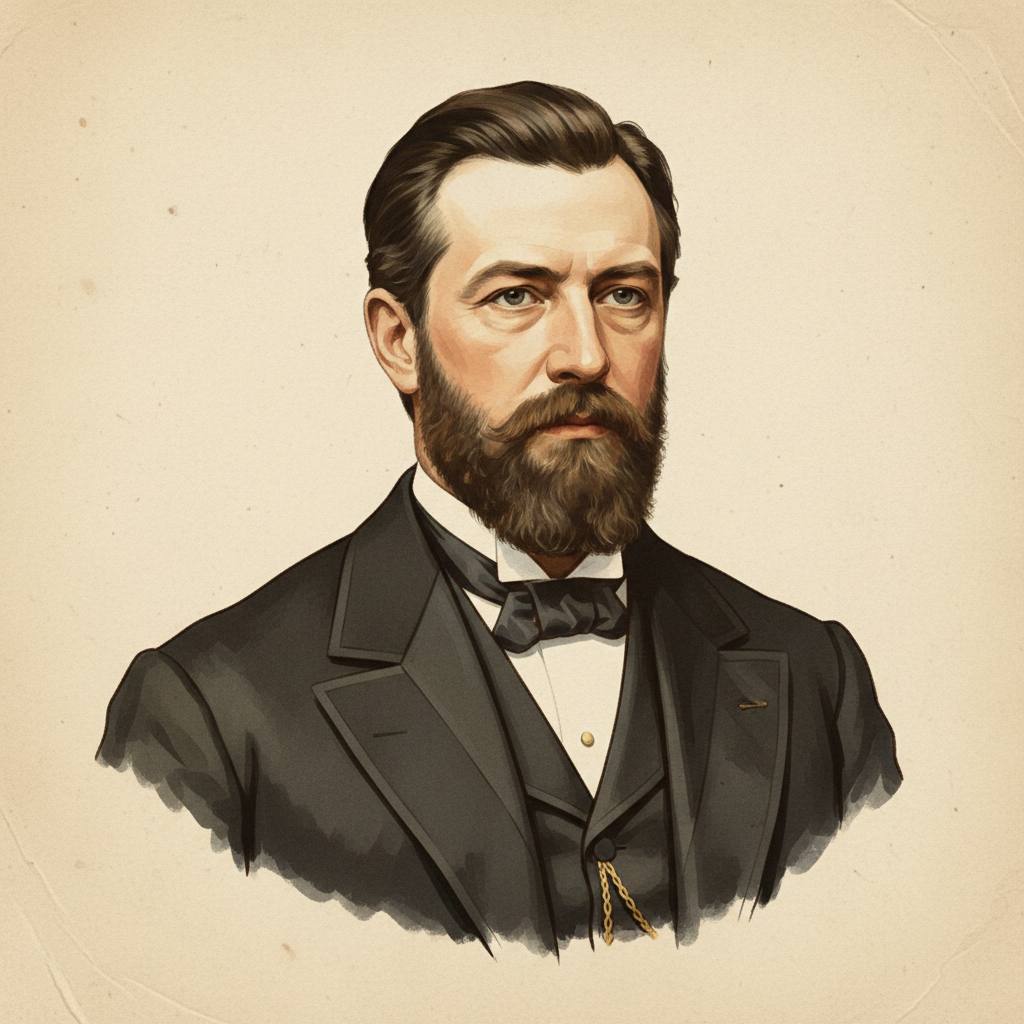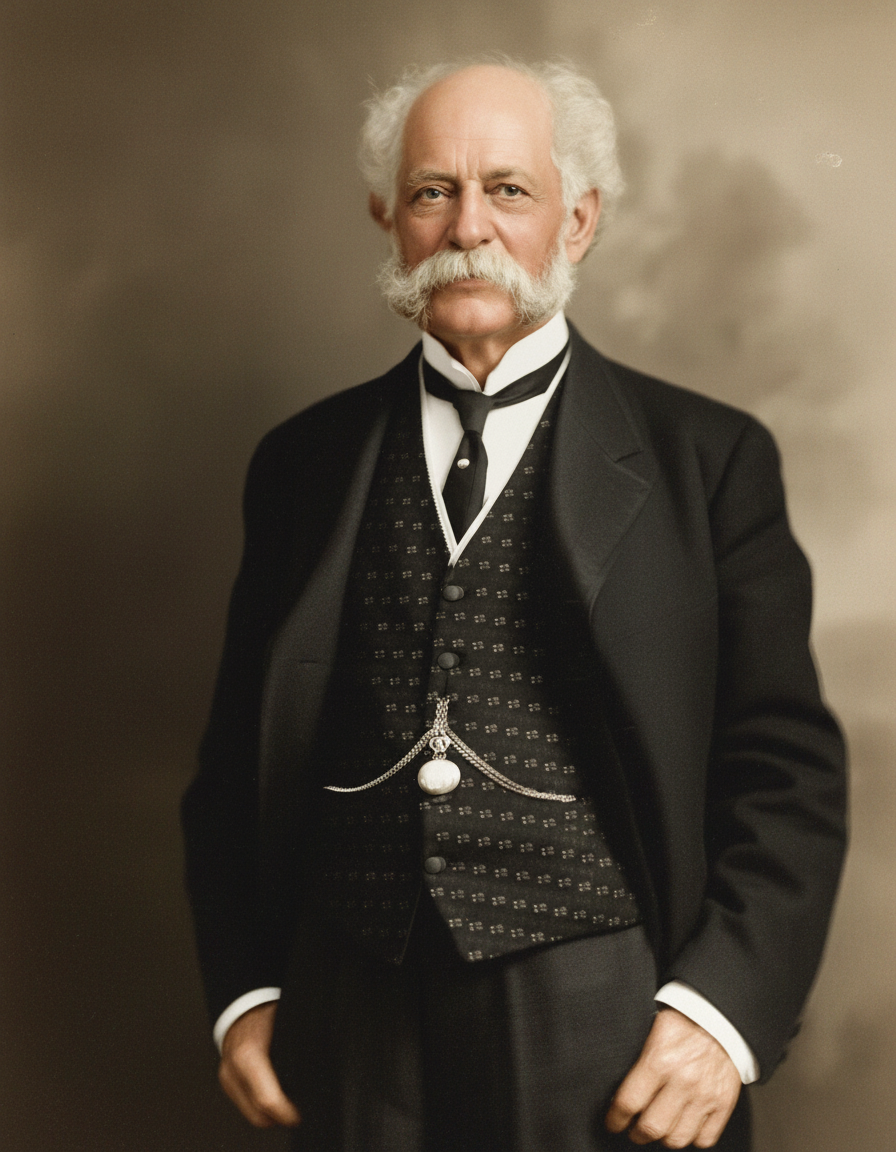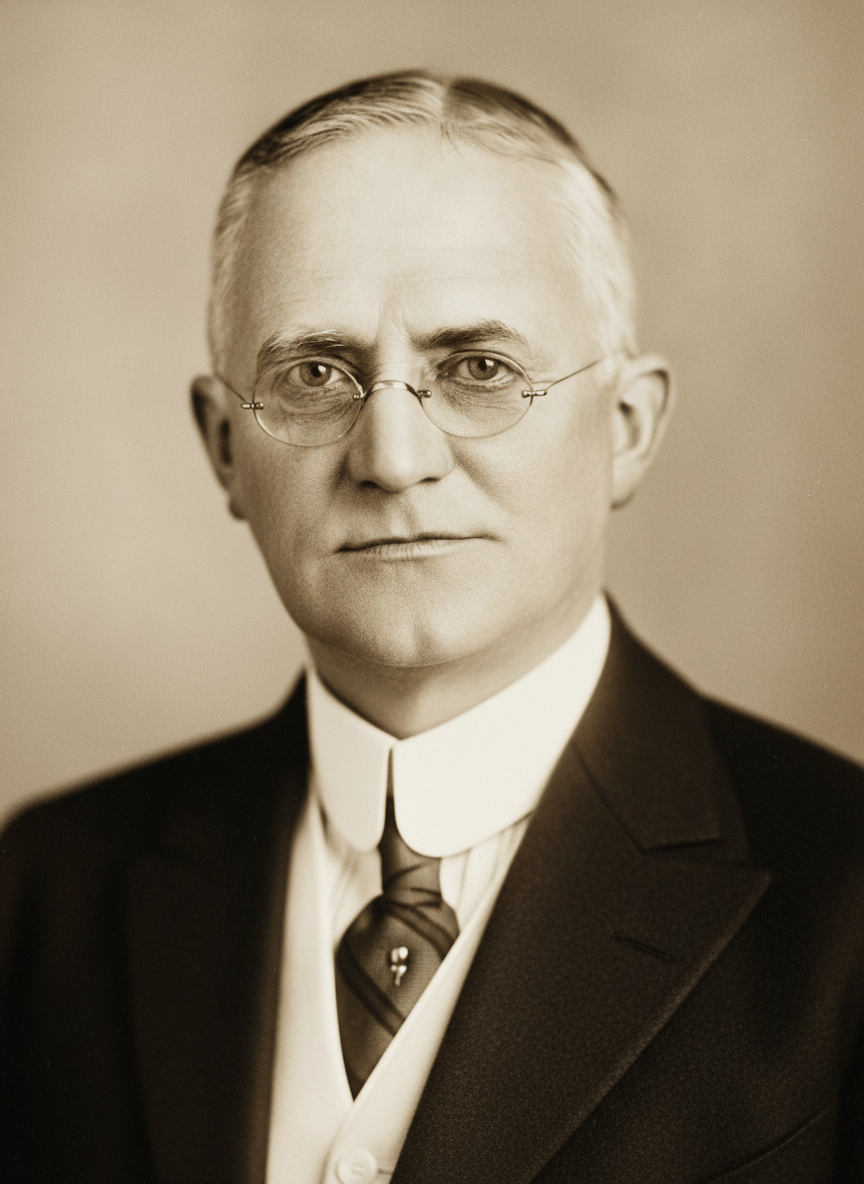
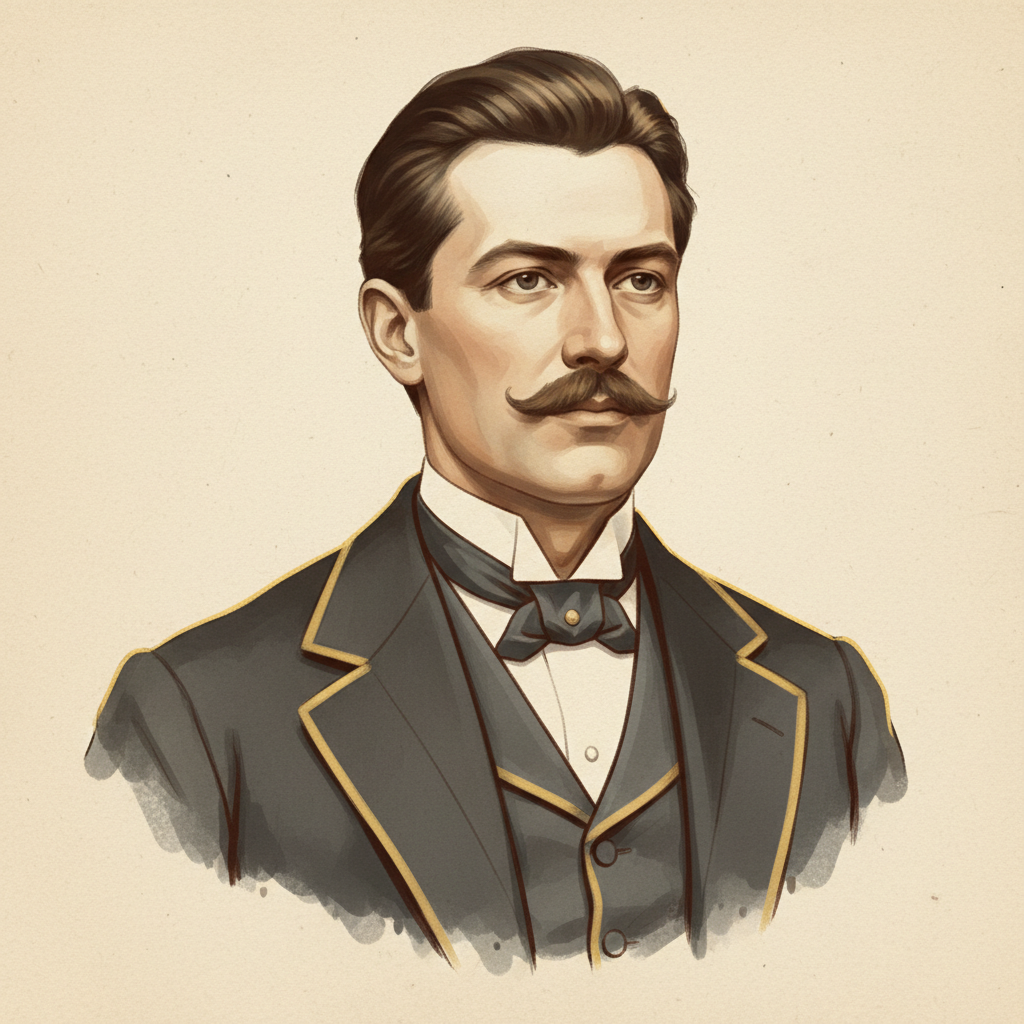
George Eastman
The industrialist who democratized photography, transforming a complex craft into an accessible consumer activity.
George Eastman, founder of Eastman Kodak Company, pioneered the popularization of photography. Through relentless innovation in photographic film and cameras, and astute business strategies, he made photography an integral part of everyday life. His 'Kodak Moment' philosophy underscored his commitment to consumer convenience and market accessibility.
Biography
Accomplishments
- 01Invented and commercialized the dry-plate photographic process starting in 1880, significantly simplifying photography from the prior wet-plate methods.
- 02Founded Eastman Kodak Company in 1888, strategically building a vertically integrated enterprise that controlled film manufacturing, camera production, and processing.
- 03Developed and marketed the first mass-market consumer camera, the original Kodak camera in 1888, with the memorable slogan 'You push the button, we do the rest.'
- 04Pioneered the transparent roll film in 1889, a critical innovation that enabled continuous film exposure and was instrumental in the development of motion pictures.
- 05Introduced the 'Brownie' camera in 1900, priced at $1, making photography accessible and affordable for virtually every household.
- 06Established a comprehensive patent portfolio and licensing strategy, protecting Kodak's innovations and creating barriers to entry for competitors.
- 07Implemented progressive labor practices, including wage dividends and pension plans for employees, enhancing worker loyalty and productivity.
- 08Engaged in significant philanthropy, donating over $100 million (equivalent to billions today) to education and healthcare institutions during his lifetime.
Lessons for Operators
Key Takeaways
Practical lessons distilled for operators, investors, C-levels, and capital allocators.
Strategy of Simplification
Eastman's core strategy was to simplify a complex process (photography) into a consumer-friendly experience. Companies should seek to de-clutter their offerings, reduce cognitive load, and streamline the user journey to unlock broader market appeal. This often involves taking on complexity behind the scenes so the front-end user experience is effortless.
Ecosystem Domination
Kodak didn't just sell cameras; it created an entire ecosystem: cameras, film, processing, and printing. This allowed them to capture value at multiple points and lock in customers to their proprietary standards. Modern businesses should consider which adjacent services or products can be integrated to create a more compelling and sticky ecosystem around their core offering.
Perpetual Innovation for Market Expansion
From dry plates to roll film to the Brownie, Eastman's story is one of continuous, market-driven innovation. Each product iterative improved accessibility or reduced cost, thereby broadening the addressable market. A product roadmap should not only enhance existing offerings but also target entirely new customer segments through simplification, cost reduction, or novel utility.
Brand as a Promise
The 'Kodak Moment' became synonymous with capturing memories. The brand promised reliability, ease, and quality. A strong brand promise, consistently delivered, builds trust and creates an emotional connection with consumers, transcending mere product features. This brand equity can command premium pricing and foster loyalty.
Frameworks & Principles
Named frameworks and strategic principles they popularized or embodied.
Horizontal Integration to Vertical Differentiation
Eastman initially focused on dry plates (horizontal product). He then vertically integrated by creating the camera, film, and processing services. This differentiated his offering by providing a complete, seamless experience. The ultimate result was a differentiated offering that was better and simpler for the consumer.
When to useWhen a company seeks to differentiate its product or service in a crowded market by controlling more steps in the value chain, thereby offering a more complete and friction-free customer experience or proprietary technology.
Razor and Blades Model
Eastman implicitly used this model by initially selling cameras at a low margin or even a loss (like the $1 Brownie) to drive sales of high-margin film and processing services. The camera was the 'razor,' and the film/processing were the recurring 'blades.'
When to useApplicable for businesses selling a durable good (razor) that necessitates the recurring purchase of a consumable item or service (blades). This strategy aims to create long-term customer lock-in and predictable revenue streams.
Market Creation through Simplification
Eastman didn't just compete in an existing market; he fundamentally created the mass-market for photography by drastically simplifying a complex, professional process. His innovations lowered the skill barrier and made photography accessible to everyday consumers.
When to useWhen identifying a complex or intimidating product/service that, with significant simplification, could appeal to a much broader, untapped market. This involves re-engineering the user experience, often through technological or design innovation.
Sources & Further Reading
Profiles, interviews, podcasts, and articles used to compile and verify this entry. Each link opens at the original publisher.
Explore Related Titans
Other figures in the archive who share George Eastman's domain, geography, or era.
More in Industrial & Manufacturing



From United States




Contemporaries — 19th century