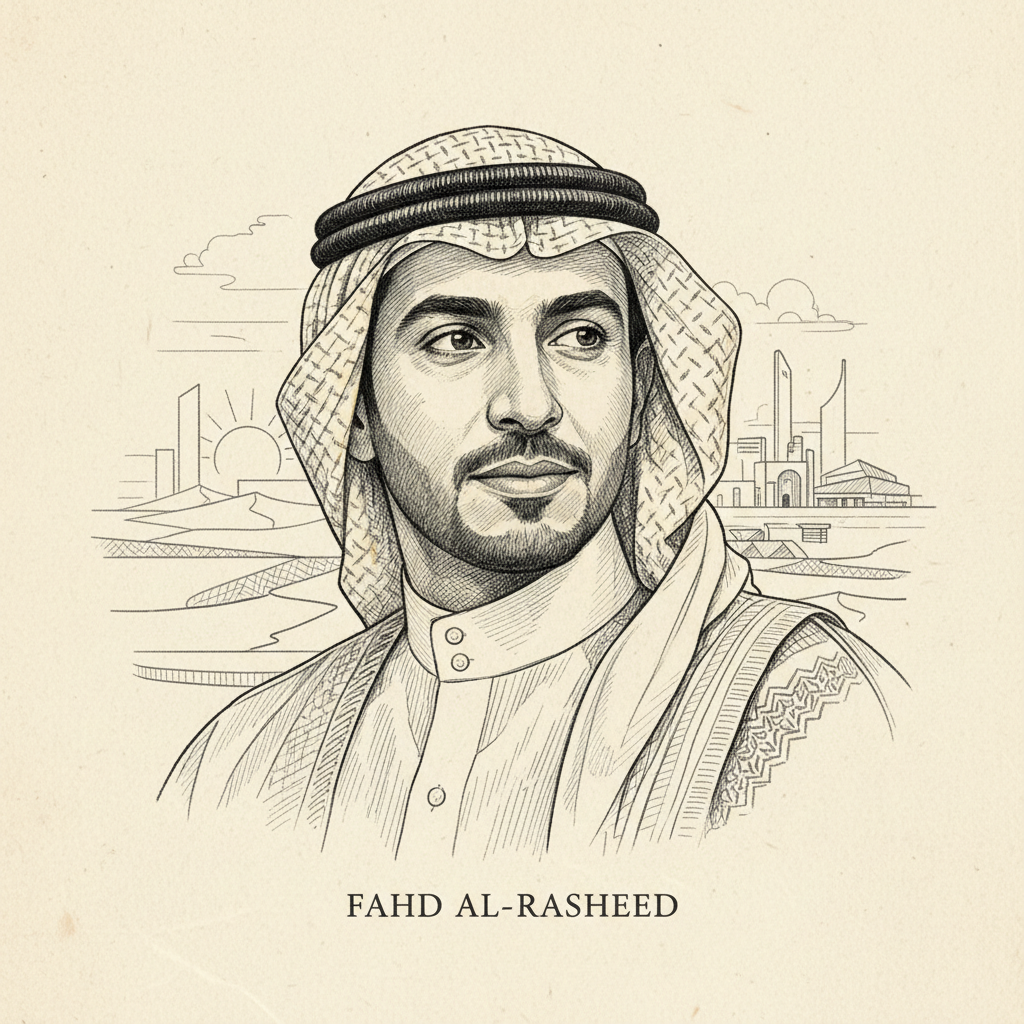
Fahd al-Rasheed
Architect of megaprojects and economic diversification in Saudi Arabia.
Fahd al-Rasheed is a prominent Saudi Arabian executive renowned for his leadership in large-scale urban development projects and national economic diversification initiatives. He held key roles, including CEO of King Abdullah Economic City (KAEC) and the Royal Commission for AlUla (RCU), overseeing multi-billion dollar ventures aimed at transforming Saudi Arabia's economy.
Biography
Accomplishments
- 01Transformed King Abdullah Economic City (KAEC) from concept into a functional, multi-sector megacity during his tenure as CEO (2008-2018), attracting over $10 billion in investment and developing critical infrastructure like King Abdullah Port.
- 02Led the Royal Commission for AlUla (RCU) as CEO (2019-2022), spearheading the ambitious cultural, heritage, and tourism development project, overseeing critical infrastructure and master planning with a focus on sustainable growth and community engagement.
- 03Successfully leveraged Public-Private Partnerships (PPPs) to fund and accelerate development in both KAEC and AlUla, demonstrating a pragmatic approach to large-scale project financing.
- 04Held key advisory roles to the Saudi Royal Court, influencing national economic strategy and diversification initiatives aligned with Vision 2030.
- 05Served on the Board of Directors for Saudi Aramco, one of the world's largest companies, contributing to strategic oversight of global energy operations and investment decisions (2020-present).
- 06Co-founded and served as CEO of Tuwaiq Company, an investment firm focused on real estate and infrastructure, showcasing his entrepreneurial acumen beyond public sector roles.
- 07Drove significant job creation and economic activity in regions previously underserved, particularly through the development of industrial parks and tourism infrastructure.
- 08Implemented sustainable development practices and frameworks for heritage preservation in AlUla, setting a new standard for mega-project execution in sensitive historical areas.
Lessons for Operators
Key Takeaways
Practical lessons distilled for operators, investors, C-levels, and capital allocators.
Holistic City Building
Al-Rasheed's work on KAEC demonstrates that successful urban development extends beyond infrastructure to include governance, social amenities, and economic incentives to attract and retain tenants and residents.
Leveraging Cultural Assets
The AlUla project exemplifies how unique cultural and natural heritage can be transformed into a globally competitive tourism product through strategic investment, rigorous planning, and sustainable practices.
Strategic Investment Mobilization
His career highlights the ability to attract multi-billion dollar domestic and foreign investments by clearly articulating value propositions, demonstrating execution capability, and fostering investor confidence in large-scale, long-term projects.
Vision-Driven Execution
Al-Rasheed consistently operationalizes ambitious national visions (e.g., Vision 2030) into concrete projects, showcasing strong leadership in driving public sector objectives through private sector mechanisms.
Cross-Sector Integration
His roles span real estate, logistics, tourism, and national economic development, underscoring the importance of understanding and orchestrating interdependencies between diverse sectors for macro-level impact.
Sustainable Development Imperative
In AlUla, the focus on preserving delicate ecosystems and ancient heritage while developing high-end tourism infrastructure sets a precedent for sustainable mega-project execution.
The Role of Advisors
His advisory roles suggest that senior executives can significantly influence national policy and investment direction by providing expertise and strategic guidance at the highest levels.
Frameworks & Principles
Named frameworks and strategic principles they popularized or embodied.
Mega-Project Incubation Model
This involves establishing a semi-autonomous entity (like KAEC or RCU) with a clear mandate, significant capital, and robust executive authority to fast-track large-scale developments. It necessitates a long-term vision, a comprehensive master plan, and the ability to attract and coordinate diverse stakeholders.
When to useApplicable for governments or very large corporations aiming to create entirely new economic zones, cities, or transform national tourism assets. Requires substantial upfront capital and political will.
Cultural-Economic Convergence Model
A strategy observed in AlUla, where ancient cultural heritage and natural beauty are meticulously preserved and leveraged as the core attraction for a high-value, sustainable tourism industry. This requires significant investment in archaeological preservation, eco-tourism infrastructure, and community integration.
When to useSuitable for regions with unique cultural or natural heritage seeking to diversify their economy through high-end, responsible tourism. Requires careful balancing of development with preservation mandates.
Public-Private Partnership (PPP) for Infrastructure Acceleration
Utilizing private sector capital, expertise, and operational efficiency to fund, build, and manage large-scale public infrastructure projects. Al-Rasheed's work in KAEC with King Abdullah Port is a prime example.
When to useIdeal for governments or developers seeking to undertake capital-intensive infrastructure projects where public funds are limited or where private sector operational efficiencies can deliver better value. Requires robust legal and contractual frameworks.
Recent Appearances
Latest interviews, keynotes, and press from the past half year.
 youtube.com
 youtube.com
 youtube.com
 youtube.com
 youtube.com
 youtube.com
 youtube.com
 youtube.com
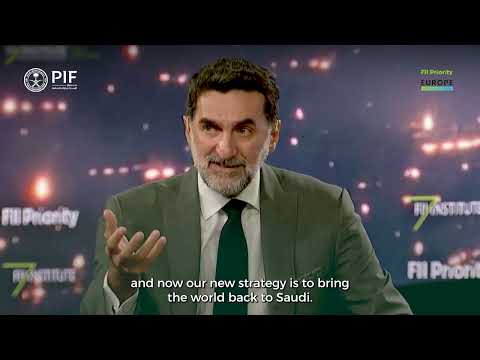 youtube.com
 youtube.com
Explore Related Titans
Other figures in the archive who share Fahd al-Rasheed's domain, geography, or era.
More in Finance & Investing
From Saudi Arabia