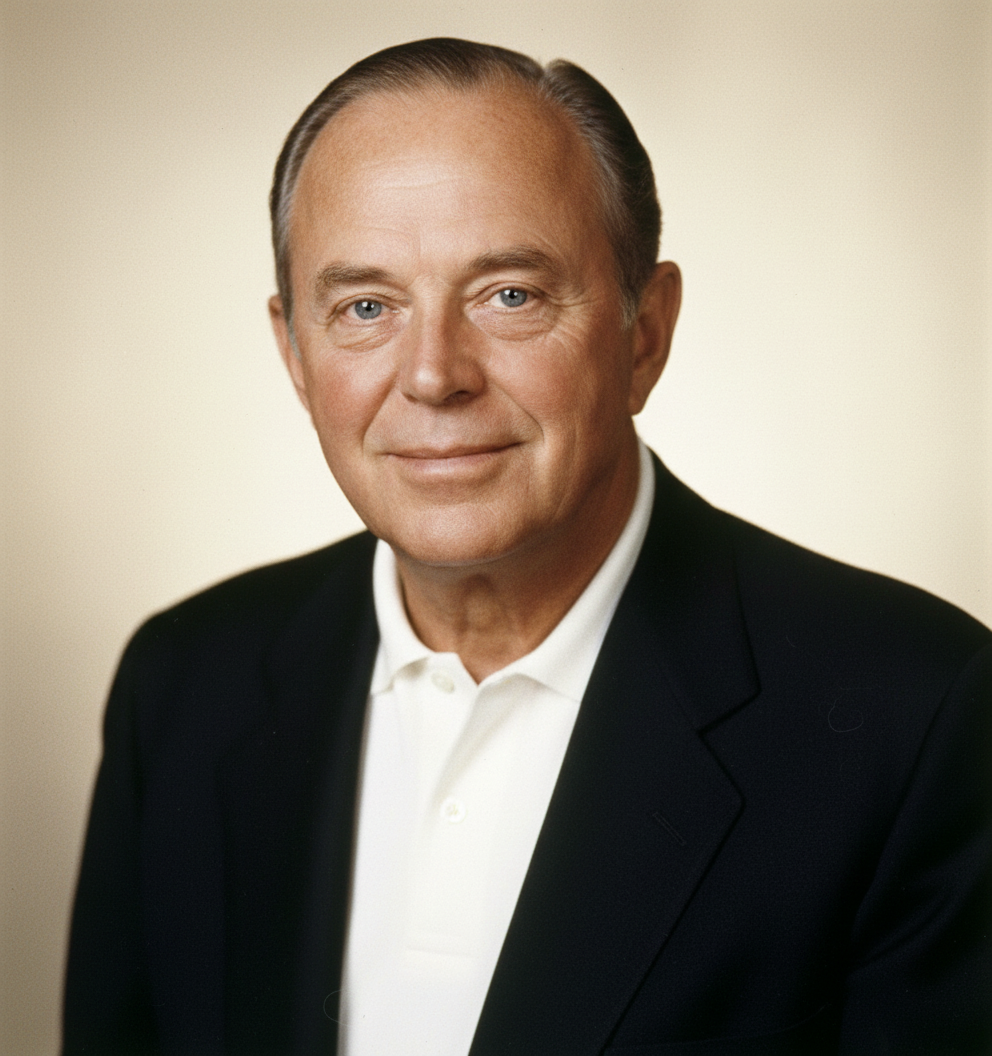
Ray Kroc
The visionary who transformed a small hamburger stand into the global real estate and food service empire, McDonald's.
Ray Kroc was an American entrepreneur who, at the age of 52, acquired the McDonald's restaurant chain from the McDonald brothers and built it into one of the world's most successful fast-food operations through an innovative franchising model focused on real estate ownership.
Biography
Accomplishments
- 01Transformed McDonald's from a single-location concept into an international chain, pioneering the modern fast-food industry.
- 02Instituted and meticulously enforced standardization of operations, quality, and service across all franchised locations, ensuring consistent customer experience globally.
- 03Developed an innovative real estate-centric franchising model, where McDonald's Corporation owned the land and buildings, significantly enhancing the company's asset base and revenue streams.
- 04Successfully bought out the McDonald brothers for $2.7 million in 1961, consolidating control and accelerating the company's expansion.
- 05Led McDonald's through its successful initial public offering (IPO) in 1965, providing capital for further growth and wealth for early investors.
- 06Established Hamburger University in 1961 for formalized training of franchisees and management, solidifying operational excellence.
Lessons for Operators
Key Takeaways
Practical lessons distilled for operators, investors, C-levels, and capital allocators.
Leverage Real Assets for Scalability
Kroc's genius lay in recognizing that the real estate component of McDonald's held more long-term value and revenue potential than just selling burgers. By owning the land and buildings and leasing them to franchisees, McDonald's generated consistent, often escalating, rental income, turning itself into a property conglomerate thinly veiled as a restaurant chain. This model provides stability and leverage that pure operational businesses often lack. Operators should evaluate whether their business models can incorporate asset ownership to create additional revenue streams and build long-term enterprise value.
Fanatical Standardization Drives Brand Consistency
Ray Kroc was obsessive about 'Quality, Service, Cleanliness, and Value' (QSC&V). He established rigorous operating procedures, training programs (Hamburger University), and strict oversight to ensure that a McDonald's hamburger tasted the same and the restaurant experience was consistent, whether in Des Plaines or Denver. This consistency built immense consumer trust and brand loyalty, crucial for rapid multi-location expansion. Businesses aiming for national or global scale must invest heavily in process standardization, training, and quality control to maintain brand integrity and customer expectations.
Aggressive Expansion Requires Capital & Control
Kroc's vision for McDonald's was boundless, necessitating significant capital infusion (achieved through IPO in 1965) and centralized control. His decision to buy out the McDonald brothers for $2.7 million in 1961, despite initial reluctance and high cost, was pivotal. It eliminated internal friction and allowed him to implement his expansion strategies without impediment. Leaders should recognize when strategic control is necessary to unlock growth potential and be prepared to make bold M&A decisions to achieve it, ensuring access to necessary capital for execution.
Sales Acumen and Relentless Drive are Foundational
Kroc was a seasoned salesman with decades of experience before McDonald's. His ability to sell the franchising concept, recruit franchisees, and secure financing was fundamental to the company's early success. His relentless drive, often working 18-hour days, demonstrated the sheer force of will required to build a global enterprise from scratch. Operators and investors should value leaders with strong sales capabilities and an unwavering commitment to execution, as these are often precursors to market penetration and growth.
Identify and Capitalize on Systemic Efficiency
Kroc was initially drawn to the McDonald brothers' 'Speedee Service System' – a highly efficient, assembly-line-like kitchen operation. He didn't invent the product but recognized the operational brilliance. His contribution was packaging this efficiency for replication and scaling it nationally. Business leaders should be adept at identifying existing operational efficiencies or innovative systems, and then applying their entrepreneurial skills to replicate, standardize, and scale these systems rather than reinventing core products.
Frameworks & Principles
Named frameworks and strategic principles they popularized or embodied.
The QSC&V Model (Quality, Service, Cleanliness, Value)
A foundational framework for operational excellence emphasizing four critical pillars that must be consistently delivered at every customer touchpoint. Quality refers to product consistency and standards; Service to speed and friendly interaction; Cleanliness to the hygiene of establishment and staff; and Value to the perceived benefit for the price paid. Kroc rigorously enforced this across all franchised locations.
When to useApplicable for any business, particularly those with a distributed presence or requiring high standardization (e.g., retail, hospitality, services), to build brand trust and ensure consistent customer experience. Utilized for operational audits, staff training, and defining brand standards.
The Real Estate-Centric Franchising Model
A strategic business model where the franchisor owns the land and/or buildings upon which franchisee-operated businesses are located. The franchisor leases these assets to franchisees, generating two revenue streams: royalties from sales and rent from property leases. This model shifts the financial base of the company towards asset ownership.
When to useIdeal for businesses with significant physical infrastructure requirements (e.g., restaurants, hotels, automotive services) seeking scalable growth. It provides a stable, often appreciating, asset base and diversified revenue. Requires significant initial capital for property acquisition or advantageous lease structures.
Hamburger University Model (Standardized Training & Education)
A dedicated institutional framework for training franchisees, managers, and key operational staff in the company's standardized operating procedures, quality controls, and business management practices. It ensures uniform knowledge and adherence to brand standards across a distributed network.
When to useEssential for businesses undertaking rapid expansion, especially through franchising or a distributed operational model. Used to indoctrinate new partners/managers, refine operational excellence, and facilitate knowledge transfer to maintain brand consistency and quality control at scale.
Sources & Further Reading
Profiles, interviews, podcasts, and articles used to compile and verify this entry. Each link opens at the original publisher.
Explore Related Titans
Other figures in the archive who share Ray Kroc's domain, geography, or era.
More in Real Estate & Hospitality

From United States



Contemporaries — 20th century