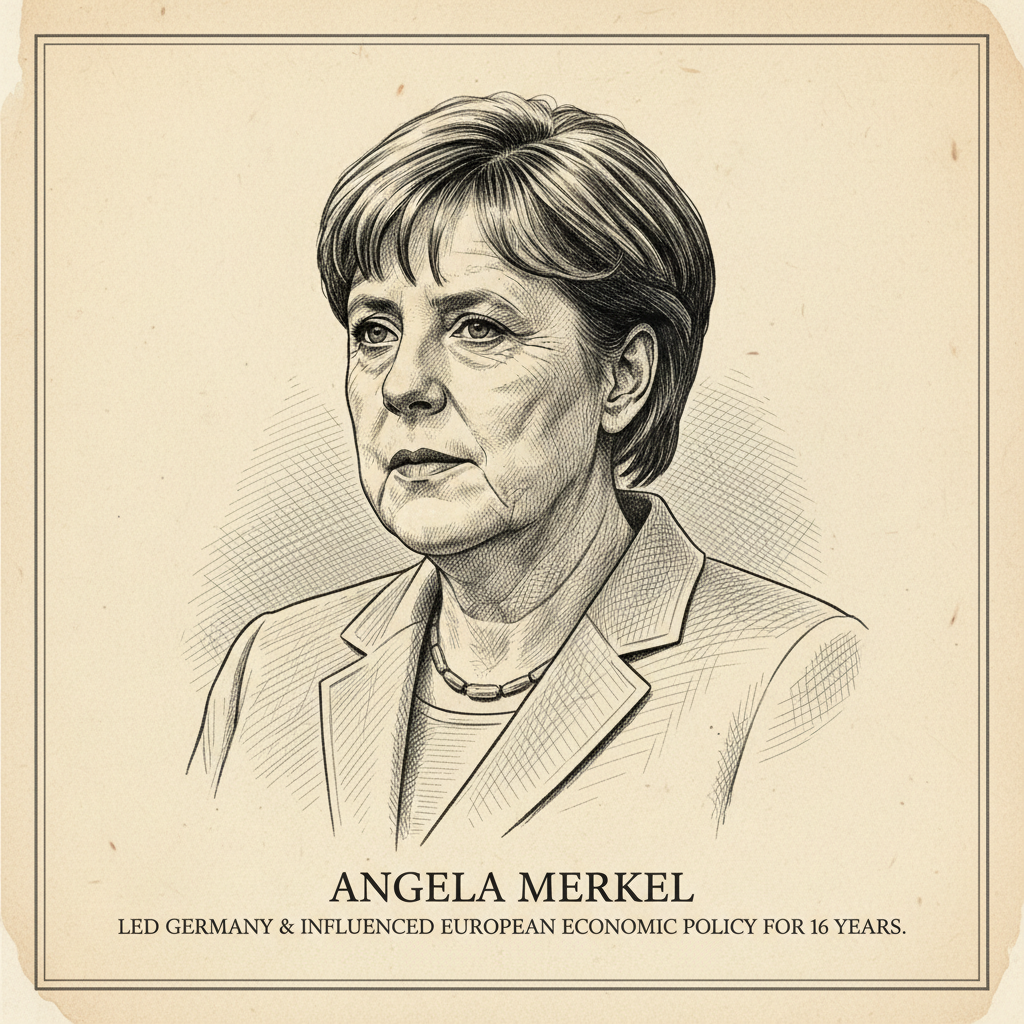
Angela Merkel
The Iron Chancellor: Navigating Geo-Economic Volatility with Pragmatic Leadership
Angela Merkel, a trained quantum chemist, served as Germany's Chancellor from 2005 to 2021, leading the Christian Democratic Union (CDU). Her tenure was marked by navigating multiple global crises, including the 2008 financial crisis, the Eurozone debt crisis, and the European migrant crisis, all while maintaining Germany's economic strength and increasing its influence on the international stage.
Biography
Accomplishments
- 01Steered Germany through the 2008 global financial crisis and the subsequent 2010-2012 Eurozone debt crisis, preventing a collapse of the Euro and maintaining Germany's economic stability.
- 02Engineered Germany's 'Energiewende,' the ambitious transition plan to phase out nuclear power by 2022 and significantly expand renewable energy sources following the Fukushima disaster.
- 03Led Germany's constructive engagement within the European Union, fostering deeper integration and playing a pivotal role in shaping EU policy responses to critical issues, such as Brexit and economic sanctions.
- 04Oversaw a period of sustained economic growth and low unemployment in Germany, consolidating its position as Europe's economic powerhouse, during her 16-year chancellorship.
- 05Managed the integration of over a million refugees during the 2015 European migrant crisis, demonstrating a humanitarian approach despite significant domestic and international challenges.
- 06Developed strong bilateral relationships with key international partners, including the United States, Russia (despite disagreements), and China, enhancing Germany's diplomatic influence.
- 07Modernized Germany's infrastructure and invested in research and development, maintaining its competitive edge in various high-tech industries.
- 08Successfully transitioned Germany to a more inclusive, multicultural society by supporting integration policies and actively addressing social cohesion challenges.
Lessons for Operators
Key Takeaways
Practical lessons distilled for operators, investors, C-levels, and capital allocators.
The Value of 'Mutti' Leadership
Merkel's maternalistic, often cautious and consensus-oriented approach ('Mutti' meaning 'Mommy') allowed her to manage complex alliances and diffuse intense political pressures. In business, fostering a sense of stability and predictability, while being firm on core principles, can be highly effective in maintaining team cohesion and investor confidence during turbulent times.
Pragmatism Trumps Ideology
Merkel's political decisions often prioritized pragmatic solutions over strict ideological adherence, particularly notable in her shift on nuclear power. For executives, this implies a focus on outcome-driven strategies, being willing to adjust methods and even core positions if data or evolving market conditions dictate, rather than being bound by rigid doctrines.
Fiscal Discipline as a Foundation
Germany's robust economic health under Merkel was underpinned by strict fiscal policies ('schwarze Null' - black zero budget). This demonstrates that long-term sustainability for an enterprise relies on sound financial management and prudent resource allocation, even during periods of growth or crisis spending.
Strategic Patience in Negotiation
Merkel was renowned for her patient, methodical negotiation style, often waiting for opponents to exhaust their positions before presenting her own. This 'sitting it out' strategy can be invaluable in high-stakes deal-making, allowing for a clearer understanding of all parties' leverage and objectives before committing to terms.
The Power of Incremental Change
Rather than grand, sudden reforms, Merkel often favored gradual, incremental adjustments. This approach minimizes disruption, allows for market adaptation, and builds broader buy-in over time. For large-scale organizational transformations, a phased implementation can be more successful than an abrupt overhaul.
Navigating Geopolitical & Geo-economic Nexus
Merkel consistently balanced Germany's economic interests with broader European stability and democratic values, exemplified by Nord Stream 2 and trade relations with China during geopolitical tensions. Leaders must develop a sophisticated understanding of how global political shifts impact economic opportunities and risks, requiring a nuanced, multi-faceted strategy.
Data-Driven Adaptability
Her scientific training instilled a rigorous, evidence-based approach. The 'Energiewende' exemplified this: a dramatic policy shift driven by new data (post-Fukushima). Enterprises thrive when leadership decisions are rooted in robust data analysis, allowing for agile responses to unforeseen market shifts or technological disruptions.
Frameworks & Principles
Named frameworks and strategic principles they popularized or embodied.
The 'Merkinism' Approach
Characterized by pragmatic decision-making, technocratic problem-solving, incremental policy adjustments, a strong emphasis on consensus-building, and unflappable demeanor, prioritizing stability and often delaying action until all options are thoroughly analyzed and broad support can be garnered. It is marked by a focus on long-term sustainability rather than short-term populism.
When to useApplicable in large, complex organizations or industries facing multiple stakeholders and high-stakes decisions (e.g., mergers, major strategic pivots, regulatory compliance). Useful when consensus and stability are paramount, and premature, rash decisions carry significant downside risk.
Crisis Consensus Building
A method of leadership focused on identifying common ground and forging broad agreements among diverse, often opposing, parties during periods of significant organizational or economic stress. This involves extensive negotiation, strategic concessions, and leveraging shared existential threats to unite stakeholders towards a common solution.
When to useEssential for steering an organization or a coalition of entities through acute crises (e.g., financial downturns, supply chain disruptions, M&A integrations). Effective when maintaining unity and preventing fragmentation is critical to survival or recovery.
Analytical Prudence Model
A decision-making framework emphasizing meticulous data analysis, scenario planning, and a cautious evaluation of all potential outcomes before committing to a course of action. Speed is often tempered by a demand for thoroughness and the avoidance of preventable errors. It encourages adapting based on new information rather than rigidly adhering to initial plans.
When to useIdeal for high-impact, irreversible decisions such as large capital expenditures, market entry strategies, or fundamental product platform changes where the cost of error is substantial. Also valuable when operating in highly regulated industries or environments with significant technological uncertainty.
Recent Appearances
Latest interviews, keynotes, and press from the past half year.
 youtube.com
 youtube.com
 youtube.com
 youtube.com
 youtube.com
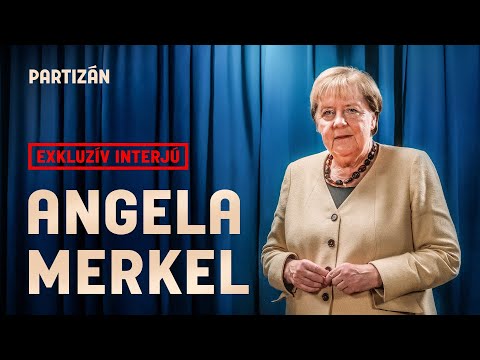 youtube.com
 youtube.com
 youtube.com
 youtube.com
 youtube.com
 youtube.com
 youtube.com
 youtube.com
 youtube.com
 youtube.com
 youtube.com
 youtube.com
 youtube.com
 youtube.com
 youtube.com
 youtube.com
 youtube.com
 youtube.com
 youtube.com
 youtube.com
 youtube.com
 youtube.com
 youtube.com
 youtube.com
 youtube.com
 youtube.com
 youtube.com
 youtube.com
 youtube.com
 youtube.com
 youtube.com
 youtube.com
 youtube.com
 youtube.com
 youtube.com
 youtube.com
 youtube.com
 youtube.com
 youtube.com
 youtube.com
 youtube.com
 youtube.com
 youtube.com
 youtube.com
 youtube.com
 youtube.com
 youtube.com
 youtube.com
 youtube.com
 youtube.com
 youtube.com
 youtube.com
 youtube.com
 youtube.com
 youtube.com
 youtube.com
 youtube.com
 youtube.com
 youtube.com
 youtube.com
 youtube.com
 youtube.com
 youtube.com
 youtube.com
 youtube.com
 youtube.com
 youtube.com
 youtube.com
 youtube.com
 youtube.com
 youtube.com
 youtube.com
 youtube.com
 youtube.com
 youtube.com
 youtube.com
 youtube.com
 youtube.com
 youtube.com
 youtube.com
 youtube.com
 youtube.com
 youtube.com
 youtube.com
 youtube.com
 youtube.com
 youtube.com
 youtube.com
 youtube.com
 youtube.com
 youtube.com
 youtube.com
 youtube.com
 youtube.com
 youtube.com
 youtube.com
 youtube.com
 youtube.com
 youtube.com
 youtube.com
 youtube.com
 youtube.com
 youtube.com
 youtube.com
 youtube.com
 youtube.com
 youtube.com
 youtube.com
 youtube.com
 youtube.com
 youtube.com
 m.youtube.com
 youtube.com
 youtube.com
 youtube.com
 youtube.com
 youtube.com
 youtube.com
 youtube.com
 youtube.com
 youtube.com
 youtube.com
Sources & Further Reading
Profiles, interviews, podcasts, and articles used to compile and verify this entry. Each link opens at the original publisher.
Explore Related Titans
Other figures in the archive who share Angela Merkel's domain, geography, or era.
More in Other






From Germany




Contemporaries — born 1950s