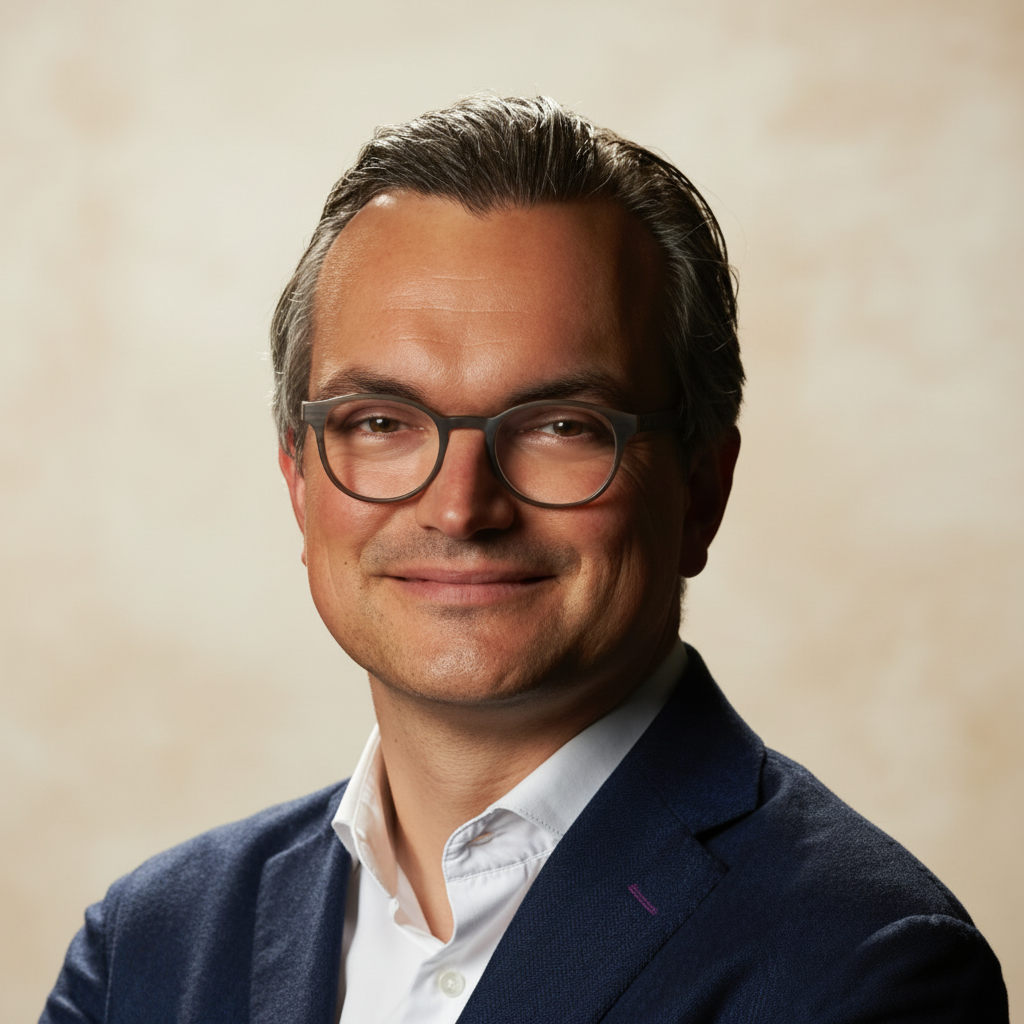
Christian Teichmann
Architect of Strategic Growth and Corporate Innovation Ventures.
Christian Teichmann is a prominent German executive known for his strategic leadership in venture capital and corporate innovation, particularly within the automotive sector. He has held significant roles at Daimler AG, spearheading global corporate strategy and establishing Daimler's venture capital arm, Daimler Mobility Services GmbH (now SHARE NOW). He later served as CEO of Daimler AG's venture activities and as a Managing Partner at Porsche Ventures, orchestrating strategic investments and fostering new business models.
Biography
Accomplishments
- 01Led Global Corporate Strategy for Daimler AG (2011-2016), defining strategic direction for a multinational automotive corporation through periods of industry transformation.
- 02Founded and served as Managing Director of Daimler Mobility Services GmbH (2016-2019), building and scaling car2go (later SHARE NOW) into a leading global car-sharing service, demonstrating capability in operationalizing new business models.
- 03Served as CEO of Daimler AG's venture activities (2016-2019), overseeing a portfolio of strategic investments and fostering corporate venturing within one of the world's largest automotive companies.
- 04Became a Managing Partner at Porsche Ventures (2019-present), successfully directing strategic investments in startups aligned with Porsche AG's future mobility, sustainability, and digital strategies.
- 05Orchestrated significant investment rounds and corporate integrations, such as the merger of car2go and DriveNow to form SHARE NOW, creating a leading global mobility service provider.
Lessons for Operators
Key Takeaways
Practical lessons distilled for operators, investors, C-levels, and capital allocators.
Strategy to Execution Pipeline
Christian Teichmann's career trajectory underlines the critical need for corporations to establish direct pathways from strategic planning to operational execution, especially in innovation. Merely identifying market trends is insufficient; capital must be allocated and new ventures built or acquired to capitalize on them. Operators should ensure their strategic insights translate into tangible initiatives with clear ownership.
Corporate Venture Capital as a Strategic Imperative
His work at Daimler and Porsche Ventures demonstrates that corporate venture capital (CVC) is a powerful tool not just for financial returns but for strategic learning, market intelligence, and accessing disruptive technologies. Investors and C-levels should consider CVC as an integral part of their innovation strategy, structured to provide both strategic alignment and operational autonomy to portfolio companies.
Building New Business Models Internally and Externally
Teichmann’s leadership in founding Daimler Mobility Services (car2go/SHARE NOW) exemplifies how large incumbents can create and scale entirely new business models. This requires distinct organizational structures, different talent profiles, and a willingness to operate outside traditional corporate confines. Enterprise leaders must champion similar 'intrapreneurial' efforts alongside external venture investments.
Navigating Industry Transformation
In industries facing significant disruption, like automotive, passive observation is a path to obsolescence. Teichmann's career is a case study in actively shaping the future through investment and strategic partnerships. Fund managers and capital allocators should prioritize companies with clear strategies for addressing or leveraging industry shifts, as demonstrated by early investments in emerging mobility solutions.
The Dual Role of a Corporate Venturist
Being successful in corporate venture capital requires a unique skill set: the ability to understand both the entrepreneurial drive of startups and the strategic objectives, risk appetite, and integration challenges of the parent corporation. This dual fluency is crucial for effective deal-making, post-investment value creation, and ensuring portfolio companies meet strategic objectives for the corporate parent.
Frameworks & Principles
Named frameworks and strategic principles they popularized or embodied.
Corporate Venture Capital (CVC) Model
This framework involves a parent company investing in external startups or creating new internal ventures, often with strategic rather than purely financial objectives. The CVC unit acts as a bridge between the corporate entity and the startup ecosystem.
When to useWhen a large corporation needs to access external innovation, gain market intelligence on disruptive technologies, diversify into new business areas, or accelerate strategic partnerships without necessarily acquiring entire companies. It's particularly effective in rapidly evolving industries.
Ecosystem Building through Mobility Services
This approach involves developing or investing in a suite of interconnected services (e.g., car-sharing, ride-hailing, multimodal transport) that go beyond the core product offering, creating a holistic customer experience and new revenue streams centered around mobility.
When to useApplicable for companies in transportation, automotive, or urban planning looking to expand their value proposition beyond traditional product sales. It's used to capture a larger share of customer spending in the mobility landscape and respond to changing consumer preferences for access over ownership.
Ambidextrous Organization Design
This framework suggests that companies must simultaneously excel at exploiting current capabilities (efficiency, core business) and exploring new opportunities (innovation, new ventures). It often involves creating separate organizational units or processes to manage these distinct activities.
When to useWhen an established company needs to maintain its core business's profitability while addressing disruptive threats or pursuing entirely new growth avenues. Teichmann's move from core strategy to leading separate venture units at Daimler exemplifies this separation for exploration.
Explore Related Titans
Other figures in the archive who share Christian Teichmann's domain, geography, or era.
More in Finance & Investing






From Germany


Contemporaries — born 1970s