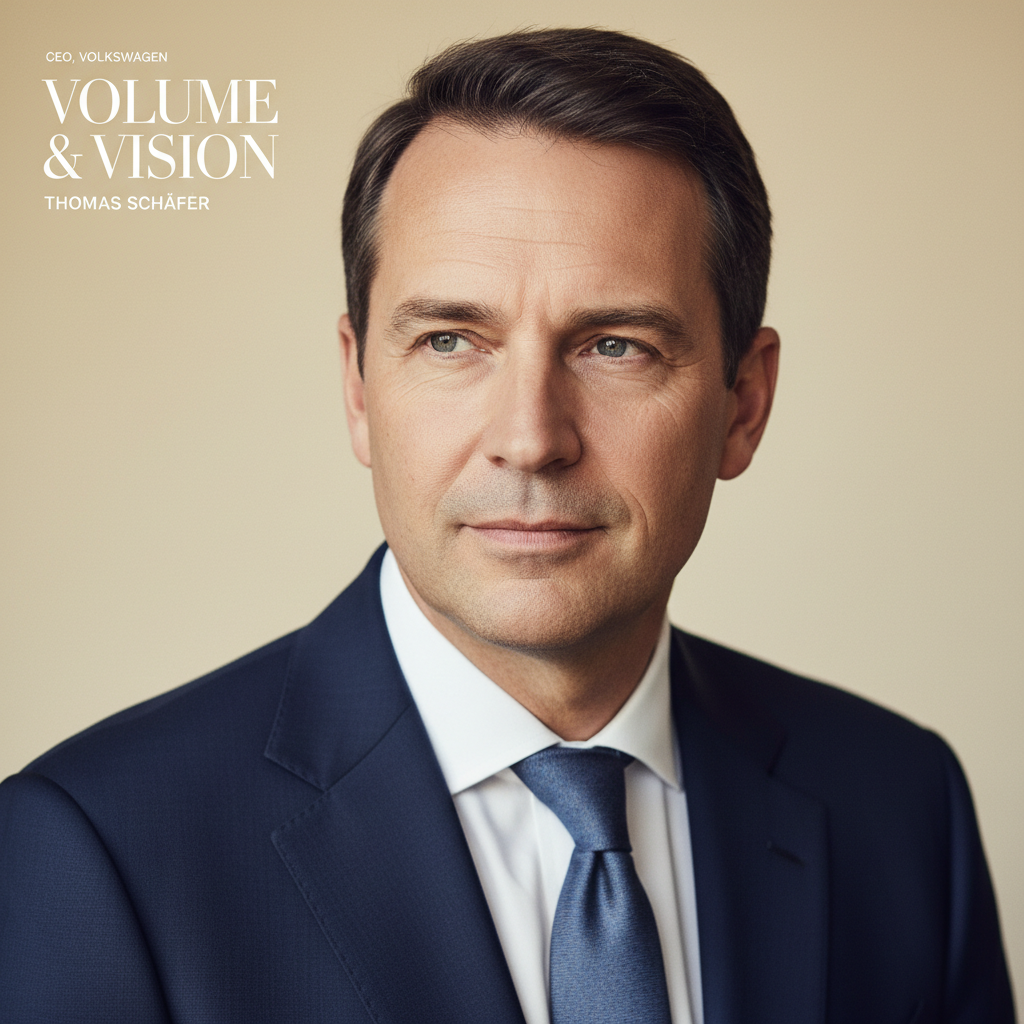
Thomas Schäfer
Leading Volkswagen's volume brands through electrification and operational transformation.
Thomas Schäfer is a German automotive executive known for his leadership roles within the Volkswagen Group, particularly in navigating complex market transformations and spearheading electrification strategies. He currently serves as CEO of the Volkswagen Passenger Cars brand and Head of the Brand Group Volume, overseeing brands like Volkswagen, Škoda, SEAT/CUPRA, and Volkswagen Commercial Vehicles.
Biography
Accomplishments
- 01Spearheaded Volkswagen South Africa's resilient performance and market positioning during 2015-2020, adapting to local market demands and preparing for future model introductions.
- 02Led Škoda Auto as CEO (2020-2022) through a period of strategic repositioning, focusing on strengthening the brand's international presence, particularly in India.
- 03Initiated and oversaw the development of Škoda's accelerated electrification roadmap, including the introduction of new MEB-based electric vehicles like the Enyaq iV.
- 04Appointed CEO of Volkswagen Passenger Cars and Head of Brand Group Volume (July 2022), consolidating management for key mass-market brands under one leader to enhance synergy and efficiency.
- 05Drove significant cost reduction and efficiency programs within the Volkswagen Passenger Cars brand, aiming for a targeted 10 billion Euros in savings by 2026 to fund future investments.
- 06Launched the 'Accelerate Forward | Road to 6.5' performance program for the Volkswagen brand, targeting a 6.5% operating return by 2026 through focused product, cost, and structural improvements.
Lessons for Operators
Key Takeaways
Practical lessons distilled for operators, investors, C-levels, and capital allocators.
Holistic Brand Group Management
Centralize leadership for similar market segments to drive economies of scale, common platform utilization, and optimized resource allocation, essential for global automotive players navigating intense competition and high investment costs.
Performance-Driven Transformation
Implement comprehensive performance programs with clear financial metrics (e.g., target operating return) and defined timelines to systematically address inefficiencies, rationalize portfolios, and generate capital for future strategic shifts like electrification and digitalization.
Market-Specific Strategy for Growth
Recognize that global strategies must be flexible enough to accommodate unique regional market conditions, consumer preferences, and regulatory environments to sustain local market share and profitability.
Electrification as an Operational Imperative
Treat the transition to electric vehicles not just as a product strategy but as a full operational overhaul encompassing manufacturing, supply chain, software integration, and dealership preparedness. This requires continuous investment and process re-engineering.
Operational Efficiency Fuels Innovation
Aggressive cost management and operational streamlining are not ends in themselves, but strategic levers to free up capital and resources for disruptive innovation, R&D, and expansion into new technologies and services.
Frameworks & Principles
Named frameworks and strategic principles they popularized or embodied.
Brand Group Synergy Model
A strategic model where related automotive brands are managed under a single executive or structure to maximize synergies in platform sharing, R&D, procurement, and production. It aims to reduce redundancy while maintaining distinct brand identities.
When to useApplicable for diversified corporations with multiple brands targeting similar or adjacent customer segments. Effective when seeking to achieve economies of scale, accelerate technology deployment, and optimize supply chains across a portfolio.
Strategic Performance Program (e.g., 'Road to 6.5')
A top-down, multi-year initiative designed to fundamentally improve the financial performance of an organization by setting ambitious targets (e.g., operating margin), identifying key levers (cost reduction, portfolio optimization, CO2 strategy), and establishing a rigorous execution framework.
When to useUtilize when a significant financial turnaround or a step-change in profitability is required, especially during periods of major industry disruption (e.g., electrification, global supply chain issues) that necessitate funding for new strategic directions.
Localized Market Adaptation Strategy
A business strategy where product development, marketing, pricing, and distribution are tailored specifically to the cultural, economic, and regulatory nuances of individual geographic markets, rather than employing a global standardized approach.
When to useEssential when entering or operating in highly diverse and complex global markets, particularly in emerging economies or regions with distinct consumer preferences, regulatory frameworks, or competitive landscapes that preclude a 'one-size-fits-all' approach.
Explore Related Titans
Other figures in the archive who share Thomas Schäfer's domain, geography, or era.
More in Transportation & Logistics








From Germany





Contemporaries — born 1970s