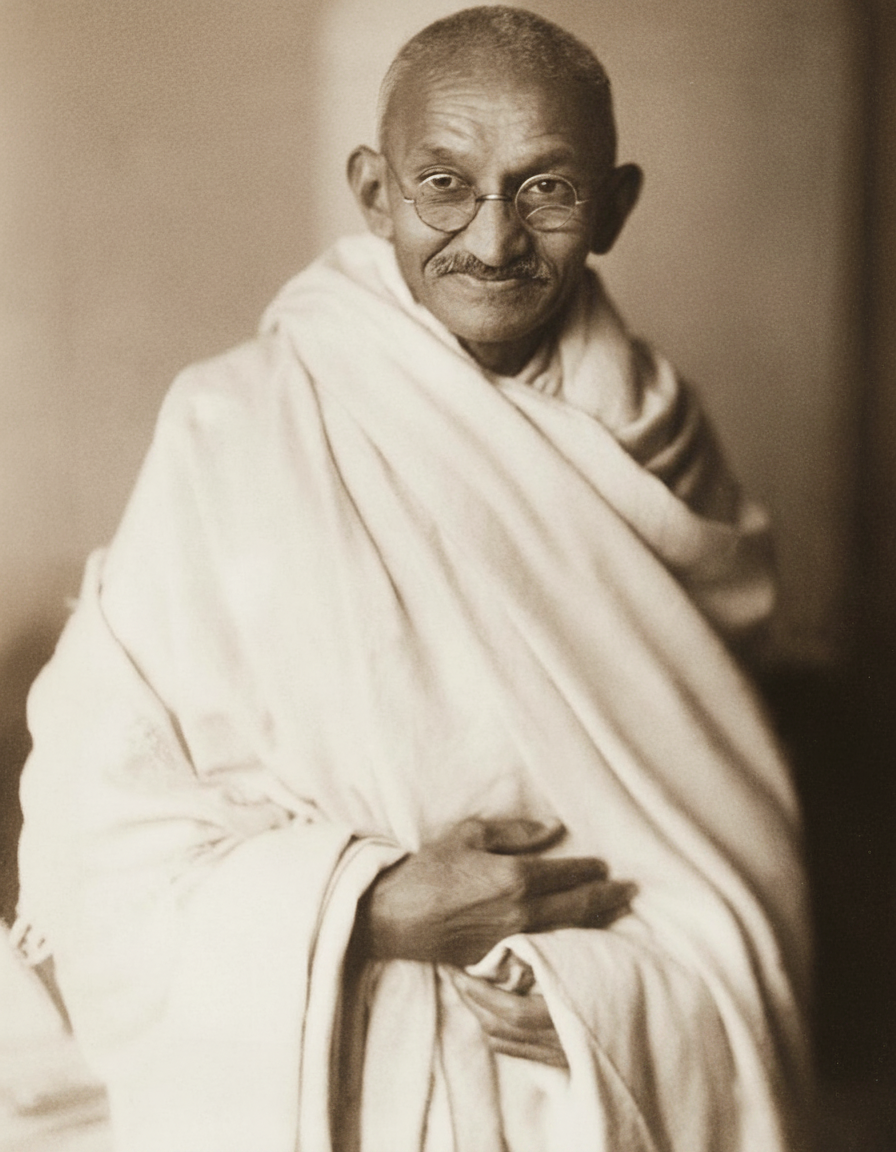
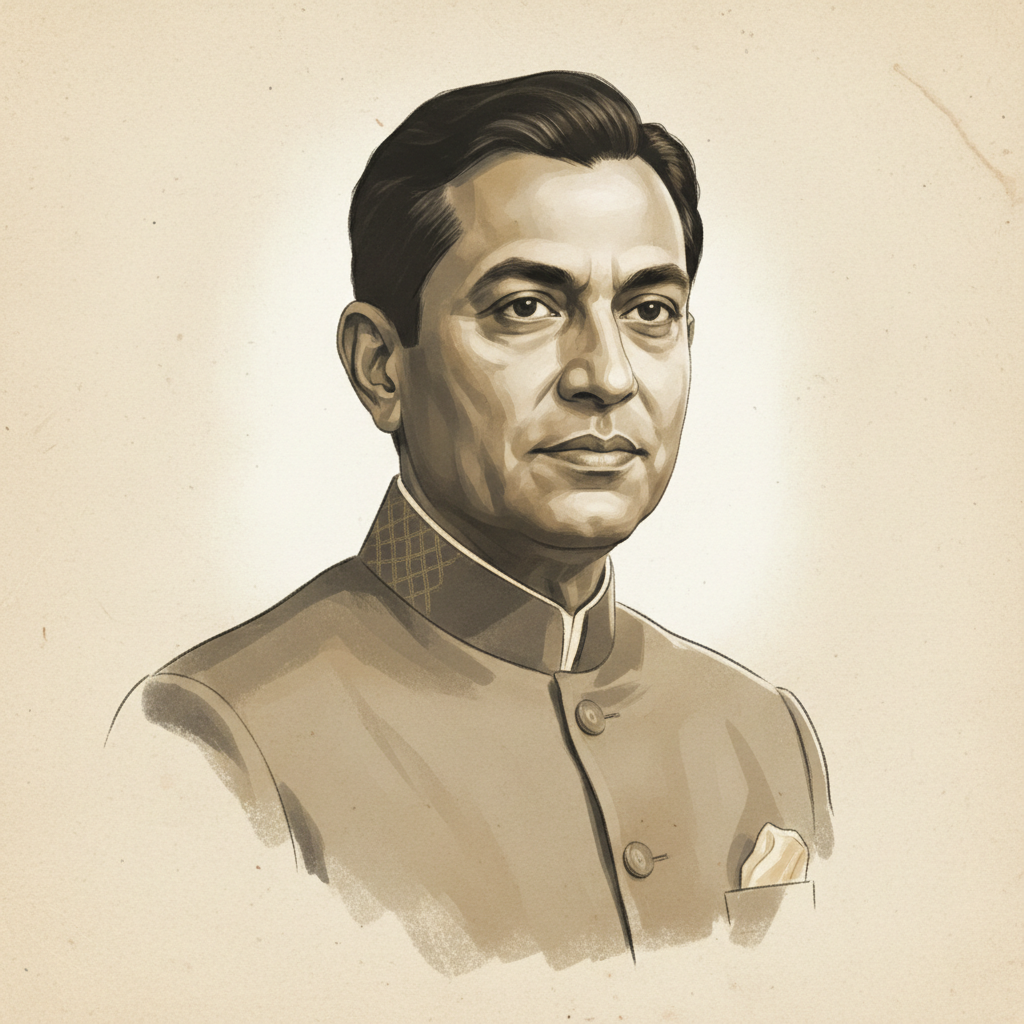
Mahatma Gandhi
Architect of non-violent resistance, champion of social justice, and pioneer of liberation strategy.
Mohandas Karamchand Gandhi, an Indian lawyer, anti-colonial nationalist, and ethicist, led India's successful struggle for independence from British rule. He inspired movements for civil rights and freedom across the world through his philosophy of satyagraha (non-violent resistance).
Biography
Accomplishments
- 01Led the Non-Cooperation Movement (1920-1922) against British rule, demonstrating the power of mass civil disobedience.
- 02Organized the Salt March (Dandi March) in 1930, a 240-mile non-violent protest against the British salt monopoly, garnering global attention and mobilizing millions.
- 03Initiated the Quit India Movement in 1942, escalating demands for immediate British departure from India.
- 04Successfully spearheaded India's independence from British colonial rule on August 15, 1947.
- 05Formulated and implemented 'Satyagraha,' a novel framework for civil resistance based on truth and non-violence currently deployed by numerous social movements globally.
- 06Led social reform efforts against 'untouchability,' advocating for the rights and dignity of marginalized communities within India.
Lessons for Operators
Key Takeaways
Practical lessons distilled for operators, investors, C-levels, and capital allocators.
Validate Your Thesis Empirically
Gandhi's methods were not theoretical; he rigorously tested satyagraha in South Africa for over two decades before applying it on a broader scale in India. For operators, this means piloting initiatives, gathering data, and refining strategies based on real-world outcomes before full-scale deployment.
Culture Eats Strategy for Breakfast
Gandhi meticulously cultivated a culture of self-reliance (Swadeshi), discipline, and shared purpose among Indian masses. He understood that a strong, unified collective identity was as crucial as any political strategy. Enterprise leaders must focus on internal culture and values to empower their teams.
Long-term Vision Requires Short-term Agility
While independence was the ultimate goal, Gandhi executed a series of distinct campaigns (e.g., Non-Cooperation, Salt March) each with specific, achievable objectives. This modular approach allowed for iterative learning and sustained momentum. Investors should look for ventures that can articulate clear milestones within a grander vision.
Disrupt Through De-commodification
By promoting homespun khadi, Gandhi directly challenged the British textile industry's exploitation of India as a raw material source and a captive market. He 'de-commodified' a basic need, transforming it into a tool of economic and political resistance. Businesses can seek niches where they can provide value by disrupting established, extractive models.
Identify and Isolate the 'Pain Point'
The Salt March wasn't just symbolic; it targeted the British salt tax, affecting every Indian household regardless of class or creed. This made the injustice tangible and unified diverse groups. Leaders should identify critical, universally felt pain points to rally stakeholders and create compelling solutions.
Frameworks & Principles
Named frameworks and strategic principles they popularized or embodied.
Satyagraha (Truth-Force/Soul-Force)
A policy of non-violent resistance to achieve truth and justice, characterized by active, but peaceful, civil disobedience. It involves steadfast adherence to moral principles, willingness to endure suffering without retaliation, and an appeal to the conscience of the oppressor.
When to useApplicable in situations demanding systemic change or challenging established power structures where traditional competitive or adversarial methods are ineffective or unethical. Useful for social movements, advocacy groups, and ethical business practices seeking to influence policy or market behavior through principled non-compliance.
Swadeshi (Self-Sufficiency/Self-Reliance)
The principle of patronizing one's own country's products and institutions, thereby fostering local economies and reducing dependence on external forces. It encompasses economic, political, and spiritual self-reliance.
When to useRelevant for local economic development initiatives, circular economy models, or organizations promoting ethical consumption and production. Can guide sourcing strategies for businesses aiming to support local suppliers, reduce supply chain vulnerabilities, or build resilient community ecosystems.
Constructive Programme
A comprehensive socio-economic agenda for national regeneration, complementary to political struggle. It focused on building a new social order through grassroots work in areas like communal unity, removal of untouchability, village industries, basic education, and women's empowerment.
When to useIdeal for social enterprises, NGOs, or corporate social responsibility (CSR) initiatives aiming for holistic community development. It emphasizes practical, bottom-up solutions to systemic issues, aligning social impact with long-term organizational goals.
Sources & Further Reading
Profiles, interviews, podcasts, and articles used to compile and verify this entry. Each link opens at the original publisher.
Explore Related Titans
Other figures in the archive who share Mahatma Gandhi's domain, geography, or era.
More in Other






From India


Contemporaries — 19th century