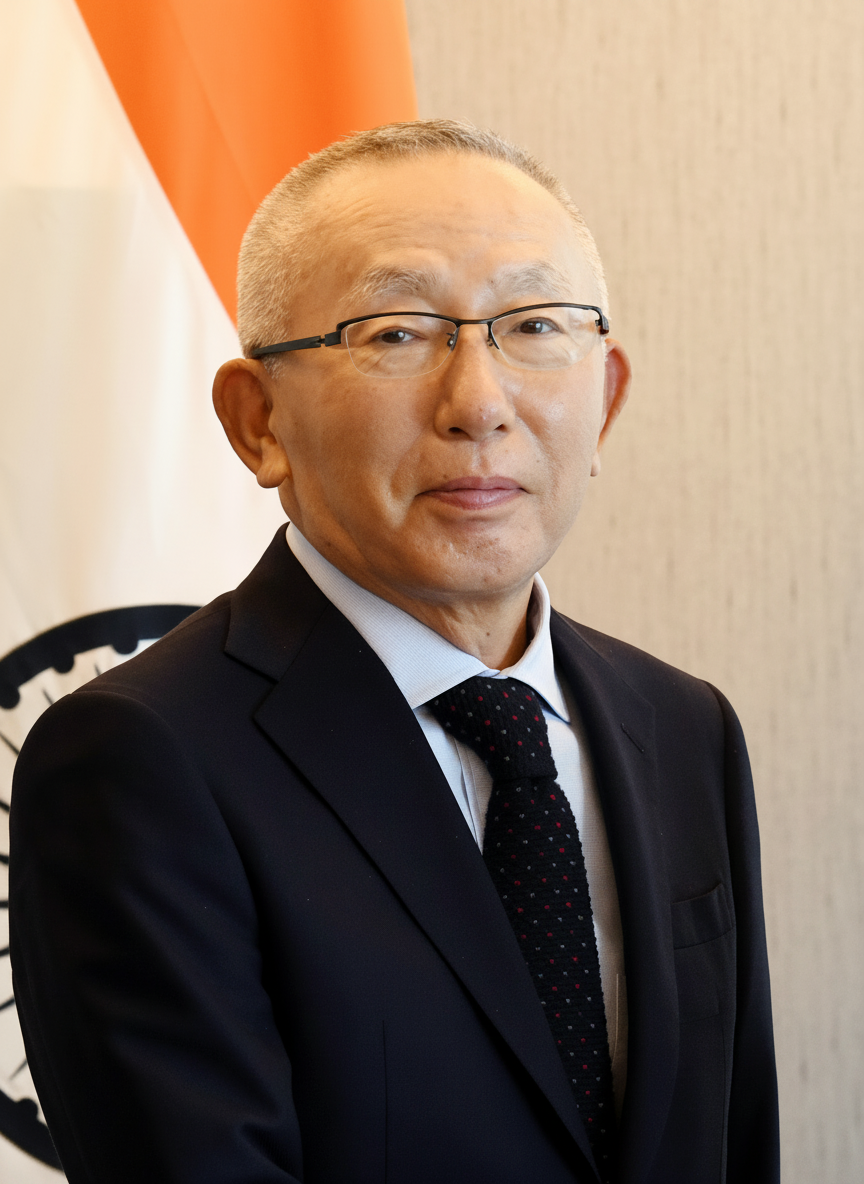
Tadashi Yanai
Architect of the modern SPA model who scaled a regional roadside tailor into Fast Retailing, Asia's dominant apparel conglomerate.
Tadashi Yanai transformed his father's single men's tailoring shop in suburban Yamaguchi Prefecture into Fast Retailing, parent company of Uniqlo, GU, and Theory. By pioneering a fully integrated Specialty-store retailer of Private-label Apparel (SPA) framework in Japan, forming deep chemical R&D alliances with textile giants like Toray Industries, and instituting an aggressive operational discipline, Yanai built the third-largest apparel retailer globally and became Japan's wealthiest corporate leader.
Biography
Accomplishments
- 01Scaled Fast Retailing from a single roadside outlet into an enterprise with over 3,500 group stores globally and over 3 trillion yen in annual consolidated revenue.
- 02Engineered the modern Japanese SPA (Specialty-store retailer of Private-label Apparel) architecture, consolidating design, raw material sourcing, production, and retail.
- 03Formed an exclusive corporate partnership with Toray Industries in 2006, delivering billion-unit proprietary synthetic textiles including Heattech, Airism, and Ultra Light Down.
- 04Established Uniqlo as the preeminent foreign apparel brand across Greater China, scaling to over 900 profitable mainland locations by maintaining cost and utility superiority.
- 05Successfully created and scaled GU as an autonomous lower-tier fast-fashion vehicle, mitigating cannibalization while insulating the core Uniqlo brand from volatile trend-chasing.
- 06Authored and embedded the core corporate governance manifesto 'The Fast Retailing Way', driving one of corporate Japan's most radical early transitions to English as an official business language in 2012.
Lessons for Operators
Key Takeaways
Practical lessons distilled for operators, investors, C-levels, and capital allocators.
Industrialize Everyday Staples
By framing apparel as engineered hardware ('Made for All') rather than trend-driven software, Yanai lowered SKU counts, lengthened product lifecycles, and commanded unprecedented economies of scale across production lines.
Upstream Collaborative R&D
Fast Retailing's long-term partnership with materials producer Toray Industries created proprietary competitive moats that standard retail competitors could neither license nor replicate off-the-shelf.
Institutionalized Failure Tolerance
Under the 'One Win, Nine Losses' philosophy, execution failures—such as the early UK retail campaign or the failed SKIP fresh-vegetable venture—are treated as operational capital investments, provided post-mortems immediately rewrite playbooks.
Zen-in Keiei (Autonomous Store-Led Management)
Yanai inverted standard corporate retail hierarchies by transforming store managers into autonomous business heads with P&L accountability, enabling hyper-responsive floor-level merchandising adapted to micro-demographics.
Frameworks & Principles
Named frameworks and strategic principles they popularized or embodied.
One Win, Nine Losses (Issho Kyuhei) Risk Architecture
An operational and capital allocation model dictating that businesses must undertake rapid, bounded experiments where a 10% hit rate is sufficient to yield transformative growth, provided the 90% failures are closed rapidly, insulated from systemic balance-sheet risk, and mined for structural data.
When to useDeploy when attempting counter-cyclical market entries, testing adjacent product categories, or disrupting incumbent business models without clear market visibility.
LifeWear Unified Value Chain (Upstream SPA Integration)
A vertical integration framework where product development begins with molecular-level fiber formulation alongside industrial chemical firms, moving directly to locked mega-factories, tight master-artisan quality controls, and proprietary retail real estate, bypassing all brokers and wholesalers.
When to useImplement when market margins are compressed by intermediaries and long-term moat defensibility requires uncopyable material performance rather than marketing spend.
Zen-in Keiei (All-Employee Micro-Entrepreneurship)
An organizational design where front-line operators (store managers) are granted operational discretion over order volumes, display allocation, and local marketing strategies, shifting headquarters from command-and-control to a shared-service platform.
When to useUse when scaling retail or multi-unit service operations across diverse international territories where centralized top-down merchandising cannot react quickly enough to local consumer nuances.
Sources & Further Reading
Profiles, interviews, podcasts, and articles used to compile and verify this entry. Each link opens at the original publisher.
Explore Related Titans
Other figures in the archive who share Tadashi Yanai's domain, geography, or era.
More in Technology










From Japan



Contemporaries — born 1940s