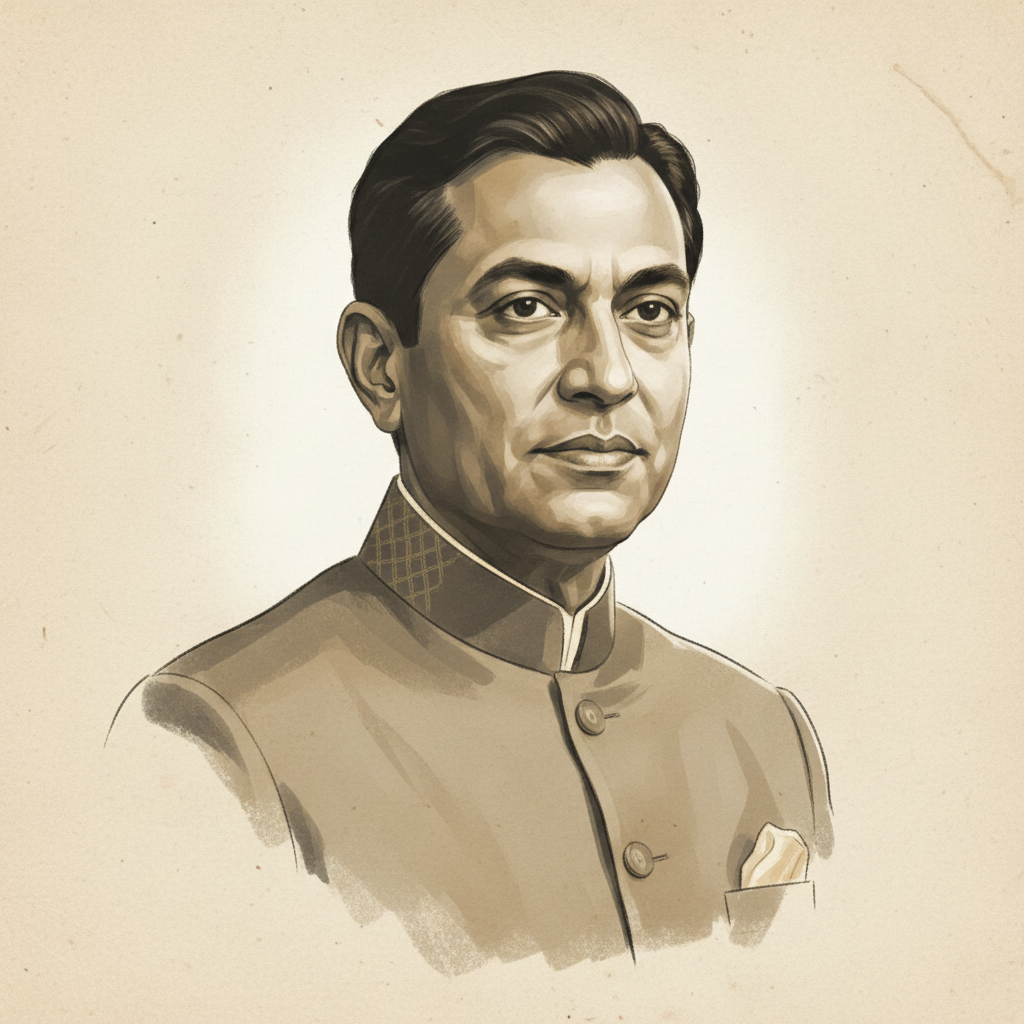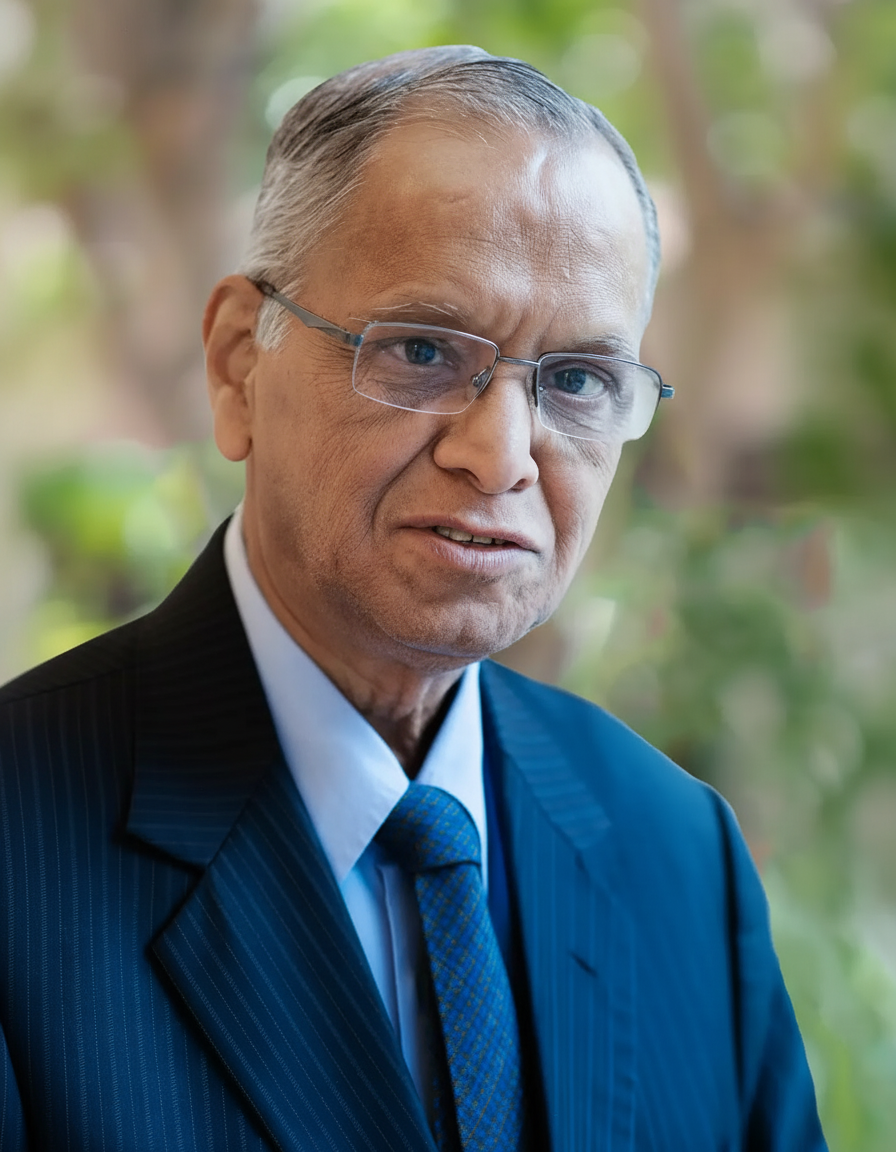
Portrait of Narayana Murthy
Modern Architect · 1946 — Present

Narayana Murthy

Pioneered India's global IT services export boom through ethical leadership and software innovation.

Country
India
Continent
Asia
Industry
Information Technology
Role
Co-founder & Longtime CEO / Executive Chairman, Infosys

N. R. Narayana Murthy is an Indian industrialist who co-founded Infosys in 1981, transforming it into a global IT consulting and software services powerhouse. He engineered the Global Delivery Model (GDM), which decoupled software development from physical client proximity, and led Infosys to become the first Indian-registered company to list on Nasdaq in 1999. Renowned for championing corporate governance and employee equity in emerging markets, Murthy institutionalized extreme transparency and financial conservatism, setting the governance benchmark for modern Indian enterprise.

Biography

Nagavara Ramarao Narayana Murthy earned a bachelor's degree in electrical engineering from the University of Mysore (National Institute of Engineering) in 1967 and a master's degree from IIT Kanpur in 1969. Early career exposure at SESA in Paris altered his economic philosophy from leftist socialism to compassionate capitalism after witnessing Western free-market infrastructure. After a failed entrepreneurial effort named Softronics, Murthy joined Patni Computer Systems in Pune as head of software. In 1981, Murthy and six fellow software professionals—Nandan Nilekani, S. Gopalakrishnan, S. D. Shibulal, K. Dinesh, N. S. Raghavan, and Ashok Arora—founded Infosys Consultants with 10,000 rupees (roughly $250) borrowed from his wife, Sudha Murty. During the 1980s License Raj, Infosys navigated severe bureaucratic hurdles, including a multi-year delay to import a single computer and foreign exchange restrictions. A critical inflection occurred in 1989 when joint-venture partner Kurt Salmon Associates pulled out, prompting co-founders to consider selling; Murthy bought them out of their doubts by committing to lead the firm forward single-handedly if necessary. Economic liberalization in India in 1991 unlocked massive tailwinds, allowing Infosys to establish software technology parks and reliable satellite communication links. Under Murthy's tenure as CEO from 1981 to 2002, Infosys pioneered the Global Delivery Model (GDM), dividing projects into client-facing architecture and offshore engineering to run uninterrupted 24-hour development cycles. Infosys went public in India in 1993 and subsequently became the first Indian company to trade on the Nasdaq (INFY) in March 1999, raising $34.5 million. Murthy served as CEO until 2002, Executive Chairman until 2006, and Non-Executive Chairman until 2011, briefly returning as Executive Chairman in 2013-2014 to stabilize margins and realign operational focus during an executive transition.

Accomplishments

  • 01Co-founded Infosys in 1981 with $250 in pooled seed capital and scaled it into a global enterprise with multi-billion-dollar recurring revenues.
  • 02Formulated and scaled the Global Delivery Model (GDM), an offshore software development paradigm that became the industry standard for multi-billion-dollar IT service providers worldwide.
  • 03Engineered the March 1999 Nasdaq listing of Infosys (INFY), the first American depository receipt (ADR) listing by an Indian-incorporated company.
  • 04Pioneered broad-based Employee Stock Option Plans (ESOPs) in corporate India, distributing equity broadly and creating India's first generation of salaried tech millionaires.
  • 05Chaired the 2002-2003 Securities and Exchange Board of India (SEBI) Committee on Corporate Governance, establishing institutional guidelines for board independence, audit transparency, and minority shareholder rights.
  • 06Grew Infosys revenues from roughly $10 million in 1992 to over $2 billion by 2006 while sustaining industry-leading net margins consistently exceeding 20%.

Lessons for Operators

Enforce radical financial transparency: Treating reporting standards, GAAP/IFRS conformity, and voluntary disclosures as competitive differentiators attracts lower-cost global capital.
Anchor pricing to business value, not labor arbitrage: Retain high operating margins by turning down unprofitable volume contracts, avoiding the low-margin body-shopping race to the bottom.
Operationalize the 24-hour workday: Geographically bifurcate software delivery between onshore client management and offshore production centers to compress cycle times and lower costs.
Align long-term talent through widespread equity participation: Distributing ownership across engineers and support staff breeds organizational loyalty and reduces costly technical attrition.
Retain institutional resilience through conservative balance sheets: Maintaining zero debt and substantial cash reserves preserves strategic independence during cyclical macro downturns.
Establish clear leadership transition protocols: Founder-led firms must codify retirement age and board succession boundaries early to prevent executive paralysis.
The Operator's Playbook

Key Takeaways

Practical lessons distilled for operators, investors, C-levels, and capital allocators.

Lesson 01

Under-Promise, Over-Deliver (UPOD)

Murthy instituted UPOD as a disciplined investor relations and delivery operating principle, systematically meeting or exceeding quarterly earnings and client milestone projections for over a decade.

Lesson 02

Corporate Governance as a Capital Magnet

By adopting US GAAP and voluntary disclosures long before domestic regulatory mandates, Infosys gained premium valuations and frictionless access to global institutional capital.

Lesson 03

Labor Arbitrage to Process Arbitrage

The Global Delivery Model transitioned the firm from exploiting wage differentials to optimizing complex distributed workflows backed by CMMI Level 5 software engineering processes.

Lesson 04

Balance Sheet Conservatism

Infosys maintained a pristine cash-heavy, debt-free balance sheet, ensuring operational viability through the 2000 dot-com crash and the 2008 global financial crisis without forced asset sales.

Mental Models

Frameworks & Principles

Named frameworks and strategic principles they popularized or embodied.

01

Global Delivery Model (GDM)

An architectural and organizational framework that partitions software projects into client-facing requirements/program management executed onsite and engineering/testing executed offshore. Leveraging time zone differences, it establishes a continuous 24-hour development pipeline with measurable cost efficiencies.

When to useApplicable when scaling high-volume service delivery, technical support, or engineering operations requiring high labor elasticity, geographic cost optimization, and round-the-clock turnaround.

02

The PSPD Model (Predictability, Sustainability, Profitability, De-risking)

A strategic management metric suite ensuring operating health. Predictability measures quarterly revenue visibility; Sustainability focuses on durable client relationships and recurring retainers; Profitability maintains margin floors; De-risking caps exposure to any single client (maximum 10%), single geography, or single technology stack.

When to useDeploy during portfolio review or board-level strategic planning to manage corporate concentration risk while scaling enterprise professional services businesses.

03

Compassionate Capitalism Operational Framework

A leadership structure balancing market-driven capital accumulation with internal equity distribution and stringent ethics. It involves performance meritocracy, strict zero-tolerance integrity filters for all contracts, low wage dispersion ratios, and broad equity ownership for all employee tiers.

When to useUse when architecting compensation structures, cultural values, and executive incentives in knowledge-intensive organizations operating in emerging or developing economies.

Citations

Sources & Further Reading

Profiles, interviews, podcasts, and articles used to compile and verify this entry. Each link opens at the original publisher.

Adjacent Minds

Explore Related Titans

Other figures in the archive who share Narayana Murthy's domain, geography, or era.

Technology

More in Technology

Browse all →
Portrait of Steve Jobs
USA / TECHNOLOGY
Steve Jobs
Co-founder of Apple Inc. and visionary credited with transforming multiple industries.
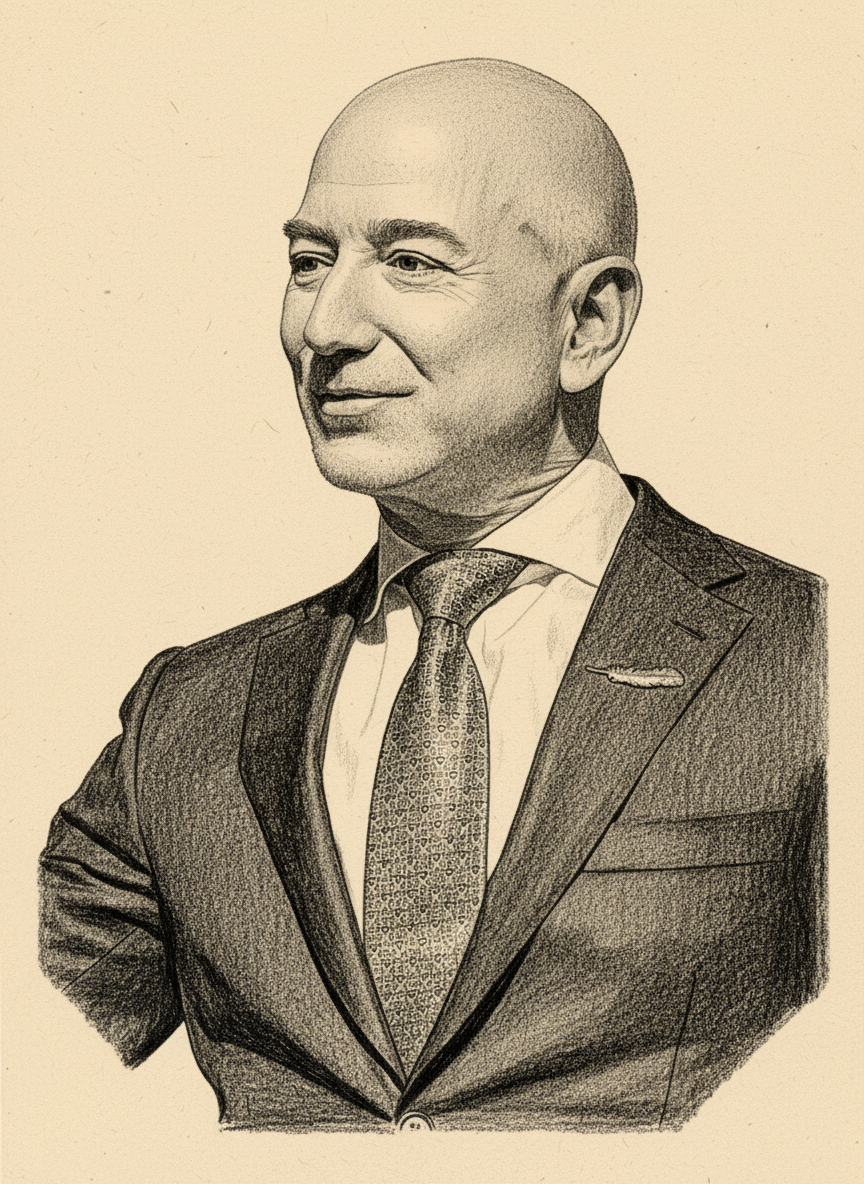
Portrait of Jeff Bezos
UNITED STATES / TECHNOLOGY, RETAIL, LOGISTICS, CLOUD COMPUTING, SPACE EXPLORATION
Jeff Bezos
Architect of Amazon, pioneer of e-commerce, and visionary across cloud computing, logistics, and space exploration.
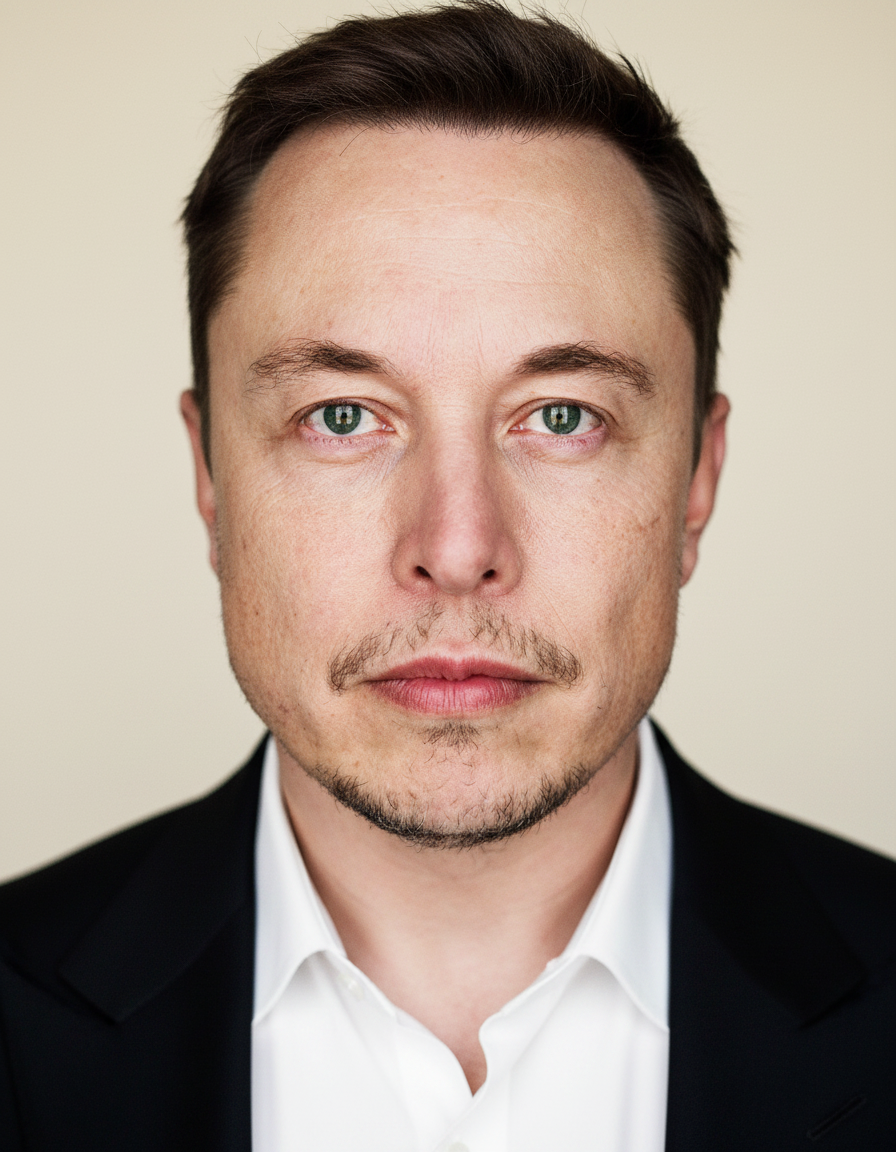
Portrait of Elon Musk
SOUTH AFRICA / AEROSPACE, AUTOMOTIVE, ARTIFICIAL INTELLIGENCE, ENERGY, TELECOMMUNICATIONS
Elon Musk
Elon Reeve Musk: Visionary entrepreneur leading advancements in aerospace, automotive, and artificial intelligence.
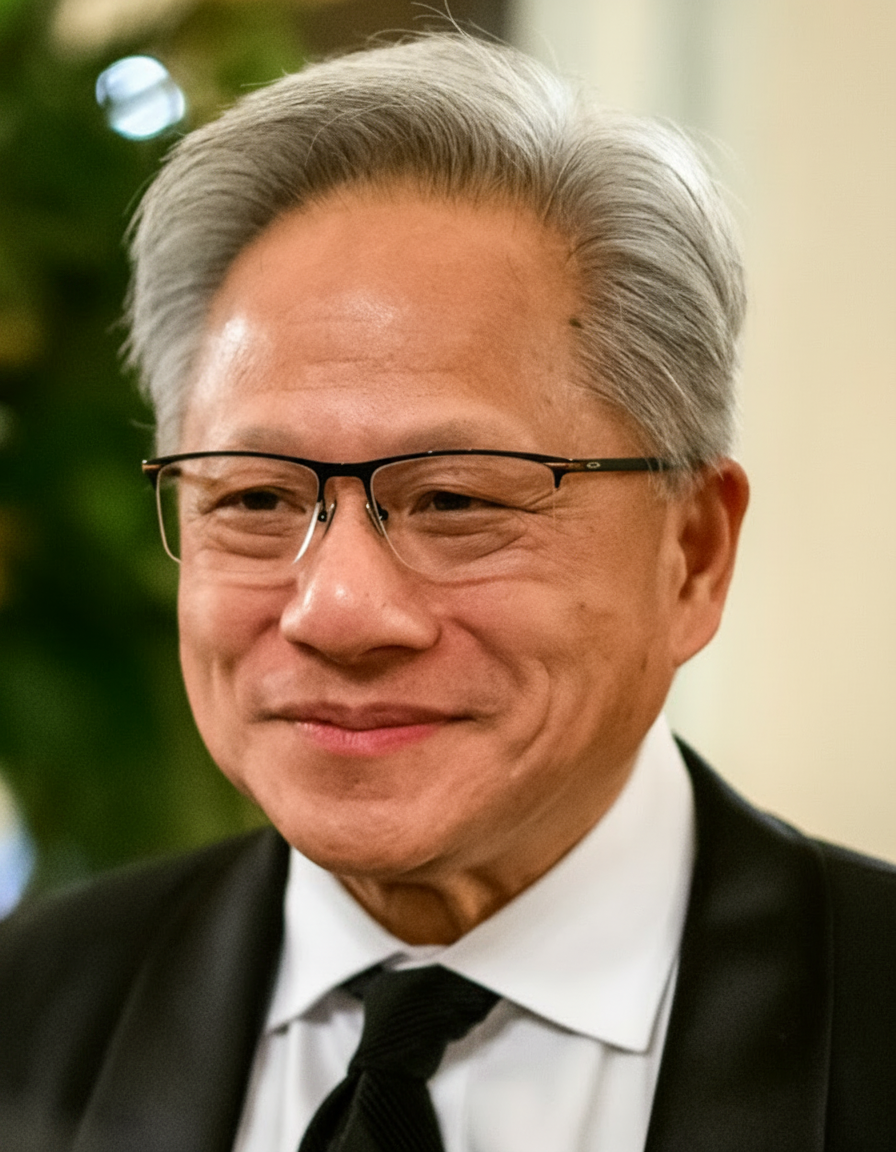
Portrait of Jensen Huang
TAIWAN (NATURALIZED AMERICAN CITIZEN) / SEMICONDUCTORS, ARTIFICIAL INTELLIGENCE, COMPUTING
Jensen Huang
Co-founder, President, and CEO of NVIDIA, a pioneering force in graphics processing units (GPUs) and artificial intelligence.
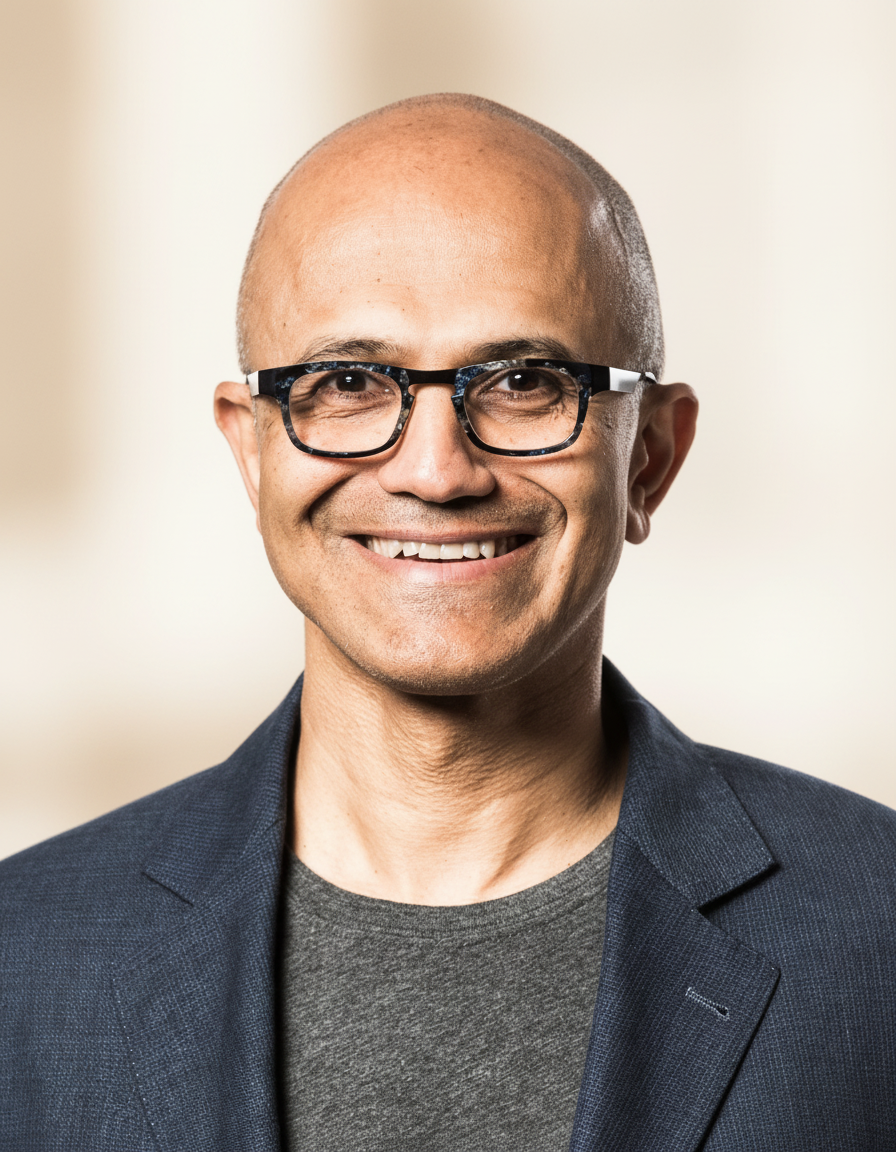
Portrait of Satya Nadella
UNITED STATES / TECHNOLOGY
Satya Nadella
Architect of Microsoft's cloud-first, AI-driven renaissance, shifting culture and strategy to drive sustained growth and market leadership.
Portrait of Bill Gates
UNITED STATES / SOFTWARE, TECHNOLOGY, PHILANTHROPY
Bill Gates
Co-founder of Microsoft, architect of the personal computing revolution, and global philanthropist.
Portrait of Mark Cuban
UNITED STATES / TECHNOLOGY, MEDIA, SPORTS, HEALTHCARE
Mark Cuban
Mark Cuban: The Prolific Disrupter – From Software Startups to Sports Franchises and Pharmaceutical Innovation, Leveraging Technology and Direct-to-Consumer Models.
Portrait of Sam Walton
UNITED STATES / RETAIL
Sam Walton
The architect of modern retail, pioneering discount merchandising and logistical efficiency to establish the world's largest retail corporation.
Portrait of Jack Ma
CHINA / E-COMMERCE, TECHNOLOGY, FINANCE
Jack Ma
Co-founder of Alibaba Group, pioneering e-commerce and digital finance in China.
Portrait of Walt Disney
UNITED STATES / ENTERTAINMENT
Walt Disney
Co-founder of The Walt Disney Company, pioneering animation, theme parks, and diversified entertainment.
India

From India

Browse all →
Portrait of Mukesh Ambani
INDIA / CONGLOMERATE
Mukesh Ambani
India's transformative conglomerate architect, driving digital and retail revolutions.
Portrait of Chanakya
INDIA / GOVERNMENT & PUBLIC POLICY, CONSULTING
Chanakya
The architect of unified India, master strategist, and foundational thinker in statecraft and economics.
Portrait of Anshu Jain
INDIA / FINANCIAL SERVICES
Anshu Jain
Anshu Jain: The architect of Deutsche Bank's global investment banking prowess, demonstrating aggressive expansion and risk management in a shifting financial landscape.
Portrait of Shailesh Jejurikar
INDIA / CONSUMER GOODS, PRIVATE EQUITY
Shailesh Jejurikar
A transformational executive with a distinguished career at Procter & Gamble, now leveraging deep operational expertise in private equity.
Portrait of BYJU Raveendran
INDIA / ED-TECH
BYJU Raveendran
Byju Raveendran transformed educational delivery in India, leveraging digital platforms to scale personalized learning and create a multi-billion dollar ed-tech enterprise.
Portrait of Natarajan Chandrasekaran
INDIA / CONGLOMERATE MANAGEMENT
Natarajan Chandrasekaran
Architect of Tata Group's digital transformation and strategic consolidation.
Portrait of Kiran Mazumdar Shaw
INDIA / BIOTECHNOLOGY, PHARMACEUTICALS
Kiran Mazumdar Shaw
Pioneering Indian biotechnology, transforming innovation into accessible healthcare.
Portrait of Piyush Gupta
INDIA / FINANCIAL SERVICES
Piyush Gupta
Architect of DBS's digital transformation and leading global recognition for banking innovation.
Portrait of Vinod Khosla
INDIA / VENTURE CAPITAL, TECHNOLOGY
Vinod Khosla
Co-founder of Sun Microsystems and influential venture capitalist, known for his early and often contrarian bets on disruptive technologies.
Portrait of Shantanu Narayen
INDIA / SOFTWARE, DIGITAL MEDIA, MARKETING TECHNOLOGY
Shantanu Narayen
Architect of Adobe's Cloud Transformation and Sustained Growth
Same Era

Contemporaries — born 1940s
Browse all →
Portrait of Ray Dalio
UNITED STATES / INVESTMENT MANAGEMENT
Ray Dalio
The architect of 'radical transparency' and systematic investing, Ray Dalio built Bridgewater Associates into one of the world's largest and most influential hedge funds.
Portrait of Bernard Arnault
FRANCE / LUXURY GOODS
Bernard Arnault
The architect of modern luxury, Bernard Arnault transformed LVMH into the world's leading luxury conglomerate.
Portrait of Michael Bloomberg
UNITED STATES / FINANCIAL DATA, MEDIA, PHILANTHROPY, GOVERNMENT
Michael Bloomberg
The architect of real-time financial information and a transformative civic leader.
Portrait of Larry Ellison
UNITED STATES / ENTERPRISE SOFTWARE
Larry Ellison
Oracle's Architect: A relentless competitor who built the dominant enterprise database and cloud platform.
Portrait of David M. Rubenstein
UNITED STATES / PRIVATE EQUITY
David M. Rubenstein
Co-Founder and Executive Chairman of The Carlyle Group, a global investment firm.
Portrait of Stephen Schwarzman
UNITED STATES / FINANCIAL SERVICES
Stephen Schwarzman
Co-founder, Chairman, and CEO of Blackstone, Stephen A. Schwarzman engineered the firm's evolution into the world's largest alternative asset manager.
Portrait of John Menard Jr.
UNITED STATES / RETAIL, HOME IMPROVEMENT
John Menard Jr.
The architect of a 'big box' retail empire, known for extreme cost control and an unwavering focus on operational efficiency.
Portrait of Alfred West
UNITED STATES / FINANCIAL TECHNOLOGY (FINTECH)
Alfred West
Pioneering financial technology entrepreneur who founded and led SEI Investments, revolutionizing asset management and investment processing.
Portrait of Sir Martin Sorrell
UNITED KINGDOM / MARKETING & ADVERTISING
Sir Martin Sorrell
The architect of WPP, transforming a wire-basket manufacturer into the world's largest advertising and marketing services company.
Portrait of Israel Englander
UNITED STATES / FINANCIAL SERVICES
Israel Englander
Israel Englander: The Architect of Millennium Management, a Hedge Fund Behemoth Built on Decentralized Risk Management and Diverse Strategies.