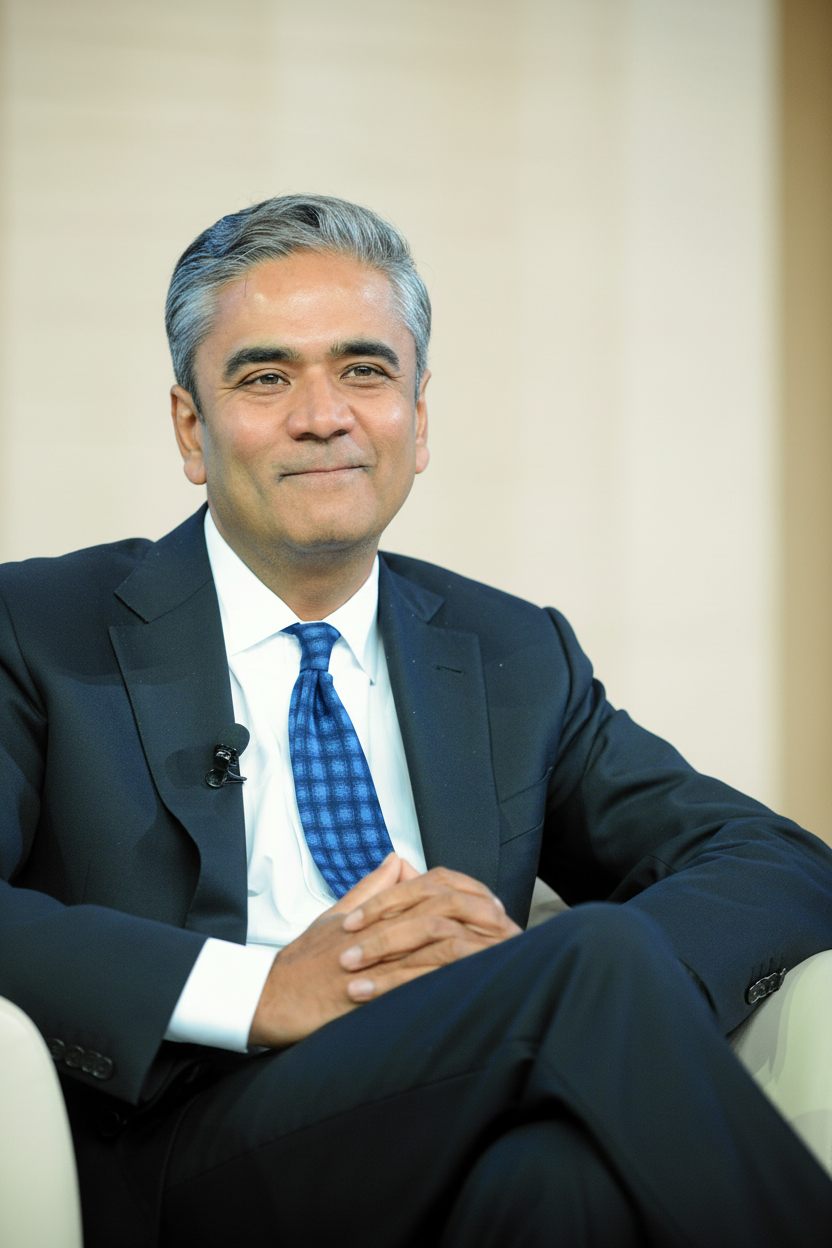
Anshu Jain
Anshu Jain: The architect of Deutsche Bank's global investment banking prowess, demonstrating aggressive expansion and risk management in a shifting financial landscape.
Anshu Jain was a transformational leader known for building Deutsche Bank into a formidable global investment bank. Starting his career at Merrill Lynch, he joined Deutsche Bank in 1995, rising to Co-CEO in 2012. He spearheaded the bank's aggressive expansion in capital markets, fixed income, and global derivatives, significantly increasing its market share and profitability before his tenure as CEO, where he faced intense regulatory and structural challenges post-financial crisis. His strategic vision and risk-taking appetite reshaped the institution.
Biography
Accomplishments
- 01Transformed Deutsche Bank's investment banking unit into a top-tier global player, significantly increasing its market share and profitability, particularly in fixed income, currencies, and derivatives, from 1995 to 2012.
- 02Engineered Deutsche Bank's expansion into global capital markets, challenging the dominance of traditional Wall Street firms and making it the largest European investment bank by certain metrics.
- 03Successfully navigated the integration of Bankers Trust acquisition in 1999, which significantly bolstered Deutsche Bank's fixed income and capital markets capabilities, proving his operational acumen in large-scale M&A.
- 04Led Deutsche Bank as Co-CEO through the post-2008 financial crisis regulatory environment, initiating efforts to restructure the bank and address compliance issues, despite eventually facing a challenging exit.
- 05Pioneered complex derivatives trading strategies at Merrill Lynch in the late 1980s and early 1990s, laying foundational expertise later applied to Deutsche Bank's derivatives desk.
- 06Appointed President of Cantor Fitzgerald in 2017, demonstrating continued influence and demand for his expertise in the financial services sector.
- 07Instrumental in building Deutsche Bank's emerging markets franchise, recognizing and capitalizing on growth opportunities outside traditional Western markets.
Lessons for Operators
Key Takeaways
Practical lessons distilled for operators, investors, C-levels, and capital allocators.
Strategic Niche Domination
Identify high-growth, high-margin niches (like complex derivatives in the 1990s and early 2000s) and relentlessly pursue market leadership. This demands specialist talent, capital allocation, and a deep understanding of market mechanics. However, be prepared for increased regulatory scrutiny proportional to market influence.
Aggressive, Unapologetic Growth
Jain’s approach prioritized aggressive market share capture. For firms seeking rapid scaling, this involves bold investment in talent and technology, challenging incumbents directly, and accepting higher risk tolerances (with mitigated controls). However, this strategy is unsustainable without parallel enhancements in risk management and compliance infrastructure.
The Perils of Unchecked Ambition
While ambition fueled Deutsche Bank's rise, a perceived 'win at all costs' culture arguably led to compliance lapses and regulatory fines, ultimately undermining long-term value. Leaders must balance growth with robust ethical frameworks and risk controls to ensure sustainability.
Navigating Regulatory Headwinds
Jain's CEO tenure exemplifies the immense challenge of leading a globally interconnected, systemically important financial institution through an era of intense post-crisis regulatory reform. Enterprise leaders must proactively engage with and adapt to evolving regulatory landscapes, rather than reacting belatedly.
Importance of Executive Succession Planning
Jain's co-CEO structure underscored challenges in leadership clarity and decision-making during crisis. Clear, singular accountability, especially in high-stakes environments, is often more effective than shared leadership without defined portfolios.
Frameworks & Principles
Named frameworks and strategic principles they popularized or embodied.
Market Share Aggregation Strategy
Focus intensely on specific high-value product segments or geographies to rapidly gain dominant market share, often by leveraging advanced proprietary technology, risk modeling, and a deep talent pool. This framework prioritizes revenue growth and competitive positioning.
When to useApplicable when a company identifies a fragmented or underserved market segment with high growth potential, and possesses the capital, talent, and risk appetite to aggressively enter and scale. Caution should be applied regarding regulatory implications of dominant market position.
Integrated Global Investment Bank Model
Developing a financial institution that offers a comprehensive suite of investment banking services (M&A, equity and debt capital markets, sales & trading, derivatives) across major global financial centers, leveraging cross-border synergies and client relationships.
When to useSuitable for large financial institutions aiming for global reach and diverse revenue streams, capable of managing complex international regulatory environments and integrating cross-border operations. Requires significant capital and a strong risk management framework.
Culture of Risk and Reward Alignment
A system where compensation, career progression, and strategic decisions are inextricably linked to both the profits generated and the associated risks taken. Jain fostered a culture that rewarded aggressive trading and client acquisition.
When to useEffective in performance-driven environments like investment banking or sales, where individual contribution is measurable. However, careful design is needed to prevent excessive risk-taking or short-termism, particularly through robust clawback provisions and long-term incentive structures tied to sustainable performance and compliance.
Recent Appearances
Latest interviews, keynotes, and press from the past half year.
 youtube.com
 youtube.com
 youtube.com
 youtube.com
 youtube.com
 youtube.com
 m.youtube.com
 youtube.com
 youtube.com
 youtube.com
 youtube.com
 youtube.com
 youtube.com
 youtube.com
 youtube.com
 youtube.com
 youtube.com
 youtube.com
 youtube.com
 youtube.com
 youtube.com
 youtube.com
 youtube.com
 youtube.com
 youtube.com
 youtube.com
 youtube.com
 youtube.com
 youtube.com
 youtube.com
 youtube.com
 youtube.com
 youtube.com
 youtube.com
 youtube.com
 youtube.com
 youtube.com
 youtube.com
 youtube.com
 youtube.com
 youtube.com
 youtube.com
 youtube.com
 youtube.com
 youtube.com
 youtube.com
 youtube.com
 youtube.com
 youtube.com
 youtube.com
 youtube.com
 youtube.com
 youtube.com
 youtube.com
 youtube.com
 youtube.com
 youtube.com
 youtube.com
 youtube.com
 youtube.com
 youtube.com
 youtube.com
 youtube.com
 youtube.com
 youtube.com
 youtube.com
 youtube.com
 youtube.com
 youtube.com
 youtube.com
 youtube.com
 youtube.com
 youtube.com
 youtube.com
 youtube.com
 youtube.com
 youtube.com
 youtube.com
 youtube.com
 m.youtube.com
 youtube.com
 youtube.com
 youtube.com
 youtube.com
 youtube.com
 youtube.com
 youtube.com
 youtube.com
 youtube.com
 youtube.com
 youtube.com
 youtube.com
 youtube.com
 youtube.com
 youtube.com
 youtube.com
 youtube.com
 youtube.com
 youtube.com
 youtube.com
 youtube.com
 youtube.com
 youtube.com
 youtube.com
 youtube.com
 youtube.comyoutube.com
 youtube.com
 m.youtube.com
 youtube.com
 youtube.com
 youtube.com
 youtube.com
 m.youtube.com
 youtube.com
 youtube.com
 youtube.com
 youtube.com
 youtube.com
 youtube.com
 m.youtube.com
 youtube.com
 youtube.com
 youtube.com
 m.youtube.com
 youtube.com
 youtube.com
 youtube.com
 youtube.com
 youtube.com
 youtube.com
 youtube.com
 youtube.com
 m.youtube.com
 youtube.com
 youtube.com
 m.youtube.com
 youtube.com
 youtube.com
 youtube.com
 youtube.com
 youtube.com
 youtube.com
 youtube.com
 m.youtube.com
 youtube.com
 m.youtube.com
Sources & Further Reading
Profiles, interviews, podcasts, and articles used to compile and verify this entry. Each link opens at the original publisher.
Explore Related Titans
Other figures in the archive who share Anshu Jain's domain, geography, or era.
More in Finance & Investing










From India




Contemporaries — born 1960s