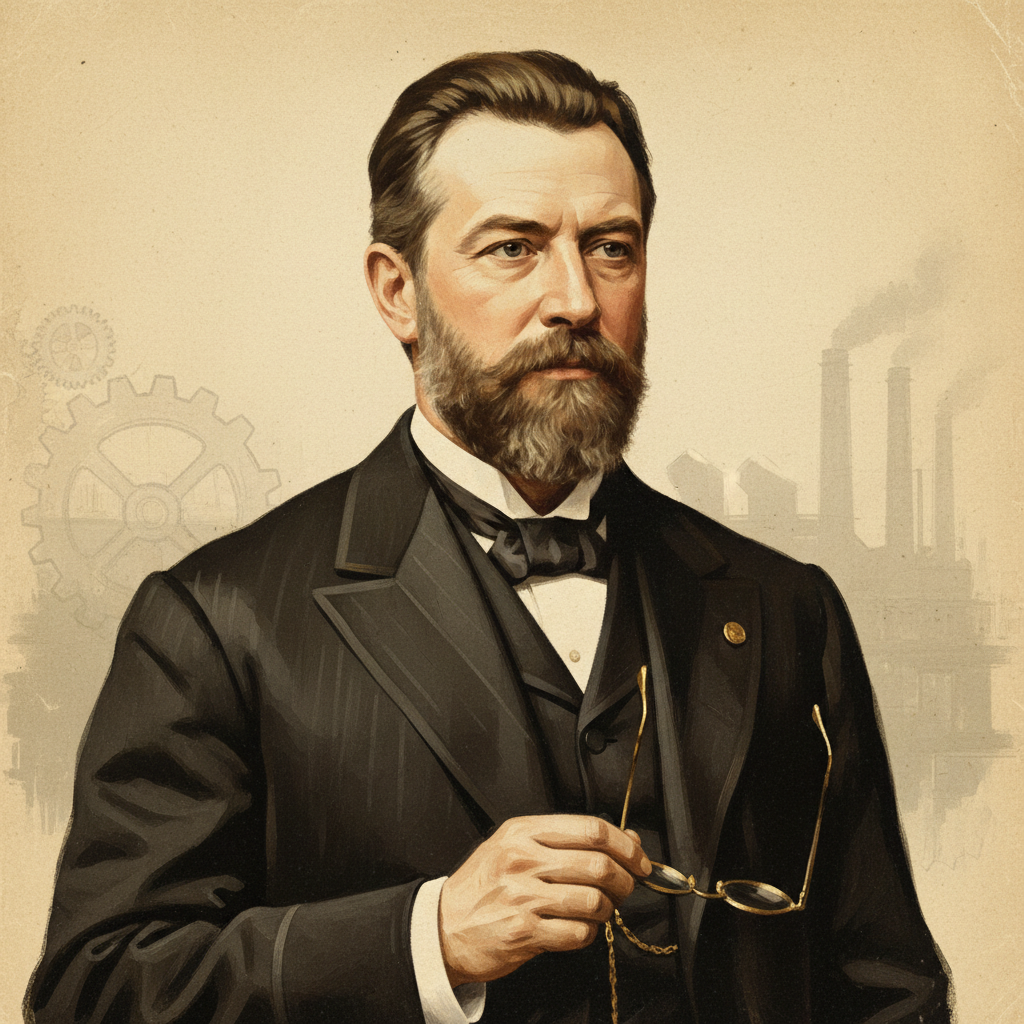
André Citroën
Pioneer of European automotive mass production, modern industrial marketing, and advanced vehicle architecture.
André Citroën was an engineering visionary who revolutionized European industry by introducing Fordist assembly-line manufacturing, high-volume consumer automaking, and groundbreaking innovations like the front-wheel-drive Traction Avant. His unmatched promotional acumen scaled Citroën into Europe's largest automaker, though extreme capital expenditures and leverage ultimately forced a restructuring by Michelin.
Biography
Accomplishments
- 01Scaled French artillery shell production at the Quai de Javel facility to 55,000 units per day during World War I using early flow-production techniques.
- 02Launched the 1919 Citroën Type A, Europe's first true mass-produced, standardized motorcar, producing over 24,000 units in its first two years.
- 03Built Europe's largest automobile manufacturer by 1932, producing hundreds of thousands of vehicles and claiming over 30% of the French domestic market.
- 04Pioneered consumer auto-financing in Europe by establishing SOVAC (Société pour la Vente à Crédit d'Automobiles) in 1920, broadening vehicle access to the middle class.
- 05Engineered the 1934 Citroën Traction Avant, which normalized front-wheel drive, monocoque steel unibody construction, and hydraulic brakes in high-volume passenger vehicles.
- 06Executed iconic global brand campaigns, including lighting his name on the Eiffel Tower with 250,000 lightbulbs and financing the Sahara and Central Asia expeditions (Croisière Noire and Croisière Jaune).
Lessons for Operators
Key Takeaways
Practical lessons distilled for operators, investors, C-levels, and capital allocators.
Dual-Risk Execution Trap
Simultaneously rebuilding the flagship Quai de Javel manufacturing plant in five months while developing the untried monocoque front-wheel-drive Traction Avant compounded engineering and cash flow vulnerabilities, ultimately causing corporate insolvency.
Democratization Through Integration
Citroën proved that luxury features become profitable mass-market products when vertical manufacturing integration, standardized supply chains, and consumer credit (SOVAC) are deployed synchronously.
Brand Equity as Moat
Pioneering marketing initiatives—from highway road signage networks to trans-continental vehicular endurance trials—built unassailable customer mindshare that allowed the brand to survive ownership changes intact.
Creditor Vulnerability in High Capex
Relying on supplier credit (notably Michelin) to fund long-tail research and industrial expansion transforms your core suppliers into your eventual acquirers when working capital stalls.
Frameworks & Principles
Named frameworks and strategic principles they popularized or embodied.
The Integrated Demand-Supply Loop
A commercial deployment model where manufacturing scale is paired directly with proprietary consumer credit, national roadside signage, and authorized dealership mechanics to pull inventory through the line rather than pushing it onto lots.
When to useWhen launching high-capex, consumer-durable technologies into developing or fragmented markets lacking institutional credit or support infrastructure.
Platform-Production Decoupling Matrix
A risk assessment rule of thumb determining that an enterprise should never implement a radical core architecture change (such as monocoque chassis + front-wheel drive) concurrently with a complete greenfield or brownfield factory rebuild.
When to useDuring industrial expansion planning to prevent simultaneous technical teething issues on the factory floor and in product quality.
Sources & Further Reading
Profiles, interviews, podcasts, and articles used to compile and verify this entry. Each link opens at the original publisher.
Explore Related Titans
Other figures in the archive who share André Citroën's domain, geography, or era.
More in Transportation & Logistics







From France








Contemporaries — 19th century