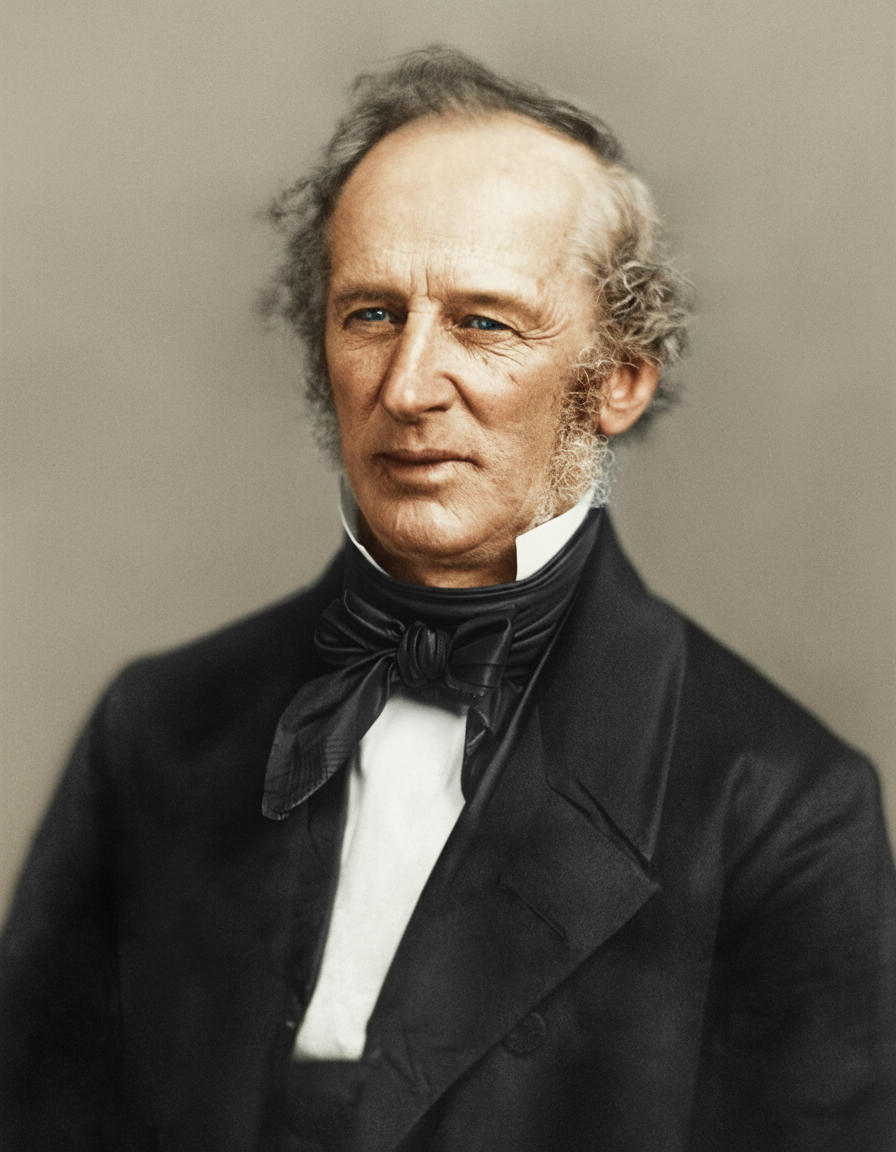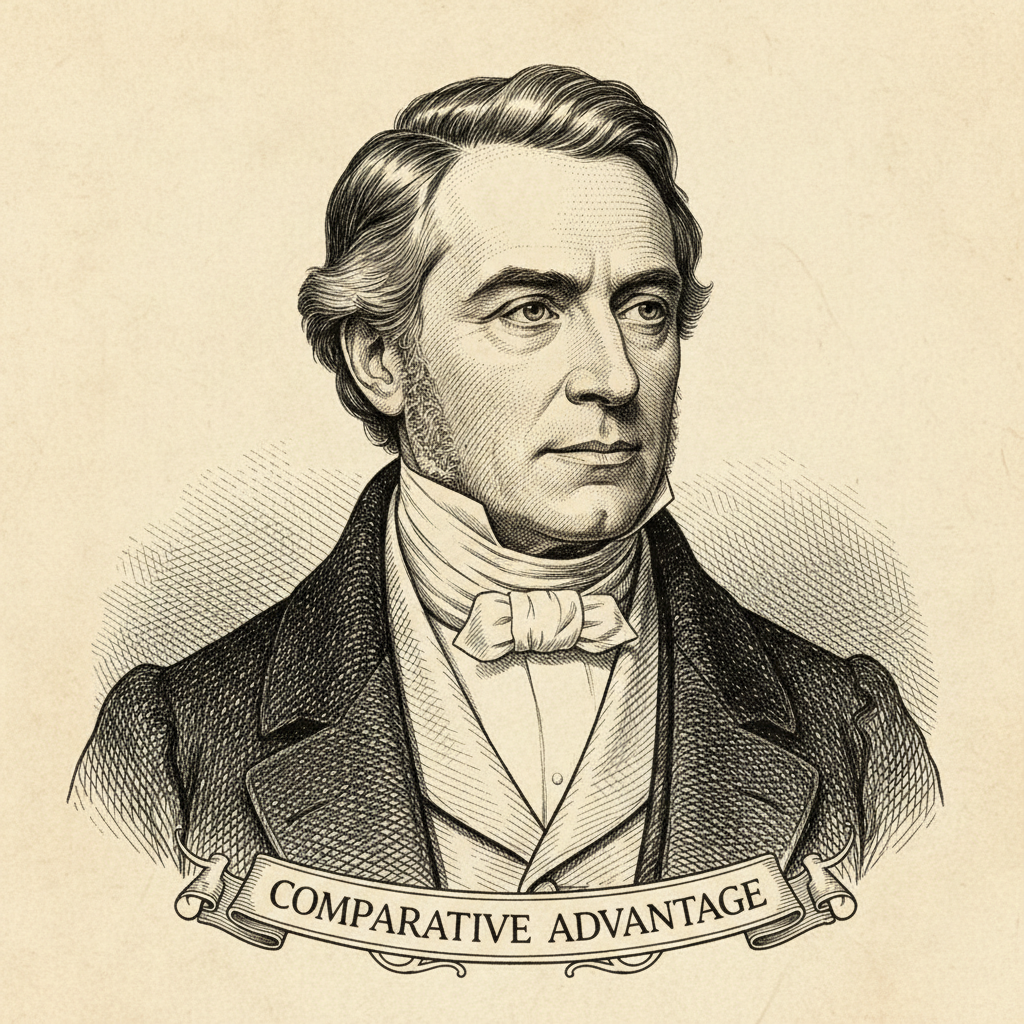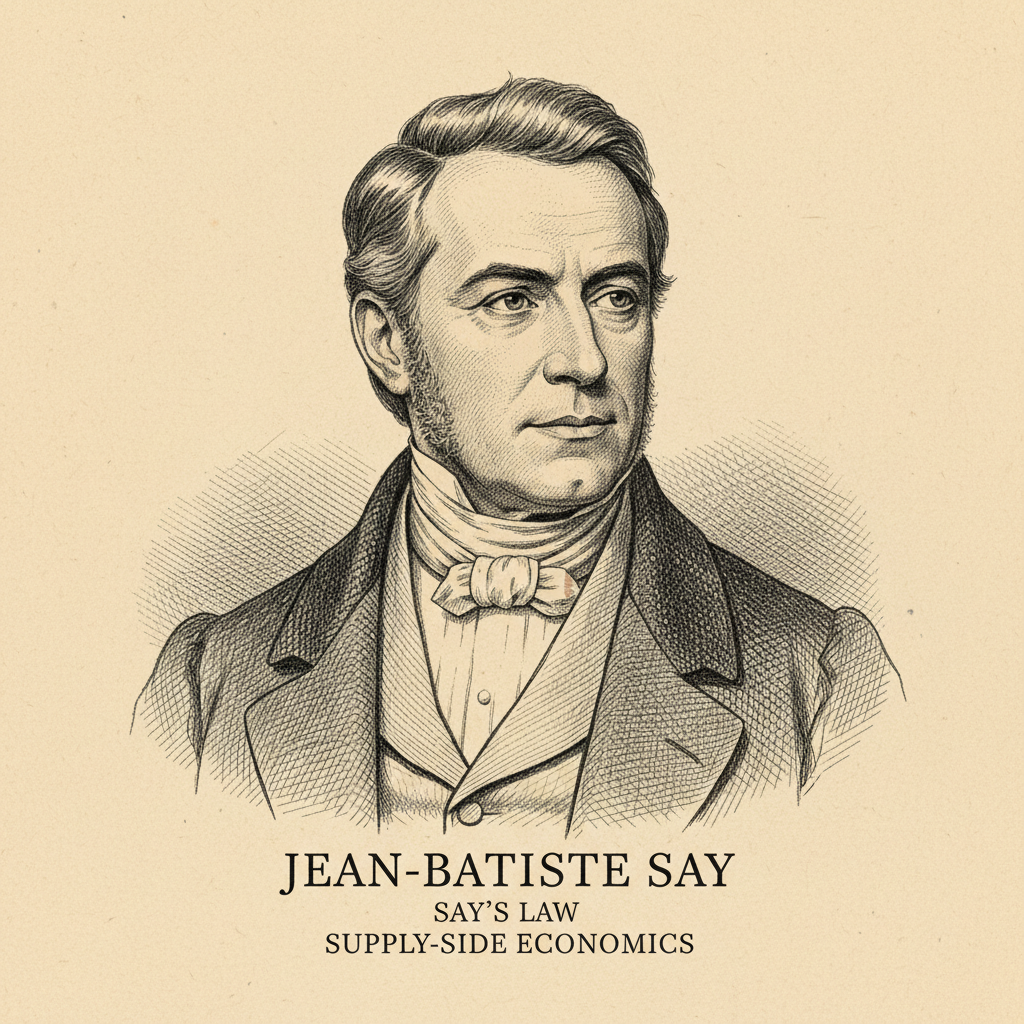
Jean-Baptiste Say
The French Economist and Entrepreneur who articulated the fundamental principle that production, not money, is the source of demand.
Jean-Baptiste Say was a prominent French economist and industrialist best known for 'Say's Law of Markets,' which posits that supply creates its own demand. He championed free markets and entrepreneurship, challenging the prevailing mercantilist views and advocating for productive activity as the engine of economic growth. His practical experience as a textile manufacturer informed his theoretical contributions.
Biography
Accomplishments
- 01Authored 'Traité d'économie politique' (1803), a foundational text in classical economics that popularized and systematically presented many of Adam Smith's ideas.
- 02Formulated 'Say's Law of Markets,' a fundamental principle asserting that 'products are paid for with products,' thereby denying the possibility of a general glut in the economy.
- 03Successfully established and managed a cotton spinning factory in Auchy-la-Montagne from 1806 to 1813, demonstrating practical entrepreneurial success and integrating industrial experience with economic theory.
- 04Pioneered the concept of the entrepreneur as a distinct economic agent, distinguishing them from capitalists and laborers, and highlighting their critical role in organizing production and innovation.
- 05Helped establish and elevate the study of political economy in France through his influential teaching positions at the Athénée, the Conservatoire National des Arts et Métiers, and the Collège de France.
- 06Advocated consistently for free trade, limited government intervention, and sound monetary policy, influencing economic liberalization discussions post-Napoleonic era.
Lessons for Operators
Key Takeaways
Practical lessons distilled for operators, investors, C-levels, and capital allocators.
Supply Creates its Own Demand
Businesses should focus on creating valuable products and services. The act of production generates income for workers, suppliers, and owners, who in turn use that income to demand other products. This principle suggests that persistent gluts are not due to a general lack of money, but often to misallocated production or external shocks.
The Entrepreneur as the Engine of Growth
Say defined the entrepreneur as the individual who combines factors of production (land, labor, capital) to create goods or services, bearing the risk of the enterprise. Investors and operators should recognize and foster entrepreneurial talent, as founders and innovators are the primary drivers of economic dynamism and job creation, not merely financiers or managers.
Empiricism and Practical Application
Say's transition from theorist to industrialist and back reinforced his theories. This blend of abstract thought with boots-on-the-ground execution provided him with unique insights. Leaders should seek to bridge theoretical knowledge with practical operational experience to validate and refine strategies, ensuring that proposed solutions are viable in real-world contexts.
Resistance to Central Planning
Say consistently argued against excessive government intervention and mercantilist policies, believing they distorted markets and stifled innovation. Operators should be wary of regulatory overreach or attempts at central economic control, understanding that market signals and decentralized decision-making often lead to more efficient resource allocation and adaptation.
Value Creation Over Speculation
His emphasis on production as the source of wealth implicitly warns against purely financial speculation that does not directly contribute to the creation of tangible goods or services. Long-term capital allocators should prioritize investments in ventures that manufacture, innovate, and provide genuine utility rather than those focused solely on asset appreciation without underlying productive growth.
Frameworks & Principles
Named frameworks and strategic principles they popularized or embodied.
Say's Law of Markets
The principle that the production of goods and services creates its own demand. In essence, the income generated from producing something is invariably spent to purchase other things, precluding prolonged general gluts (though localized or sectoral gluts can occur).
When to useWhen analyzing macroeconomic conditions to understand the relationship between production and consumption, or when evaluating arguments for government stimulus versus supply-side policies. It encourages focusing on removing obstacles to production rather than purely stimulating consumption.
Entrepreneurial Function Distinction
Say explicitly separated the role of the entrepreneur (organizer, innovator, risk-taker) from the capitalist (provider of capital) and the laborer. He saw the entrepreneur as the pivotal figure in translating ideas into economic activity.
When to useWhen evaluating business models, structuring organizations, or assessing investment opportunities to highlight the critical input of innovative leadership and risk-taking. It's useful for differentiating between passive capital deployment and active value creation.
Production-Centric Economic Analysis
Say's approach focused on the supply side, arguing that wealth is created through productive activity and the efficient combination of resources, rather than through accumulation of money or favorable trade balances.
When to useWhen designing long-term growth strategies, evaluating national economic policies, or considering investments in foundational industries. This framework pushes leaders to consider how to enhance productive capacity, innovation, and efficiency within their ecosystem or portfolio.
Sources & Further Reading
Profiles, interviews, podcasts, and articles used to compile and verify this entry. Each link opens at the original publisher.
Explore Related Titans
Other figures in the archive who share Jean-Baptiste Say's domain, geography, or era.
More in Other




From France






Contemporaries — 18th century