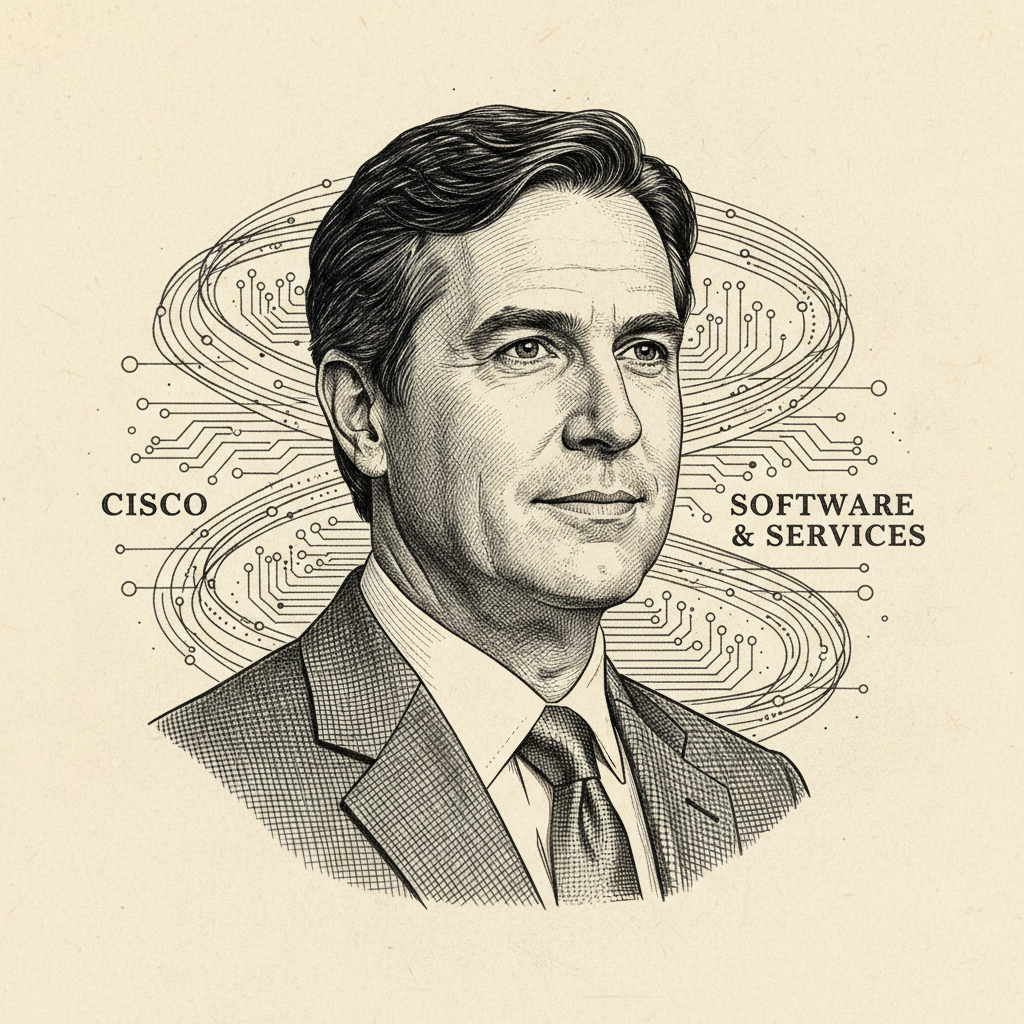
Benoit Dageville
Co-founder and CTO of Snowflake, pioneering the cloud data warehouse and disrupting traditional data analytics. His technical vision enabled a multi-billion dollar IPO.
Benoit Dageville is a French-American software engineer and entrepreneur, best known as the co-founder and Chief Technology Officer of Snowflake Inc. (NYSE: SNOW). His career spans significant contributions to database technology, including a 16-year tenure at Oracle before co-founding Snowflake in 2012. Dageville is recognized for architecting Snowflake's innovative cloud-native data platform, which separated computing from storage, enabling unprecedented scalability and flexibility for data warehousing.
Biography
Accomplishments
- 01Co-founded Snowflake Inc. in 2012, architecting its core cloud-native data platform that decoupled storage and compute, enabling unparalleled scalability and elasticity.
- 02Led Snowflake's technical development from inception through its record-setting $3.36 billion IPO in September 2020 (NYSE: SNOW), validating the disruptive potential of its architecture.
- 03Credited with innovating the multi-cluster shared data architecture, allowing independent scaling of compute for diverse workloads, a core tenet of modern cloud data warehousing.
- 04Played a Senior Architect role at Oracle Corporation for 16 years, contributing to critical database technologies including parallel query processing, before envisioning a cloud-first alternative.
- 05Secured and managed the technical vision that attracted early enterprise customers and significant venture capital, including a $479 million Series G round in 2020 valuing the company at over $12.4 billion.
Lessons for Operators
Key Takeaways
Practical lessons distilled for operators, investors, C-levels, and capital allocators.
Architectural Disruption
Dageville's success with Snowflake demonstrates that fundamental architectural shifts, not incremental improvements, can create entirely new market categories. Enterprises should not be afraid to rethink core frameworks when technology paradigms (like cloud computing) change.
Problem-Solution Fit
Focusing on a deep, persistent pain point (data warehousing limitations in the cloud) with an innovative technical solution is crucial for market penetration and disruption. Understand the 'why' behind existing system failures.
Long-Term Technical Vision
The CTO role at a high-growth company requires not just managing current development but also maintaining a clear, multi-year technical roadmap that anticipates future industry needs and competitive pressures.
Leveraging Experience, Embracing Novelty
While Dageville's Oracle background provided invaluable database expertise, his readiness to discard those paradigms for a cloud-native approach was key. Operators should balance historical knowledge with innovative thinking.
Scalability as a Core Tenet
For any modern data or SaaS venture, designing for extreme scalability from the outset is non-negotiable. This foresight reduces refactoring costs and accelerates market capture as demand grows.
Frameworks & Principles
Named frameworks and strategic principles they popularized or embodied.
Decoupled Architecture (Storage and Compute)
A system design principle where distinct components (e.g., data storage and computational resources) operate independently, communicating via well-defined interfaces. This allows for separate scaling, optimization, and failure domains.
When to useApplicable when building cloud-native data platforms, microservices architectures, or any complex system where independent resource scaling, cost optimization, and fault isolation are critical. Ideal for environments with fluctuating workloads.
Multi-Cluster Shared Data
An architectural pattern where multiple independent computational clusters can access and process data from a single, shared storage layer. Each cluster operates in isolation concerning its compute resources, while data remains consistent across all clusters.
When to useEffective for data warehousing, data lakes, or analytics platforms where diverse workloads (e.g., ad-hoc querying, ETL, machine learning) need to access the same data without contending for compute resources or impacting performance for other users. Essential for concurrency and workload isolation.
Cloud-Native Design Principles
Designing applications and infrastructure specifically for cloud computing environments, leveraging characteristics like elasticity, distributed systems, managed services, and pay-as-you-go models to achieve scalability, resilience, and operational efficiency.
When to useFundamental for any new software project intended to run optimally on public cloud infrastructure (AWS, Azure, GCP). Involves embracing containerization, serverless functions, immutable infrastructure, and automatic scaling capabilities.
Recent Appearances
Latest interviews, keynotes, and press from the past half year.
 youtube.com
 youtube.com
 youtube.com
 youtube.com
 youtube.com
 youtube.com
 youtube.com
 youtube.com
 youtube.com
 youtube.com
 youtube.com
 youtube.com
 youtube.com
 youtube.com
 youtube.com
 youtube.com
 youtube.com
 youtube.com
 youtube.com
 youtube.com
 youtube.com
 youtube.com
 youtube.com
 youtube.com
 youtube.com
 youtube.com
 youtube.com
 youtube.com
 youtube.com
 youtube.com
 youtube.comm.youtube.com
 youtube.com
 youtube.com
 youtube.com
 youtube.com
 youtube.com
 youtube.com
Sources & Further Reading
Profiles, interviews, podcasts, and articles used to compile and verify this entry. Each link opens at the original publisher.
- interviewSnowflake Summit 2026 - "An AI platform for every ...diginomica.com→
- interviewBenoît Dageville, cofondateur de Snowflake « Avec l'IA ...latribune.fr→
- interviewSnowflake Director Benoit Dageville Sells $48.6 Million ...instagram.com→
- interviewSnowflake's Agentic Future Puts Security at the Centrecybermagazine.com→
- interviewSnowflake's India R&D Expansion Halted by Timing ...linkedin.com→
- interviewFrom First Principles: The Ideas That Built Snowflakesnowflake.com→
- interviewSnowflake CEO Sridhar Ramaswamy details his company's ...instagram.com→
- interviewSnowflake Interview Process 2026 — Coding, System ...ophyai.com→
Explore Related Titans
Other figures in the archive who share Benoit Dageville's domain, geography, or era.
More in Technology









From France









Contemporaries — born 1960s