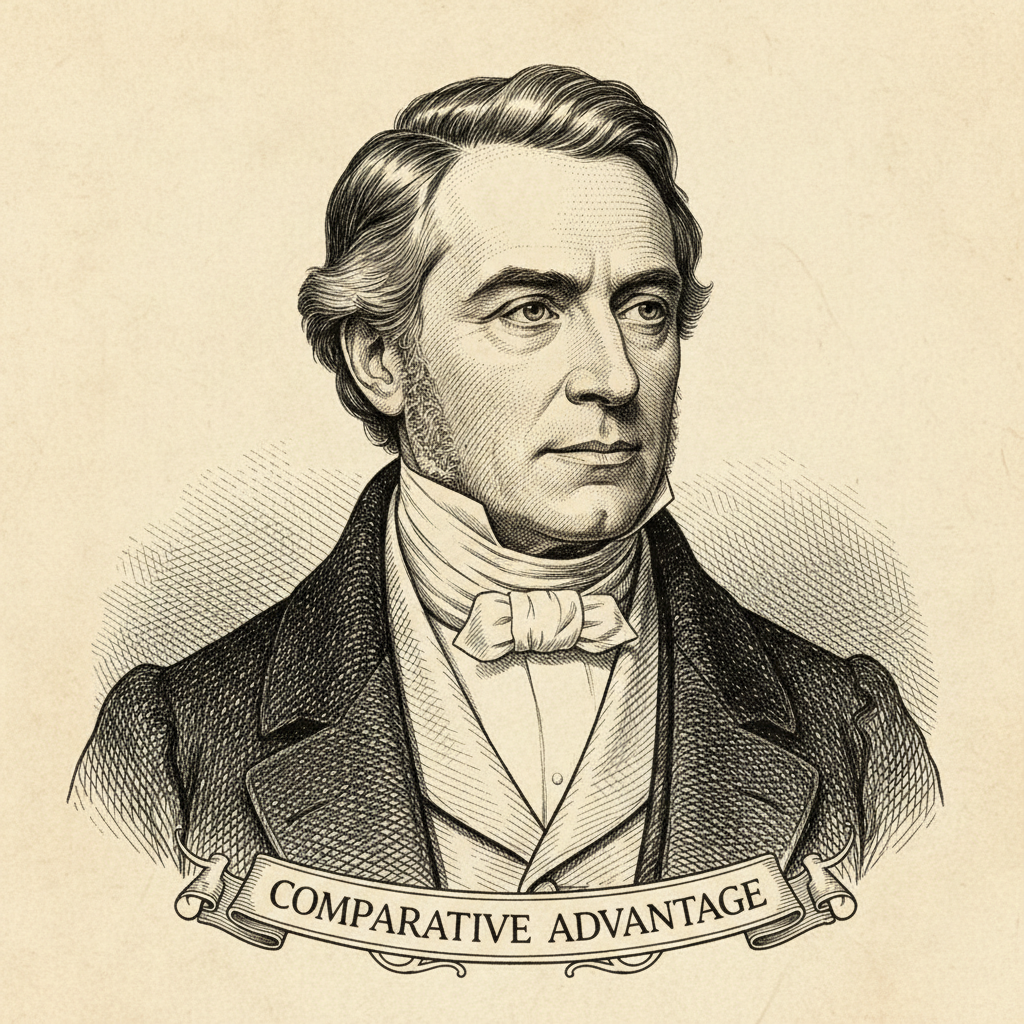
David Ricardo
The architect of comparative advantage and a transformative figure in classical economics and finance.
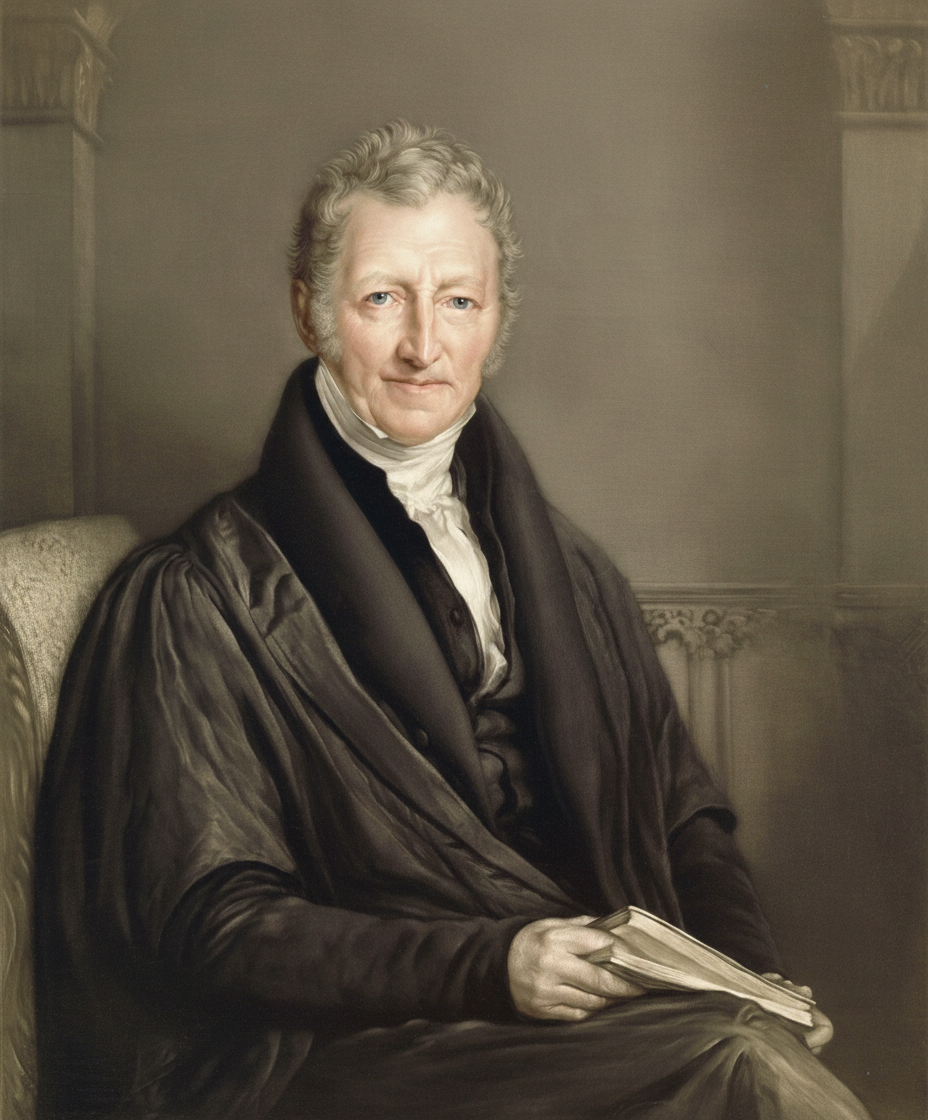
David Ricardo was a prominent British political economist, stockbroker, and Member of Parliament. He amassed a significant fortune through astute financial trading before dedicating his life to economic theory, notably formulating the theory of comparative advantage, labor theory of value, and the iron law of wages. His work laid foundational principles for international trade and monetary policy.
Biography
Accomplishments
- 01Formulated the principle of Comparative Advantage (1817), demonstrating how countries benefit from specializing in and trading goods they produce relatively more efficiently, even if another country is absolutely more efficient in all goods.
- 02Amassed a personal fortune estimated at over £1 million (equivalent to hundreds of millions today) through astute stock market and bond trading, enabling early retirement for intellectual pursuits.
- 03Authored 'On the Principles of Political Economy and Taxation' (1817), a foundational text that systematized and expanded classical economic theory, influencing generations of economists.
- 04Provided a comprehensive explanation of the Labor Theory of Value, arguing that the value of a commodity is determined by the amount of labor socially necessary for its production.
- 05Served as a Member of Parliament (1819-1823), actively participating in debates on monetary policy, corn laws, and parliamentary reform, advocating for economically liberal policies.
Lessons for Operators
Key Takeaways
Practical lessons distilled for operators, investors, C-levels, and capital allocators.
Information Asymmetry Pays Dividends
Ricardo's trading success highlights that superior, timely information is a critical asset in financial markets. Investors and operators should constantly seek to reduce information asymmetry through diligent research, network building, and proprietary data acquisition.
Specialization Drives Global Efficiency
The theory of comparative advantage dictates that companies and nations should focus resources on producing what they do relatively best, then trade. This principle is actionable for corporate strategy: identify core competencies, divest non-core assets, and engage in strategic partnerships or outsourcing that leverage others' comparative advantages.
Sound Money and Fiscal Prudence are Pillars of Stability
Ricardo consistently argued for a stable monetary system (linked to gold) and limited government spending. For businesses, this translates to maintaining strong balance sheets, managing currency risk, and advocating for macroeconomic policies that foster predictable operating environments.
Connect Market Dynamics to Underlying Economic Principles
Ricardo didn't just trade; he sought to understand the economic forces driving market movements. Successful investors and executives connect day-to-day market fluctuations to underlying demographic, technological, and behavioral economic principles to make more sustainable strategic choices.
Early Wealth Creation Grants Optionality
Amassing wealth early allowed Ricardo to transition from a profit-driven career to one of intellectual and political influence. Leaders should prioritize building robust financial foundations to create optionality for future strategic pivots, philanthropic endeavors, or independent thought.
Frameworks & Principles
Named frameworks and strategic principles they popularized or embodied.
Theory of Comparative Advantage
This theory posits that an economic agent (individual, firm, or country) can produce a good or service at a lower opportunity cost than another. Even if one nation/entity is more efficient in producing all goods (absolute advantage), both can still benefit from trade by specializing in goods where they have a comparative advantage.
When to useApplicable when evaluating international trade policies, designing supply chain strategies, determining core business competencies versus outsourcing opportunities, or assessing mergers & acquisitions based on synergistic production efficiencies. Use it to inform decisions on resource allocation and specialization.
Labor Theory of Value (Ricardian variant)
Ricardo posited that the exchange value of a commodity is determined by the quantity of labor required to produce it, and that capital costs could be reduced to stored labor. Wages, profits, and rent are then distributions from this total value.
When to useUseful for understanding cost structures, pricing strategies in industries where labor is a dominant input, and analyzing the distribution of economic output among capital, labor, and land. It provides a lens for assessing the 'true' cost and inherent value of production.
Rent Theory
Ricardo's theory of rent states that rent on land arises from the differences in its productivity. As population growth increases demand for food, cultivation extends to less fertile lands. The rent on more fertile land is the surplus over the output of the marginal, least fertile land.
When to useApplies when analyzing real estate markets, understanding agricultural economics, or assessing the impact of resource scarcity on pricing and profitability. It helps explain how differential productivity of fixed assets creates economic rents and influences asset valuations.
Sources & Further Reading
Profiles, interviews, podcasts, and articles used to compile and verify this entry. Each link opens at the original publisher.
Explore Related Titans
Other figures in the archive who share David Ricardo's domain, geography, or era.
More in Finance & Investing








From United Kingdom








Contemporaries — 18th century