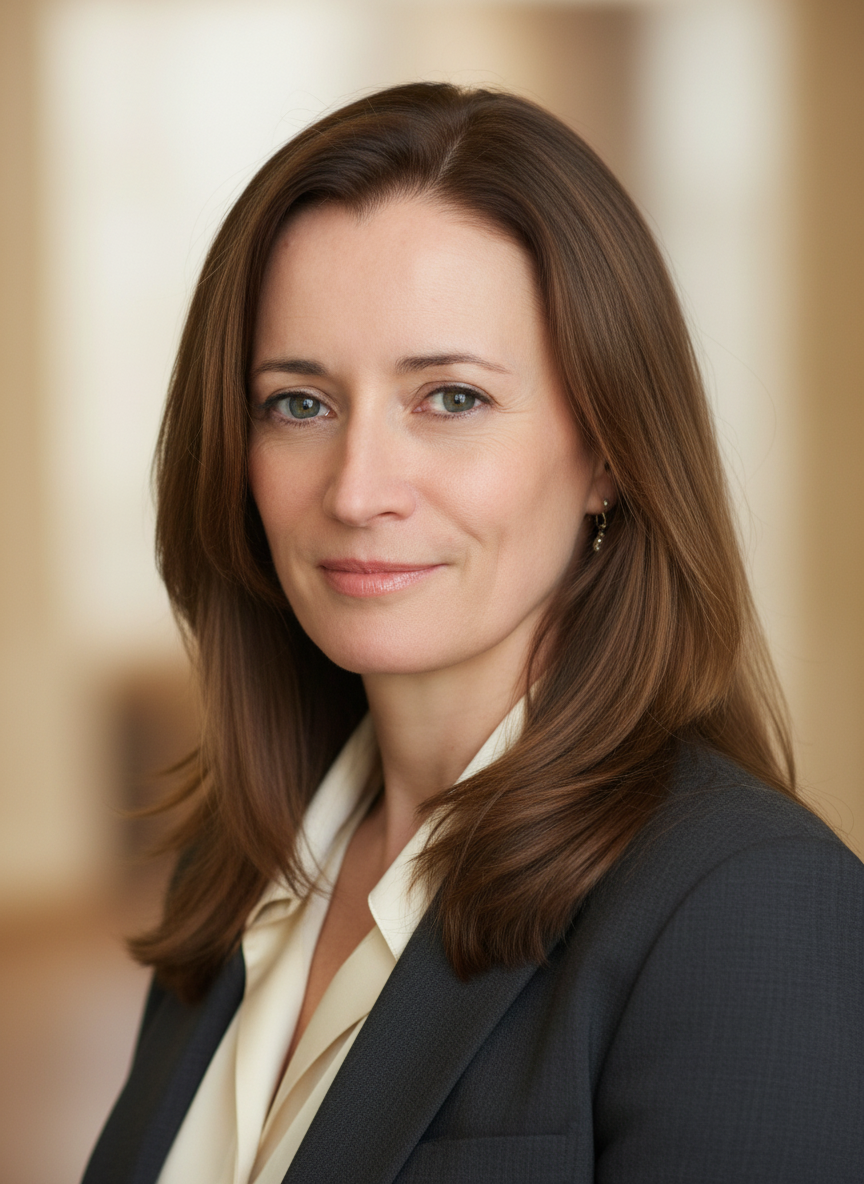
Blythe Masters
The architect of modern credit derivatives and a blockchain enterprise pioneer.
Blythe Masters is a British-American former executive at J.P. Morgan Chase & Co. and a key figure in the development of credit default swaps (CDS). She later transitioned to entrepreneurship, leading Digital Asset Holdings, a blockchain enterprise technology company, demonstrating her ability to innovate across distinct industry cycles.
Biography
Accomplishments
- 01Co-created the modern Credit Default Swap (CDS) market at J.P. Morgan in the mid-1990s, notably through the BISTRO (Broad Index Secured Trust Offering) transaction, which allowed banks to offload credit risk from their balance sheets, fundamentally altering risk management and capital allocation in finance.
- 02Served as Head of Global Commodities at J.P. Morgan, building the franchise into a top-tier player before the sale of its physical commodities business in 2014.
- 03Led Digital Asset Holdings as CEO from 2015 to 2018, securing over $100 million in funding from major financial institutions (e.g., J.P. Morgan, IBM, Goldman Sachs) and pioneering enterprise blockchain solutions for regulated markets.
- 04Oversaw the development of the Digital Asset Modeling Language (DAML), an open-source smart contract language designed for privacy-preserving, multi-party business processes on distributed ledgers, which became a foundational technology for financial market applications.
- 05Secured a landmark agreement with the Australian Securities Exchange (ASX) in 2016 to replace its CHESS equity clearing and settlement system with Digital Asset's distributed ledger technology, a significant validation of blockchain for critical market infrastructure.
- 06Achieved the position of the youngest female Managing Director at J.P. Morgan at age 28, demonstrating exceptional leadership and technical proficiency early in her career.
Lessons for Operators
Key Takeaways
Practical lessons distilled for operators, investors, C-levels, and capital allocators.
Risk Transfer Innovation
Blythe Masters spearheaded the creation of Credit Default Swaps, enabling financial institutions to manage and offload credit risk effectively. This demonstrates the power of financial engineering to address systemic inefficiencies and reshape capital markets. Lesson: Constantly re-evaluate existing risk paradigms and seek innovative instruments for better capital allocation and systemic resilience.
Pioneering Distributed Ledger Technology (DLT)
As CEO of Digital Asset, Masters pivoted from traditional finance to lead a blockchain firm, advocating for DLT's transformative potential in clearing, settlement, and enterprise process optimization. Lesson: Be prepared to lead or invest in disruptive technologies that can radically improve operational efficiency and create new business models, even if they challenge established norms.
Interdisciplinary Leadership
Her career spans sophisticated financial product creation and leading a cutting-edge enterprise technology company. This blend of financial acumen and tech leadership is crucial for driving innovation in increasingly digitalized industries. Lesson: Cultivate diverse skill sets in leadership teams, blending deep industry knowledge with technological foresight to navigate complex transformations effectively.
Strategic Partnerships and Ecosystem Building
Digital Asset's growth was fueled by strategic investments and collaborations with major financial players and market infrastructures like the ASX. This approach highlights the importance of building powerful consortia to drive adoption of complex, systemic technologies. Lesson: For broad-scale technology adoption, foster strategic partnerships across value chains to validate, fund, and integrate solutions.
Regulation as a Catalyst, Not a Constraint
Masters consistently engaged with regulators. Her experience suggests that proactive engagement with regulatory bodies is essential for the successful deployment of groundbreaking financial technologies, turning potential hurdles into opportunities for guided innovation. Lesson: Understand and actively shape the regulatory landscape surrounding new technologies; compliance from inception accelerates market acceptance.
Frameworks & Principles
Named frameworks and strategic principles they popularized or embodied.
BISTRO (Broad Index Secured Trust Offering)
A synthetic securitization framework developed at J.P. Morgan in the mid-1990s to transfer credit risk from a bank's balance sheet without selling the underlying assets directly. It used a special purpose vehicle (SPV) to issue notes collateralized by credit default swaps.
When to useTo manage credit risk exposure on a large portfolio without liquidating underlying assets, optimize regulatory capital, or free up balance sheet capacity. Applicable for large financial institutions seeking efficient portfolio risk management.
Distributed Ledger Technology (DLT) for Post-Trade Systems
Leveraging blockchain or DLT to streamline and decentralize back-office operations in financial markets (e.g., clearing, settlement, custody). It aims to reduce reconciliation, operational costs, and settlement times by providing a single, immutable source of truth among participants.
When to useFor financial market infrastructures (exchanges, clearing houses, depositories) and large financial institutions seeking to enhance operational efficiency, reduce counterparty risk, and improve transparency in multi-party processes. Consider when current systems are fragmented, slow, or costly to reconcile.
DAML (Digital Asset Modeling Language)
An open-source, functional smart contract language designed for building multi-party workflows on distributed ledgers with strong privacy controls and an abstract ledger model. It defines what participants can do, not how. This allows portability across various DLT platforms.
When to useWhen developing complex, multi-party business logic on a DLT platform where privacy, correctness, and interoperability across different underlying ledger technologies are critical. Useful for financial services, supply chain, and other regulated enterprise applications requiring auditable, automated agreements.
Recent Appearances
Latest interviews, keynotes, and press from the past half year.
 youtube.com
 youtube.com
 youtube.com
 youtube.com
 youtube.com
 youtube.com
 youtube.com
 youtube.com
 youtube.com
 youtube.com
 youtube.com
 youtube.com
 youtube.com
 youtube.com
 youtube.com
 youtube.com
 youtube.com
 youtube.com
 youtube.com
 youtube.com
 youtube.com
 youtube.com
 youtube.com
 youtube.com
 youtube.com
 youtube.com
 youtube.com
 youtube.com
 youtube.com
 youtube.com
 youtube.com
 youtube.com
 youtube.com
 youtube.com
 youtube.com
 youtube.com
 youtube.com
 youtube.com
 youtube.com
 youtube.com
 youtube.comm.youtube.com
 youtube.com
 youtube.com
 m.youtube.com
 youtube.comyoutube.com
 youtube.comyoutube.com
 youtube.com
 youtube.com
Explore Related Titans
Other figures in the archive who share Blythe Masters's domain, geography, or era.
More in Technology









From United Kingdom







Contemporaries — born 1960s