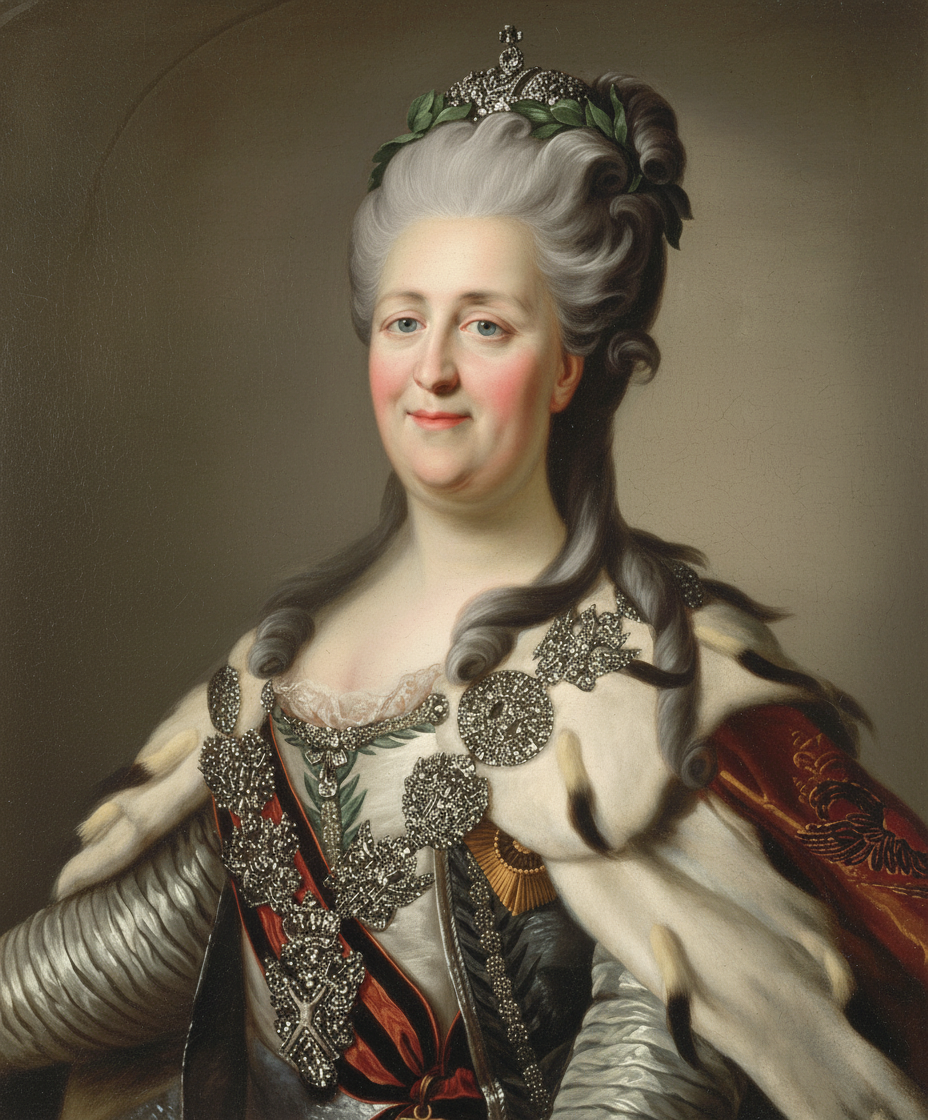
Adam Smith
The father of modern economics, whose articulation of free markets, self-interest, and the 'invisible hand' laid the theoretical groundwork for capitalism.
Adam Smith was a Scottish economist, philosopher, and author, best known for his two classic works, 'The Theory of Moral Sentiments' (1759) and 'An Inquiry into the Nature and Causes of the Wealth of Nations' (1776). The latter, often simply referred to as 'The Wealth of Nations,' is considered the seminal work of classical economics. Smith's theories on specialization, free markets, and the 'invisible hand' profoundly influenced economic thought and policy, shaping the industrial revolution and laying the intellectual foundation for modern capitalism.
Biography
Accomplishments
- 01Authored 'The Wealth of Nations' (1776), establishing it as the foundational text of modern capitalism and classical economics.
- 02Developed the concept of the 'invisible hand,' explaining how self-interested actions in free markets can unintentionally benefit society as a whole.
- 03Articulated the economic advantages of the division of labor, demonstrating how specialization increases productivity and wealth.
- 04Challenged prevailing mercantilist economic doctrines, advocating for free trade, minimal government intervention, and 'laissez-faire' policies.
- 05Pioneered the labor theory of value, positing that the value of a commodity is determined by the amount of labor required to produce it.
- 06Formulated a comprehensive system for understanding economic growth and the accumulation of capital, connecting production, consumption, and wealth.
- 07Authored 'The Theory of Moral Sentiments' (1759), providing a philosophical basis for human behavior rooted in sympathy and justice, which underpinned his later economic theories.
Lessons for Operators
Key Takeaways
Practical lessons distilled for operators, investors, C-levels, and capital allocators.
Division of Labor Fuels Productivity
Smith's pin factory example showed that specialization increases output exponentially. Businesses should structure operations to allow employees to specialize in tasks where they can achieve mastery, leading to higher efficiency and reduced costs. This is directly applicable to modern manufacturing, software development teams, and even service industries.
Self-Interest Drives Economic Activity
Individuals, when pursuing their own betterment within a just legal framework, inadvertently contribute to societal wealth. This implies that strong incentive structures and clear property rights are essential for fostering innovation and economic growth. Investors should seek ventures where individual and corporate interests are aligned with broader market needs.
Free Markets are Optimal for Resource Allocation
The 'invisible hand' guides resources to their most productive uses when markets are allowed to operate without excessive intervention. Government or institutional barriers to entry, price controls, or subsidies often distort these natural signals, leading to inefficiencies. Leaders should advocate for regulatory environments that foster open competition.
Wealth is Derived from Production, Not Hoarding Gold
Smith dismantled mercantilist ideas, arguing that a nation's wealth is measured by the total output of goods and services (GDP), not by its gold reserves. For investors and capital allocators, this means focusing on ventures that genuinely create value through production and innovation, rather than speculative or extractive activities.
The Importance of Capital Accumulation and Reinvestment
Smith stressed that the growth of wealth depends on the reinvestment of profits into productive assets (capital). Businesses must balance current consumption with strategic investments in R&D, infrastructure, and human capital to ensure long-term sustainability and growth. This is a core principle for fund managers and C-levels planning for future expansion.
The Role of Sound Institutions and Rule of Law
Although often focused on markets, Smith implicitly understood that free exchange thrives only in societies with stable institutions, rule of law, and protection of property rights. For C-levels and enterprise leaders, operating in environments with predictable legal frameworks and ethical governance is paramount for reducing risk and enabling long-term planning.
Ethical Foundations for Economic Systems
Before 'The Wealth of Nations,' Smith wrote 'The Theory of Moral Sentiments,' emphasizing human empathy and moral reasoning. This suggests that a truly sustainable capitalist system requires an ethical foundation, where market participants act with a degree of sympathy and adhere to principles of justice. Pure self-interest without moral constraints can lead to market failures and social discord.
Frameworks & Principles
Named frameworks and strategic principles they popularized or embodied.
The Invisible Hand
The concept that individuals pursuing their own self-interest in a free market, without central direction, unintentionally promote the good of society as a whole. Market prices and competition act as the 'hand' guiding resources to their most efficient uses.
When to useWhen analyzing market dynamics, understanding why decentralized decisions often lead to efficient outcomes, or when advocating against excessive government intervention in competitive markets. Useful for investors assessing market-driven demand and supply signals.
Division of Labor
The specialization of cooperative labor in specific, circumscribed tasks and roles, intended to increase the productivity of the process. Smith famously used a pin factory to illustrate how breaking down tasks dramatically increases output per worker.
When to useApplicable for designing organizational structures, optimizing production processes, or scaling operations. Operators and C-levels can use this framework to identify bottlenecks and implement specialization to enhance efficiency, reduce costs, and improve product quality in manufacturing, software development, or service delivery.
Labor Theory of Value (Early Form)
Smith proposed that the real value of a commodity, at least in early, undeveloped societies, could be measured by the quantity of labor that had to be expended to produce it. While later refined, it highlighted labor as a primary source of economic value.
When to useUseful for understanding the fundamental inputs of production and the origins of value. For investors and capital allocators, it reinforces the importance of human capital and labor efficiency as core components of a business's long-term profitability and valuation, particularly in labor-intensive industries.
Four Stages of Economic Development
Smith described how societies progress through different economic stages: hunter-gatherer, pastoral, agricultural, and commercial. This framework implicitly explains how property rights, division of labor, and economic institutions evolve with societal complexity.
When to useUseful for macroeconomists, policymakers, and global investors to understand the historical evolution of economies and predict potential developmental paths for emerging markets. It helps in contextualizing different economic policies based on a nation's current stage of development and institutional maturity.
Recent Appearances
Latest interviews, keynotes, and press from the past half year.
 youtube.com
 youtube.com
 youtube.com
 youtube.com
 youtube.com
 youtube.com
 youtube.com
 youtube.com
 youtube.com
 youtube.com
 youtube.com
 youtube.com
 youtube.com
 youtube.com
 youtube.com
 youtube.com
 youtube.com
 youtube.com
 youtube.com
 youtube.com
 youtube.com
 youtube.com
 youtube.com
 youtube.com
 youtube.com
 youtube.com
 youtube.com
 youtube.com
 youtube.com
 youtube.com
 youtube.com
 youtube.com
 youtube.com
 youtube.com
 youtube.com
 youtube.com
 youtube.com
 youtube.com
 youtube.com
 youtube.com
 youtube.com
 youtube.com
 youtube.com
 youtube.com
 youtube.com
 youtube.com
 youtube.com
 youtube.com
 youtube.com
 youtube.com
 youtube.com
 youtube.com
 youtube.com
 youtube.com
 youtube.com
 youtube.com
 youtube.com
 youtube.com
 youtube.com
 youtube.com
 youtube.com
 youtube.com
 youtube.com
 youtube.com
 youtube.com
 youtube.com
 youtube.com
 youtube.com
 youtube.com
 youtube.com
 youtube.com
 youtube.com
 youtube.com
 youtube.com
 youtube.com
 youtube.com
 youtube.com
 youtube.com
 youtube.com
 youtube.com
 youtube.com
 youtube.com
 youtube.com
 youtube.com
 youtube.com
 youtube.com
 youtube.com
 youtube.com
 youtube.com
 youtube.com
 youtube.com
 youtube.com
 youtube.com
 youtube.com
 youtube.com
 youtube.com
 youtube.com
 youtube.com
 youtube.com
 youtube.com
 youtube.com
 youtube.com
 youtube.com
 youtube.com
 youtube.com
 youtube.com
 youtube.com
 youtube.com
 youtube.com
 youtube.com
 youtube.com
 youtube.com
 youtube.com
 youtube.com
 youtube.com
 youtube.com
 youtube.com
 youtube.com
 youtube.com
 youtube.com
 youtube.com
 youtube.com
 youtube.com
 youtube.com
 youtube.com
 youtube.com
 youtube.com
 youtube.com
 youtube.com
 youtube.com
 youtube.com
 youtube.com
 youtube.com
 youtube.com
 youtube.com
 youtube.com
 youtube.com
 youtube.com
 youtube.com
 youtube.com
 youtube.com
 youtube.com
 youtube.com
 youtube.com
 youtube.com
 youtube.com
 youtube.com
 youtube.com
 youtube.com
 youtube.com
 youtube.com
 youtube.com
 youtube.comyoutube.com
 youtube.com
 youtube.com
 youtube.com
 youtube.com
 youtube.com
 youtube.com
 youtube.com
 youtube.com
 youtube.com
 youtube.com
 m.youtube.com
 youtube.com
 youtube.com
 youtube.com
 youtube.com
 youtube.com
 youtube.com
 youtube.com
 youtube.com
 youtube.com
 youtube.com
 youtube.com
 youtube.com
 youtube.com
 youtube.com
 youtube.com
 youtube.com
 youtube.com
 m.youtube.com
 youtube.com
 youtube.com
 youtube.com
 youtube.com
 youtube.com
 youtube.comm.youtube.com
 youtube.com
 youtube.com
 youtube.com
 youtube.com
 youtube.com
 youtube.com
 youtube.com
 youtube.com
 youtube.com
 m.youtube.com
 youtube.comyoutube.com
Sources & Further Reading
Profiles, interviews, podcasts, and articles used to compile and verify this entry. Each link opens at the original publisher.
Explore Related Titans
Other figures in the archive who share Adam Smith's domain, geography, or era.
More in Other






Contemporaries — 18th century