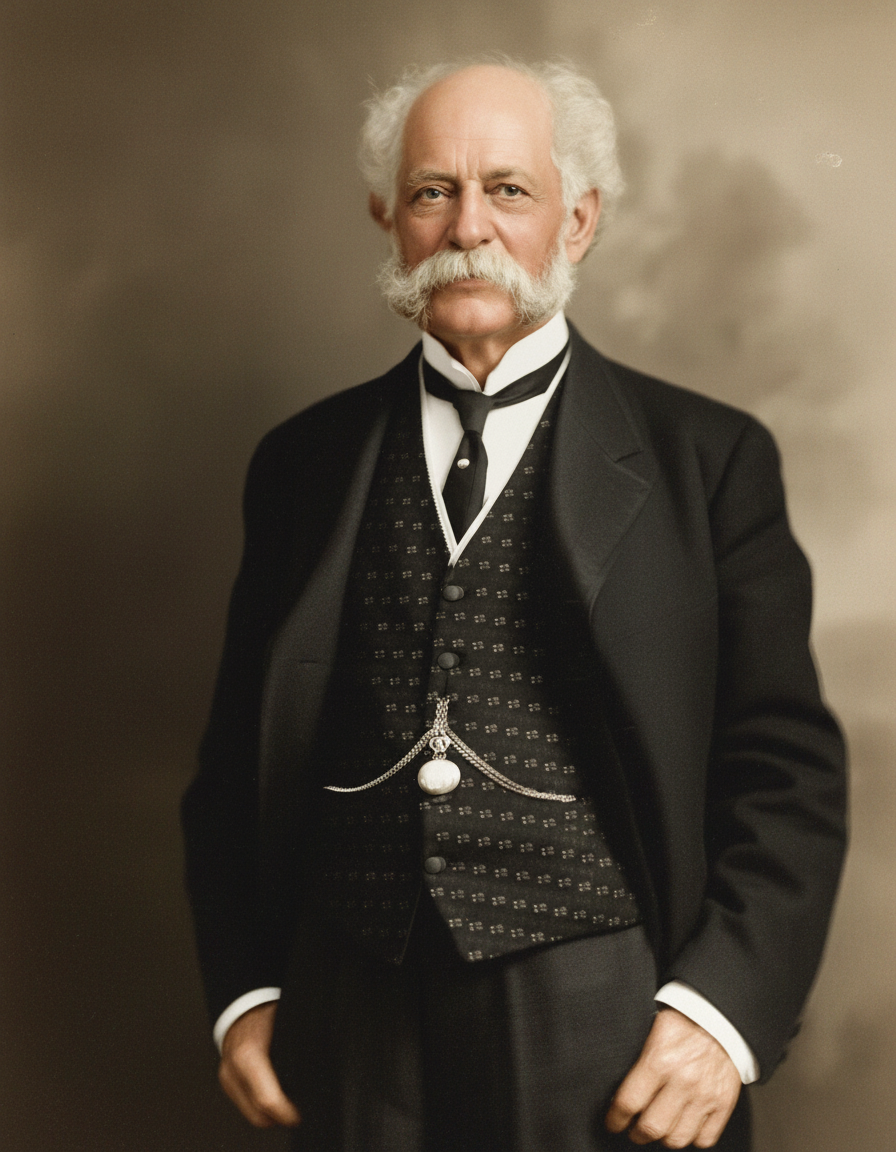
W. Edwards Deming
The father of the Third Industrial Revolution, W. Edwards Deming, transformed global manufacturing with his revolutionary quality management principles, reshaping competition and consumer expectations.
An American statistician, professor, author, lecturer, and management consultant. Deming made significant contributions to statistical quality control and popularized total quality management in Japan after WWII, which profoundly influenced their economic resurgence.
Biography
Accomplishments
- 01Successfully introduced Statistical Process Control (SPC) to Japanese industry starting in 1950, enabling them to achieve unprecedented levels of product quality and efficiency.
- 02Authored 'Out of the Crisis' (1982), a seminal work detailing his '14 Points for Management' and advocating for a systemic approach to quality, which became a foundational text for quality improvement globally.
- 03Developed the 'System of Profound Knowledge,' a management philosophy integrating systems thinking, variation, theory of knowledge, and psychology, applicable from shop floor to boardroom.
- 04Pioneered the Plan-Do-Study-Act (PDSA) cycle (often called the Deming Cycle), a continuous improvement methodology widely adopted across industries for process optimization.
- 05Awarded the Second Order of the Sacred Treasure by Emperor Hirohito in 1960 for his contributions to Japan's industrial rebirth, highlighting his international impact.
- 06Consulted for major American corporations, including Ford Motor Company in the 1980s, where his methodologies contributed to significant quality improvements during a period of intense foreign competition.
Lessons for Operators
Key Takeaways
Practical lessons distilled for operators, investors, C-levels, and capital allocators.
Quality is a System Problem
Deming asserted that most quality problems (85-95%) are due to the system, not the individual worker. This shifts the focus from individual blame to process improvement, compelling leaders to analyze and optimize their operational systems rather than punishing frontline staff. Actionable for investors: Look for companies that invest in systemic process improvement rather than relying on individual performance metrics as the sole driver of quality.
Long-Term Thinking Over Short-Term Profits
His philosophy emphasized that focusing on immediate financial gains often compromises long-term sustainability and quality. Patient capital and strategic investment in continuous improvement lead to superior products, customer loyalty, and sustainable market advantage. Actionable for capital allocators: Prioritize investments in companies demonstrating long-term strategic planning, quality infrastructure investment, and a culture of continuous improvement, even if it impacts short-term earnings.
The Importance of Data and Statistical Methods
Deming championed the use of statistical methods (like SPC) to understand variation, identify root causes of problems, and make informed decisions, moving away from subjective judgment. This provides an objective basis for improvement. Actionable for C-levels: Implement data-driven decision-making frameworks across all organizational functions. Invest in training employees in basic statistical literacy to empower them to identify and address process issues.
Leadership's Role in Driving Quality Transformation
Deming stressed that quality improvement is primarily the responsibility of management, not the quality department. Leaders must lead by example, dismantle barriers, and foster an environment where continuous learning and improvement thrive. Actionable for enterprise leaders: Commit personally to quality initiatives, allocate necessary resources, and actively participate in quality review processes. Develop leadership training programs that emphasize Deming's principles and empower employees at all levels.
Frameworks & Principles
Named frameworks and strategic principles they popularized or embodied.
Deming's 14 Points for Management
A set of management practices that, when implemented collectively, allow organizations to achieve significant quality and productivity improvements. These points cover aspects from creating constancy of purpose to eliminating numerical quotas.
When to useWhen an organization seeks a comprehensive cultural and operational transformation to improve quality, productivity, and competitive position. Particularly useful for companies struggling with inconsistent quality, employee morale, or market share.
System of Profound Knowledge
Comprises four interrelated parts: Appreciation for a System, Knowledge about Variation, Theory of Knowledge, and Psychology. This framework provides a lens through which management can understand and act upon an organization's interwoven processes.
When to useWhen leaders need to develop a deeper understanding of their organization as a complex system, move beyond simplistic solutions to problems, and foster a culture of learning and continuous improvement. It's a foundational philosophy for strategic thinking.
Plan-Do-Study-Act (PDSA) Cycle (Deming Cycle)
A repetitive four-stage model for continuous improvement of processes, products, or services. It encourages organizations to test changes on a small scale, learn from the results, and then implement or refine the changes.
When to useApplicable for any problem-solving or improvement initiative, from small process tweaks to large-scale project implementations. It encourages rapid experimentation, learning, and iterative refinement, minimizing risk of large-scale failures.
Sources & Further Reading
Profiles, interviews, podcasts, and articles used to compile and verify this entry. Each link opens at the original publisher.
Explore Related Titans
Other figures in the archive who share W. Edwards Deming's domain, geography, or era.
More in Industrial & Manufacturing










From United States










Contemporaries — 19th century