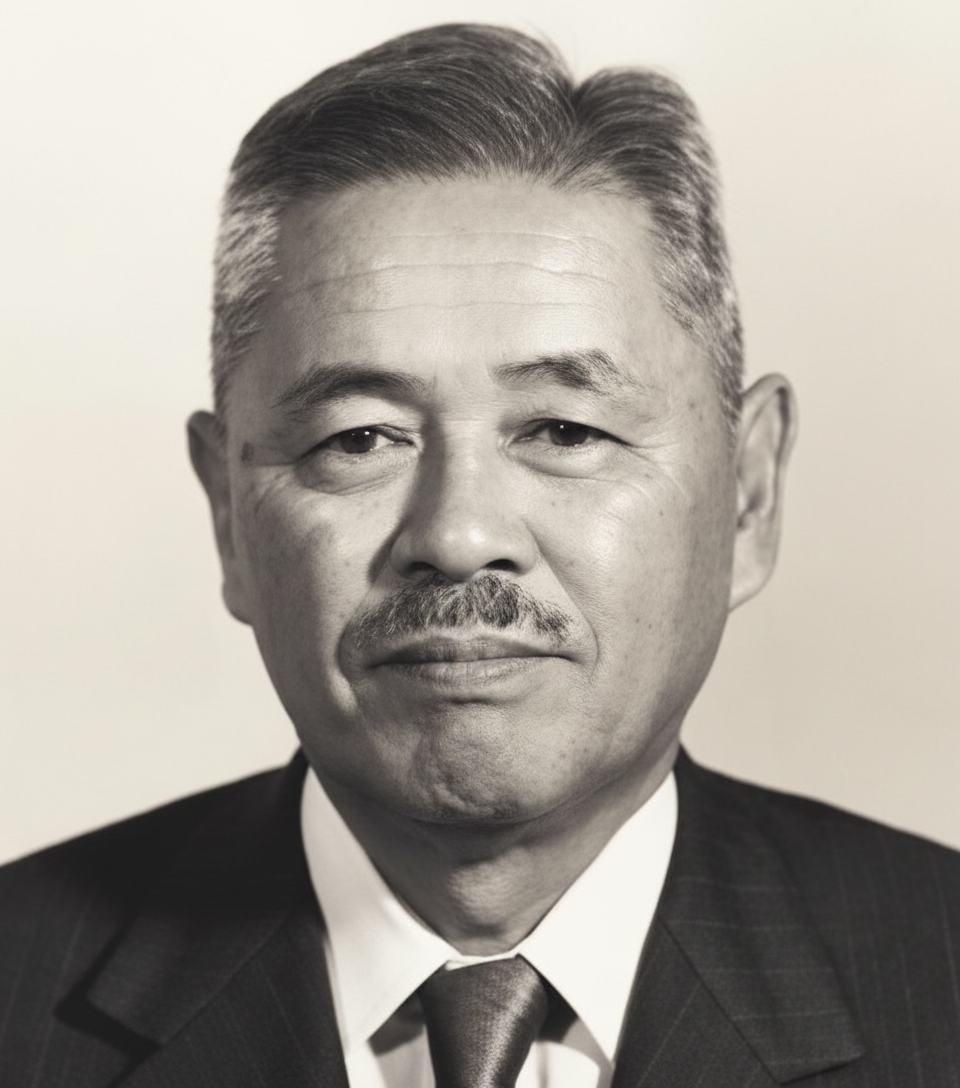
Taiichi Ohno
The father of the Toyota Production System, Taiichi Ohno revolutionized manufacturing efficiency, pioneering concepts that redefined industrial operations globally.
Taiichi Ohno was a Japanese industrial engineer and businessman who rose through the ranks of Toyota Motor Corporation to become its Chief Engineer. He is credited with developing the Toyota Production System (TPS), an integrated socio-technical system comprising its management philosophy and practices. His work laid the foundation for 'Lean Manufacturing' worldwide. Ohno's radical approach to eliminating waste (muda) in production processes fundamentally transformed not only Toyota but also influenced diverse industries globally, emphasizing efficiency, quality, and continuous improvement.
Biography
Accomplishments
- 01Developed the foundational principles of the Toyota Production System (TPS), enabling Toyota to achieve unparalleled efficiency and quality post-WWII.
- 02Pioneered the 'Just-In-Time' (JIT) production philosophy, significantly reducing inventory and lead times across manufacturing industries.
- 03Introduced 'Jidoka' (autonomation), empowering machines and workers to stop production upon defect detection, enhancing quality control at the source.
- 04Formulated the 'seven wastes' (Muda) classification, providing a systematic approach to identifying and eliminating non-value-adding activities.
- 05Implemented the 'Kanban' system, a visual scheduling system that facilitated pull-based production and optimized material flow.
- 06Mentored and trained a generation of Toyota leaders, embedding the TPS philosophy deeply within the company's culture, ensuring its long-term success.
- 07Authored 'Toyota Production System: Beyond Large-Scale Production' (1978), articulating TPS principles and influencing global business practices.
Lessons for Operators
Key Takeaways
Practical lessons distilled for operators, investors, C-levels, and capital allocators.
Obsessive Waste Elimination
Ohno's primary focus was the systemic identification and elimination of 'muda' (waste). For investors, this translates to scrutinizing capital allocation: are resources genuinely contributing to value creation, or are they tied up in unnecessary inventory, overproduction, waiting times, or excess processing? Look for companies exhibiting lean principles in their balance sheets and operational expenditures.
Empowerment and Autonomation (Jidoka)
By integrating 'Jidoka' – giving workers and machines the power to detect anomalies and stop production – Ohno shifted quality responsibility to the source. Operators should implement systems where errors are immediately visible and fixable, preventing them from becoming costly problems downstream. C-levels should empower teams with the authority and tools to self-correct, rather than depending on top-down directives for every issue.
Pull Systems and Just-In-Time (JIT)
Production driven by actual demand (pull) rather than forecasts (push) minimizes inventory and improves capital efficiency. For capital allocators, this means funding projects based on demonstrated market pull and validated demand, rather than speculative 'build it and they will come' approaches. For enterprise leaders, it implies optimizing supply chains for responsiveness, not just lowest cost, thereby reducing exposure to market fluctuations.
Genchi Genbutsu (Go and See)
Ohno emphasized direct observation over relying on reports. Fund managers assessing operational excellence should conduct site visits and engage directly with operational teams, not just financial statements. C-levels and enterprise leaders must regularly engage with frontline operations to understand challenges and opportunities firsthand, fostering credibility and informed decision-making.
Continuous Improvement (Kaizen)
TPS is not a static state but a philosophy of ongoing, incremental improvement. Investors should seek out companies with documented processes for continuous operational enhancements, which signals a robust adaptability and competitive edge. Operators should embed feedback loops and regular review cycles into their work to constantly refine and optimize processes.
Strategic Patience and Long-Term Vision
Implementing TPS required a significant shift in culture and operations, a multi-year endeavor. Investors should recognize that companies pursuing deep operational transformation may not show immediate exponential returns but are building sustainable competitive advantages that yield greater value over the long term. Enterprise leaders must cultivate patience and communicate a clear vision during these transformative periods.
Frameworks & Principles
Named frameworks and strategic principles they popularized or embodied.
Toyota Production System (TPS)
An integrated socio-technical system developed by Toyota, founded on two pillars: Just-In-Time (JIT) and Jidoka. Its core aim is to eliminate three types of deviations: Muda (waste), Muri (overburden), and Mura (unevenness), thereby maximizing efficiency, quality, and responsiveness.
When to useApplicable across any industry seeking to improve operational efficiency, quality, and responsiveness. Best used when a systemic approach is required to eliminate waste, optimize resource utilization, and deliver higher customer value through streamlined processes.
Just-In-Time (JIT)
A production strategy where materials are pulled into the process only when needed, not before. Its goal is to minimize inventory holding costs and associated risks, emphasizing immediate production in response to demand rather than speculative forecasting.
When to useIdeal for manufacturing, supply chain management, and service industries where inventory costs are high, lead times are critical, and demand can be somewhat variable. Useful for reducing working capital, improving cash flow, and enhancing responsiveness to market changes.
Jidoka (Autonomation)
The concept of 'automation with a human touch.' It involves designing equipment and processes that can detect problems or defects and stop automatically, preventing the production of defective products, thereby building quality directly into the process.
When to useEssential for any operation where quality is paramount and defects can be costly. Applicable in manufacturing, software development (e.g., automated testing, continuous integration), and service industries to empower frontline staff to halt operations upon issue detection, preventing error propagation.
Kanban System
A scheduling system for lean and JIT production, based on visual signals (e.g., cards on bins) that trigger action. Kanban boards visualize workflow, limit work in progress (WIP), and maximize efficiency.
When to useHighly effective for managing workflow and inventory in manufacturing, logistics, software development (agile methodologies), and even administrative processes. Used when there's a need to control WIP, visualize task flow, synchronize processes, and reduce overproduction.
Sources & Further Reading
Profiles, interviews, podcasts, and articles used to compile and verify this entry. Each link opens at the original publisher.
Explore Related Titans
Other figures in the archive who share Taiichi Ohno's domain, geography, or era.
More in Transportation & Logistics








From Japan



Contemporaries — 20th century