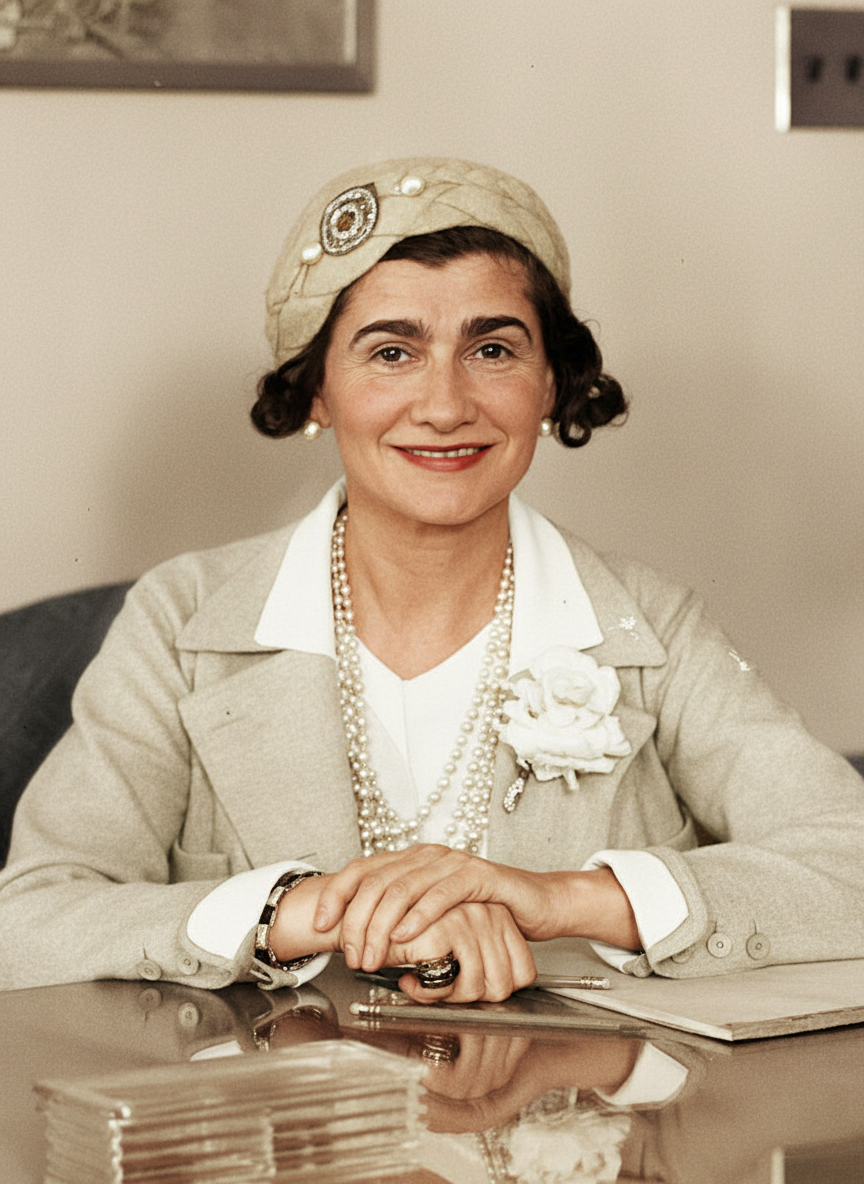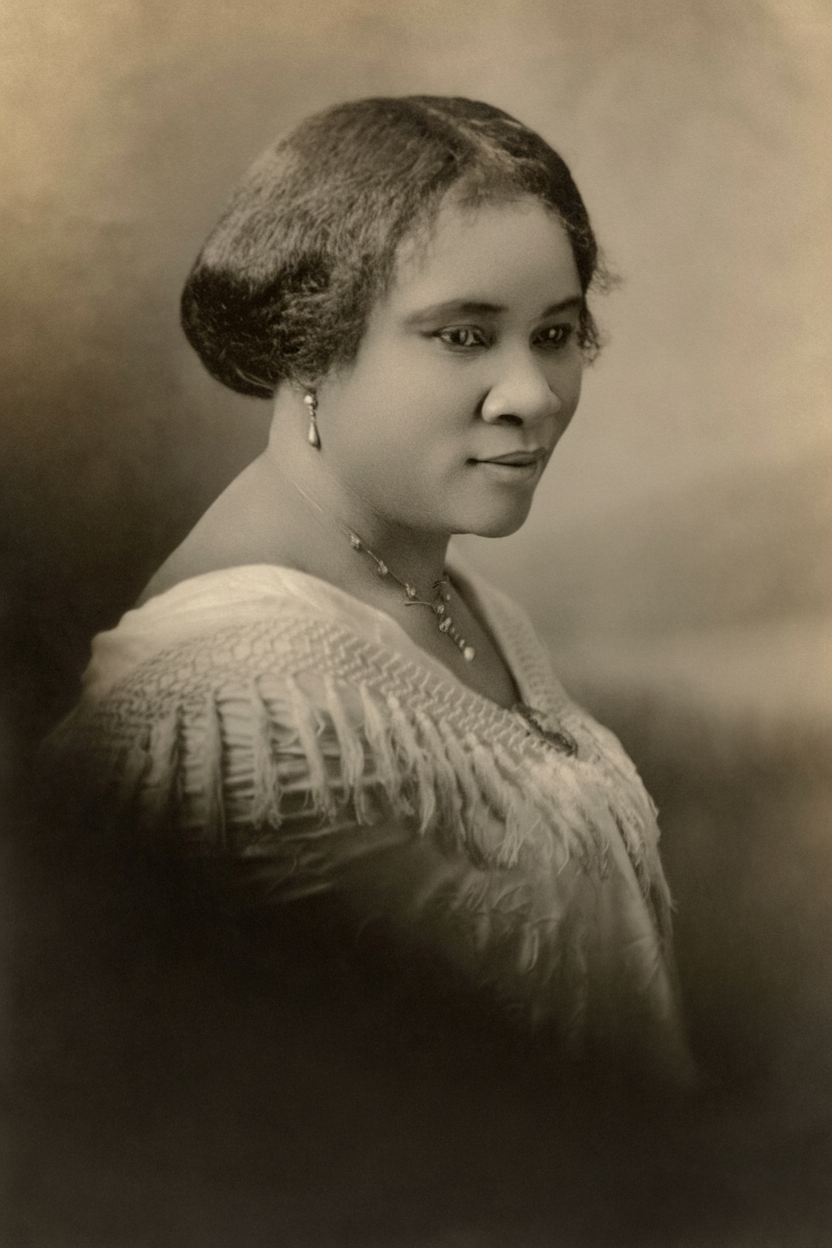
Portrait of Madam C.J. Walker
Historical Mind · 1867 — 1919

Madam C.J. Walker

Pioneering African American entrepreneur who built a haircare empire and became a self-made millionaire.

Country
United States
Continent
North America
Industry
Beauty, Personal Care, Direct Sales
Role
Founder, Entrepreneur, Philanthropist

Sarah Breedlove, known as Madam C.J. Walker, was a transformative American entrepreneur and philanthropist. Born to formerly enslaved parents in Louisiana in 1867, she overcame extreme poverty and limited education to create a highly successful line of haircare products for African American women. Launching her business in 1906, she developed a direct sales model that empowered thousands of Black women as independent agents. By her death in 1919, her company, the Madam C.J. Walker Manufacturing Company, was a multimillion-dollar enterprise, establishing her as one of the wealthiest African American women of her time and a pioneering figure in American business and philanthropy.

Biography

Sarah Breedlove was born on December 23, 1867, in Delta, Louisiana, just two years after the Emancipation Proclamation. Orphaned at age seven, she moved to Vicksburg, Mississippi, living with her older sister. Her formal education was minimal, totaling three months of night school. At age ten, she began working as a domestic servant. At eighteen, she married Moses McWilliams and gave birth to her daughter, A'Lelia Walker, in 1885. Moses died two years later, leaving Sarah a widow with a young child. She subsequently moved to St. Louis in 1888, where her brothers were barbers, and worked as a laundress, earning $1.50 a day while saving money to educate her daughter. During this period, she suffered from severe hair loss and scalp conditions, prompting her to experiment with homemade remedies and existing products. She worked for Annie Malone's Poro Company, a Black-owned hair product business, for two years, gaining invaluable experience in product formulation and direct sales. In 1906, after marrying newspaper advertising salesman Charles Joseph Walker, she adopted the name Madam C.J. Walker and launched her own business. Her signature product, 'Madam Walker's Wonderful Hair Grower,' was a scalp conditioning and healing formula. She established a direct selling model, recruiting and training a network of thousands of African American women, known as 'Walker Agents,' to sell products door-to-door. This strategy provided economic opportunities for women in an era of limited professional avenues. Her business expanded rapidly across the United States and into the Caribbean, with the headquarters eventually settling in Indianapolis, Indiana, in 1910. There, she built a factory, a beauty school, and a research laboratory. The Madam C.J. Walker Manufacturing Company became an international enterprise, employing thousands and generating substantial profits. Beyond her business acumen, Walker was a profound philanthropist and advocate for racial equality. She donated generously to educational institutions like Tuskegee Institute and Bethune-Cookman College, and civil rights organizations such as the NAACP and the National Conference on Lynching. She funded scholarships, supported orphanages, and used her platform to speak out against racial injustice. Her business model not only generated wealth but also fostered financial independence and leadership skills among African American women. She died on May 25, 1919, at her estate, Villa Lewaro, in Irvington, New York, leaving behind an estimated fortune of over a million dollars, making her one of America's first self-made female millionaires, Black or white. Her legacy extends beyond her financial achievements to her enduring impact on Black economic empowerment and philanthropy.

Accomplishments

  • 01Established the Madam C.J. Walker Manufacturing Company (1906), pioneering a haircare empire specifically for African American women, addressing a neglected market.
  • 02Developed a highly effective direct sales model, recruiting and training over 20,000 'Walker Agents' by 1919, empowering African American women with economic independence and professional skills.
  • 03Achieved self-made millionaire status by her death in 1919, making her one of the first American women, and definitively the first African American woman, to earn this fortune through her own business endeavors.
  • 04Built a sophisticated manufacturing operation, beauty schools, and research laboratories in Indianapolis, centralizing production and training to scale her enterprise.
  • 05Leveraged her wealth for significant philanthropic contributions, supporting educational institutions (e.g., Tuskegee Institute), civil rights organizations (e.g., NAACP), and various community initiatives.
  • 06Expanded her business internationally into the Caribbean, demonstrating early aptitude for global market penetration and brand building.
  • 07Used her public platform to advocate for racial justice and women's empowerment, integrating social mission with business success.

Lessons for Operators

**Identify and Serve Underserved Markets:** Walker recognized and capitalized on a critical unmet need within the African American community for specialized haircare products. Operators should rigorously analyze demographics and cultural nuances to uncover similar 'blue ocean' opportunities.
**Empower Your Distribution Channel:** Her direct sales model was not just transactional; it was a program for economic empowerment for her 'Walker Agents.' This created a highly motivated, loyal, and effective sales force. Leaders should consider how their distribution strategies can also create value and opportunity for their partners.
**Build Brand Trust Through Quality and Personal Connection:** Walker personally demonstrated her products and traveled extensively to meet her agents and customers, fostering trust and loyalty. Investors should prioritize ventures where founders are deeply connected to their customer base and committed to product efficacy.
**Scale Through Structured Training and Support:** The success of her direct sales network relied on comprehensive training programs for her agents in sales techniques, product knowledge, and business management. Enterprises must invest in robust training and support systems to ensure consistent performance across distributed teams.
**Integrate Social Impact with Business Strategy:** Walker's philanthropy and advocacy were not separate from her business but intrinsic to her brand's appeal and mission. Modern businesses can build stronger brands and attract talent by authentically aligning profit generation with positive societal impact.
**Strategic Use of Advertising and Marketing:** She understood the power of advertising, using newspapers and her own image to market her products. She also strategically changed her name to 'Madam C.J. Walker' to convey sophistication and authority. Companies should invest in branding and marketing that resonates deeply with their target demographic.
The Operator's Playbook

Key Takeaways

Practical lessons distilled for operators, investors, C-levels, and capital allocators.

Lesson 01

Market Segmentation is Growth

Walker's success stemmed from her acute understanding of a specific, overlooked market segment (African American women) and tailoring products and services precisely to their needs. This demonstrates that deep market understanding and targeted solutions can unlock significant growth potential, even within niche sectors.

Lesson 02

Distribution as a Force Multiplier

Her direct sales model, empowering thousands of 'Walker Agents,' was more than just a distribution strategy; it was a scalable model for community economic development. This decentralized approach enabled rapid market penetration and created a loyal ecosystem, proving that an empowered sales force can be a powerful competitive advantage.

Lesson 03

Founding with Purpose and Philanthropy

Walker seamlessly integrated her commercial ambition with a commitment to racial uplift and women's empowerment. Her extensive philanthropic work and advocacy enhanced her brand's credibility and garnered community loyalty, illustrating that social mission can be a core driver of business success and long-term brand equity.

Lesson 04

Operational Excellence for Scale

Building a factory, beauty schools, and a research laboratory in Indianapolis showcased a commitment to operational infrastructure. This centralized production, training, and innovation capability allowed the Madam C.J. Walker Manufacturing Company to maintain quality, scale production, and support its vast network of agents effectively.

Lesson 05

Personal Brand as a Business Asset

Walker consciously crafted her public image and leveraged her personal story and name ('Madam C.J. Walker') to build trust and authority. This highlights the enduring power of founder branding and authentic storytelling in establishing market presence and customer loyalty, especially in consumer-facing industries.

Lesson 06

Resilience in Adversity

Overcoming extreme poverty, orphanhood, and systemic racism, Walker's journey exemplifies profound resilience. Her ability to persist and innovate despite immense challenges underscores that grit and adaptability are paramount for entrepreneurial success, particularly when operating in nascent or challenging markets.

Mental Models

Frameworks & Principles

Named frameworks and strategic principles they popularized or embodied.

01

Direct Sales/Network Marketing Model

Madam C.J. Walker successfully employed a direct sales model where independent agents (Walker Agents) sold products directly to consumers, often door-to-door or in community settings. These agents were trained and incentivized, creating a self-replicating sales force.

When to useApplicable for new product launches needing rapid market penetration, reaching underserved demographics, or when building a community around a product. Ideal for industries where personal demonstration and trusted referrals are crucial, or where traditional retail channels are inaccessible.

02

Market Niche Specialization

Walker focused exclusively on developing and marketing haircare products tailored for African American women, addressing specific needs often overlooked by mainstream manufacturers. This allowed her to dominate a specialized segment with high-quality, relevant offerings.

When to useHighly effective for startups or businesses entering competitive markets. By identifying and serving a specific, unmet need within a demographic, companies can establish strong brand loyalty and market leadership before expanding. Useful for industries with diverse consumer needs.

03

Vertical Integration (Limited)

Walker established her own manufacturing facilities, research laboratories, and beauty schools (training her 'agents'). While not fully vertically integrated, this control over production and training ensured product quality and agent competency, crucial for brand reputation and scalability.

When to useConsider when quality control is paramount, supply chain reliability is a concern, or specific expertise (like agent training) is critical to product delivery. This approach can also capture more value within the production and distribution chain.

Citations

Sources & Further Reading

Profiles, interviews, podcasts, and articles used to compile and verify this entry. Each link opens at the original publisher.

Adjacent Minds

Explore Related Titans

Other figures in the archive who share Madam C.J. Walker's domain, geography, or era.

Transportation & Logistics

More in Transportation & Logistics

Browse all →
Portrait of Henry Ford
UNITED STATES / AUTOMOTIVE
Henry Ford
The architect of mass production, democratizing the automobile through efficiency and scale.
Portrait of Soichiro Honda
JAPAN / AUTOMOTIVE
Soichiro Honda
From garage mechanic to global automotive titan, Soichiro Honda built a legacy grounded in engineering prowess and entrepreneurial zeal.
Portrait of Kiichiro Toyoda
JAPAN / AUTOMOTIVE
Kiichiro Toyoda
The engineer who pivoted a textile machinery company into a global automotive titan by relentlessly pursuing 'just-in-time' efficiency.
Portrait of Jean-Dominique Senard
FRANCE / AUTOMOTIVE
Jean-Dominique Senard
A pragmatic leader known for navigating complex corporate alliances and fostering industrial transformation.
Portrait of Stefan Winkelmann
GERMANY / AUTOMOTIVE
Stefan Winkelmann
The architect behind the contemporary resurgence and consistent elevation of iconic automotive brands, demonstrating mastery in brand identity, market positioning, and product strategy within the ultra-luxury and performance segments.
Portrait of Jost Capito
GERMANY / AUTOMOTIVE & MOTORSPORT
Jost Capito
A motorsport executive renowned for transforming underperforming teams into championship contenders through strategic leadership, operational restructuring, and fostering high-performance cultures.
Portrait of Håkan Samuelsson
SWEDEN / AUTOMOTIVE
Håkan Samuelsson
Architect of Volvo Cars' modern renaissance and electrification strategy.
Portrait of Tom Arseneault
UNITED STATES / AEROSPACE & DEFENSE
Tom Arseneault
Tom Arseneault: A leader in defense innovation and strategic growth, driving BAE Systems' North American trajectory.
Portrait of Carlos Tavares
PORTUGAL / AUTOMOTIVE
Carlos Tavares
Carlos Tavares: The Turnaround Architect of the Automotive Industry
Portrait of Li Shufu
CHINA / AUTOMOTIVE MANUFACTURING
Li Shufu
The architect of Geely Automobile Holdings, transforming a refrigerator parts manufacturer into a global automotive giant through audacious acquisitions and strategic integration.
United States

From United States

Browse all →
Portrait of Andrew Carnegie
UNITED STATES / STEEL & MANUFACTURING
Andrew Carnegie
The architect of American steel supremacy and a pioneering industrialist whose innovations in cost control and vertical integration reshaped global manufacturing.
Portrait of Warren Buffett
UNITED STATES / INVESTING
Warren Buffett
The Oracle of Omaha: Architect of long-term value investing and compounding returns through disciplined acquisition and intrinsic value focus.
Portrait of Jeff Bezos
UNITED STATES / TECHNOLOGY, RETAIL, LOGISTICS, CLOUD COMPUTING, SPACE EXPLORATION
Jeff Bezos
Architect of Amazon, pioneer of e-commerce, and visionary across cloud computing, logistics, and space exploration.
Portrait of Bill Gates
UNITED STATES / SOFTWARE, TECHNOLOGY, PHILANTHROPY
Bill Gates
Co-founder of Microsoft, architect of the personal computing revolution, and global philanthropist.
Portrait of Sam Walton
UNITED STATES / RETAIL
Sam Walton
The architect of modern retail, pioneering discount merchandising and logistical efficiency to establish the world's largest retail corporation.
Portrait of Mark Cuban
UNITED STATES / TECHNOLOGY, MEDIA, SPORTS, HEALTHCARE
Mark Cuban
Mark Cuban: The Prolific Disrupter – From Software Startups to Sports Franchises and Pharmaceutical Innovation, Leveraging Technology and Direct-to-Consumer Models.
Portrait of Mohnish Pabrai
UNITED STATES / FINANCIAL SERVICES
Mohnish Pabrai
The Dhandho Investor: A Value Investing Maverick.
Portrait of Henry Ford
UNITED STATES / AUTOMOTIVE
Henry Ford
The architect of mass production, democratizing the automobile through efficiency and scale.
Portrait of Walt Disney
UNITED STATES / ENTERTAINMENT
Walt Disney
Co-founder of The Walt Disney Company, pioneering animation, theme parks, and diversified entertainment.
Portrait of Thomas Edison
UNITED STATES / INDUSTRIAL & ENERGY
Thomas Edison
The Prolific Inventor and Industrialist Who Electrified the World and Standardized Innovation.