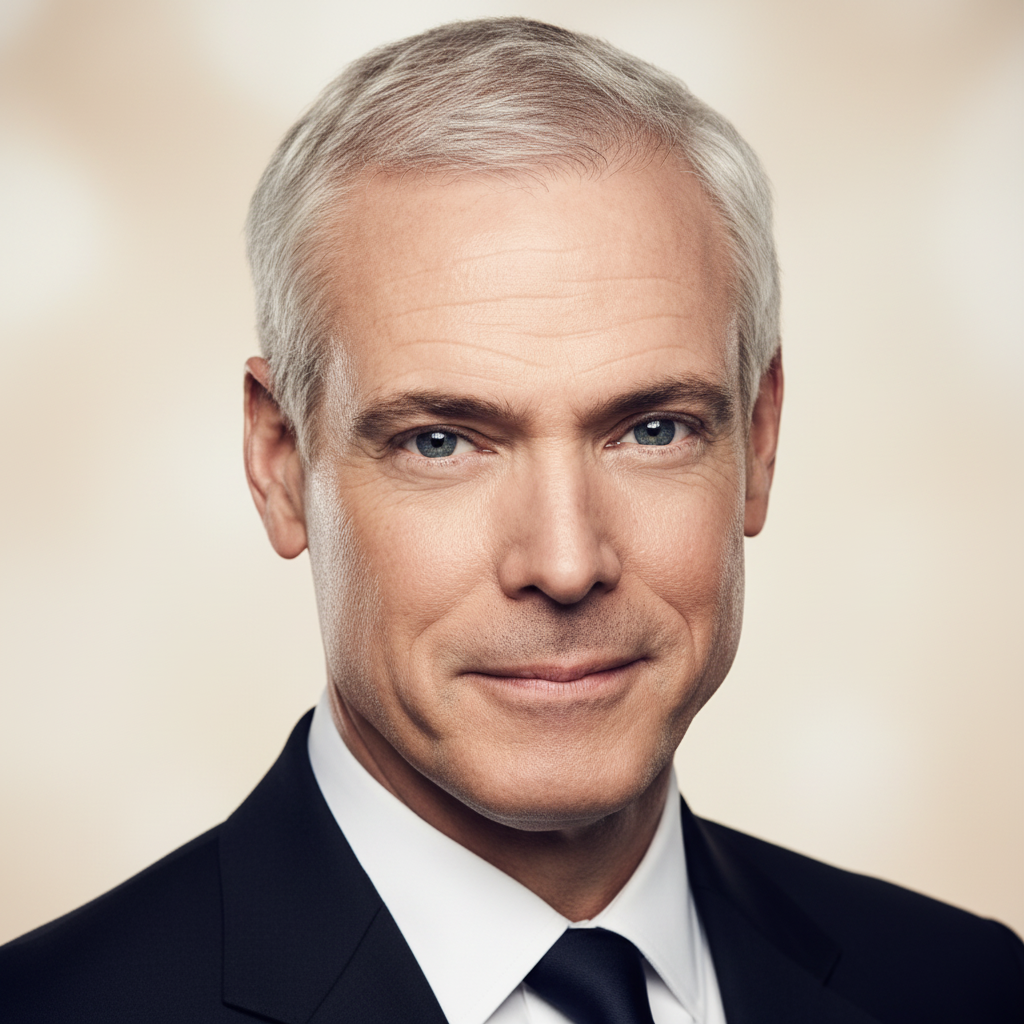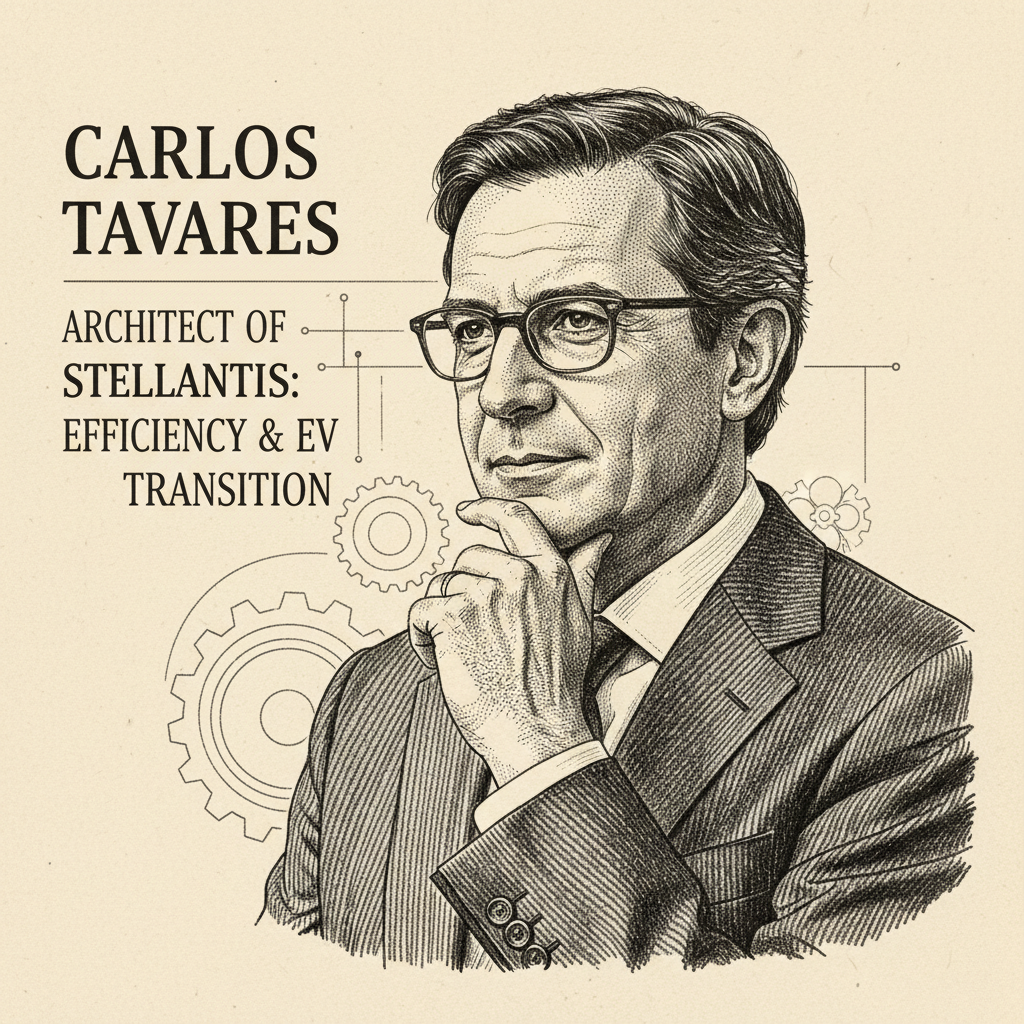
Carlos Tavares
Carlos Tavares: The Turnaround Architect of the Automotive Industry
Carlos Tavares, a Portuguese automotive executive, is renowned for his operational prowess and success in revitalizing struggling car manufacturers. With a career spanning over four decades, primarily at Renault-Nissan and then PSA Group, he rose to prominence for his stringent cost-cutting, efficiency drives, and strategic mergers. As CEO of PSA Group (2014-2021) and then Stellantis (2021-present), he orchestrated the turnarounds of Opel/Vauxhall and Chrysler, positioning these entities for profitability and future growth.
Biography
Accomplishments
- 01Orchestrated the turnaround of PSA Group (Peugeot, Citroën, DS) from near-bankruptcy to sustained profitability and market share growth between 2014 and 2021.
- 02Successfully integrated and returned Opel/Vauxhall to profitability within two years of acquisition from General Motors (2017-2019), achieving €1.1 billion in operating profit by 2019.
- 03Led the merger of PSA Group and Fiat Chrysler Automobiles (FCA) to form Stellantis in 2021, creating the world's fourth-largest automotive group by volume.
- 04Initiated and oversaw Stellantis's 'Dare Forward 2030' strategic plan, targeting €300 billion in net revenues by 2030 and becoming carbon net zero by 2038.
- 05Consistently delivered industry-leading operating margins at PSA Group and subsequently Stellantis, demonstrating superior operational efficiency compared to many larger rivals.
- 06Implemented a rigorous cost-cutting and platform rationalization strategy across acquired brands, maximizing synergies and reducing fixed costs significantly.
Lessons for Operators
Key Takeaways
Practical lessons distilled for operators, investors, C-levels, and capital allocators.
Turnaround Specialist's Playbook
Tavares has a proven method for revitalizing distressed assets: aggressive cost reduction, platform rationalization, relentless focus on operational efficiency, and a clear product strategy. This framework is applicable across industries facing margin pressure or needing to integrate complex acquisitions.
Value Creation Through Mergers
The Stellantis merger is a masterclass in realizing synergies from scale. Tavares's ability to identify and execute on €5 billion+ in annual synergies from the PSA-FCA combination showcases how strategic M&A, when managed meticulously, can unlock substantial shareholder value.
Disciplined Capital Allocation
Tavares consistently emphasizes financial discipline, ensuring that capital expenditures and R&D investments are directly tied to tangible returns and strategic objectives. This prevents wasteful spending and ensures long-term profitability, a crucial lesson for investors and capital allocators.
Adaptability in Disruption
While embracing the shift to electric vehicles and new mobility, Tavares maintains a 'pragmatic' stance, prioritizing profitability and customer pull over regulatory push. This balanced approach to innovation mitigates risk while positioning the company for future growth.
Culture of Performance
Tavares fosters a performance-driven culture with clear objectives and strict accountability. This top-down emphasis on results is critical for transforming complacent organizations and extracting maximum value from human capital.
Strategic Resilience
Under Tavares, both PSA and Stellantis demonstrated remarkable resilience against market downturns, supply chain disruptions, and intense competition, consistently outperforming many peers in terms of profitability and cash generation.
Frameworks & Principles
Named frameworks and strategic principles they popularized or embodied.
The Turnaround Manifesto
A comprehensive strategy for revitalizing underperforming businesses, characterized by aggressive cost-cutting, asset rationalization (e.g., reducing product platforms), operational efficiency drives, and a renewed focus on profitable core competencies.
When to useApplicable for businesses in distress, post-acquisition integration of struggling assets, or in mature industries facing margin compression and needing to streamline operations. Requires strong, decisive leadership.
Synergy Realization Blueprint
A detailed methodology for identifying, quantifying, and executing synergies in mergers and acquisitions. It involves commonizing platforms, centralizing procurement, optimizing manufacturing footprints, and rationalizing product portfolios across combined entities.
When to useEssential for any M&A transaction where scale and integration are critical to value creation. Particularly effective in industries with high fixed costs and product commonality potential, like automotive.
Pragmatic Electrification Strategy
An approach to the electric vehicle transition that balances regulatory mandates and environmental goals with financial profitability and market demand. It involves investing in a diverse portfolio of powertrain technologies (ICE, hybrid, EV) and scaling EV production based on customer adoption and infrastructure readiness.
When to useRelevant for industries undergoing a significant technological shift that requires substantial capital investment, where immediate full-scale adoption is not guaranteed to be profitable or feasible, and a phased, adaptable strategy is preferred.
Performance-Driven Organizational Model
A management framework centered on setting ambitious but achievable financial and operational targets, empowering local teams with clear responsibilities, and holding them strictly accountable for results. Rewards performance and addresses underperformance decisively.
When to useIdeal for organizations needing to improve accountability, efficiency, and competitiveness. Effective in driving cultural change and ensuring strategic objectives are met through a disciplined execution focus.
Recent Appearances
Latest interviews, keynotes, and press from the past half year.
 youtube.com
 youtube.com
 youtube.com
 youtube.com
 youtube.com
 youtube.com
 youtube.com
 youtube.com
 youtube.com
 youtube.com
 youtube.com
 youtube.com
 youtube.com
 youtube.com
 youtube.com
 youtube.com
 youtube.com
 youtube.com
 youtube.com
 youtube.com
 youtube.com
 youtube.com
 m.youtube.com
 youtube.com
 youtube.com
 youtube.com
 youtube.com
 youtube.com
 youtube.com
 youtube.com
 youtube.com
 youtube.com
 youtube.com
 youtube.com
Sources & Further Reading
Profiles, interviews, podcasts, and articles used to compile and verify this entry. Each link opens at the original publisher.
Explore Related Titans
Other figures in the archive who share Carlos Tavares's domain, geography, or era.
More in Transportation & Logistics





Contemporaries — born 1950s