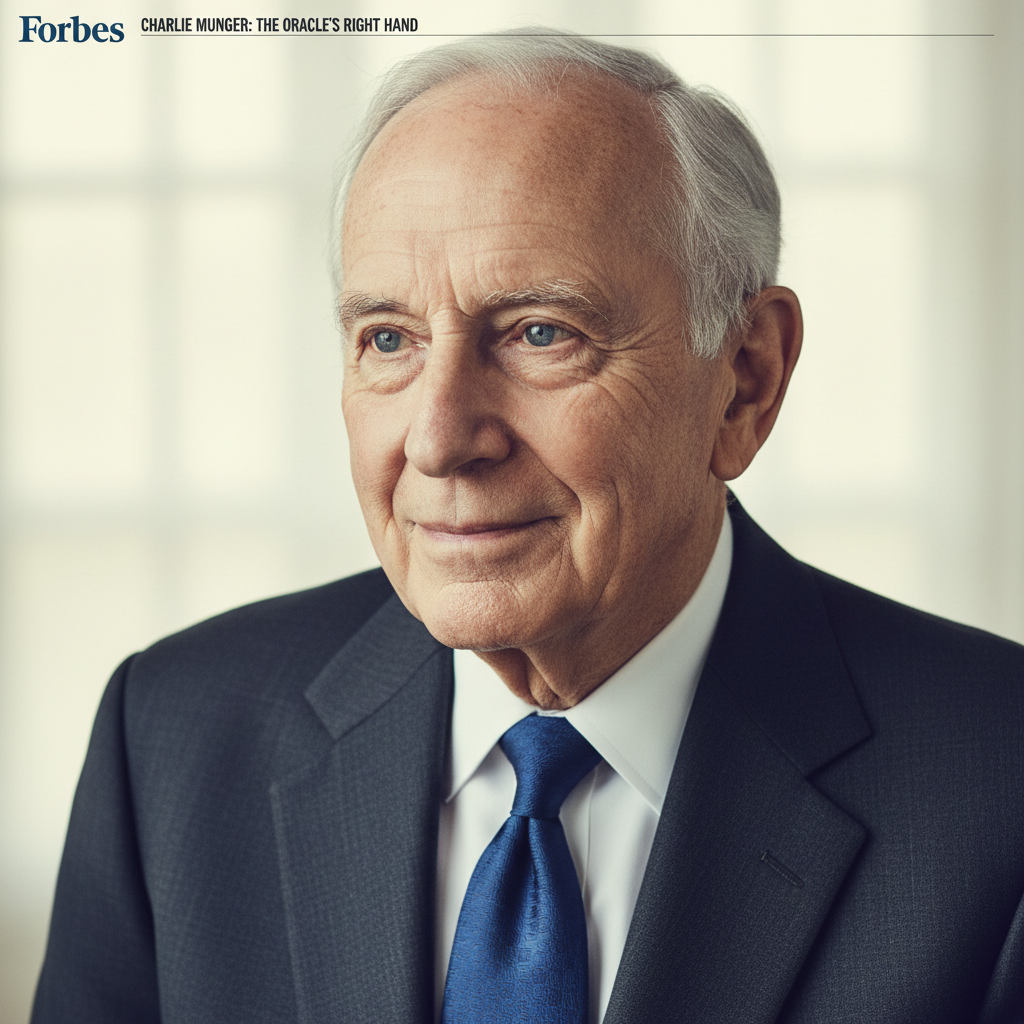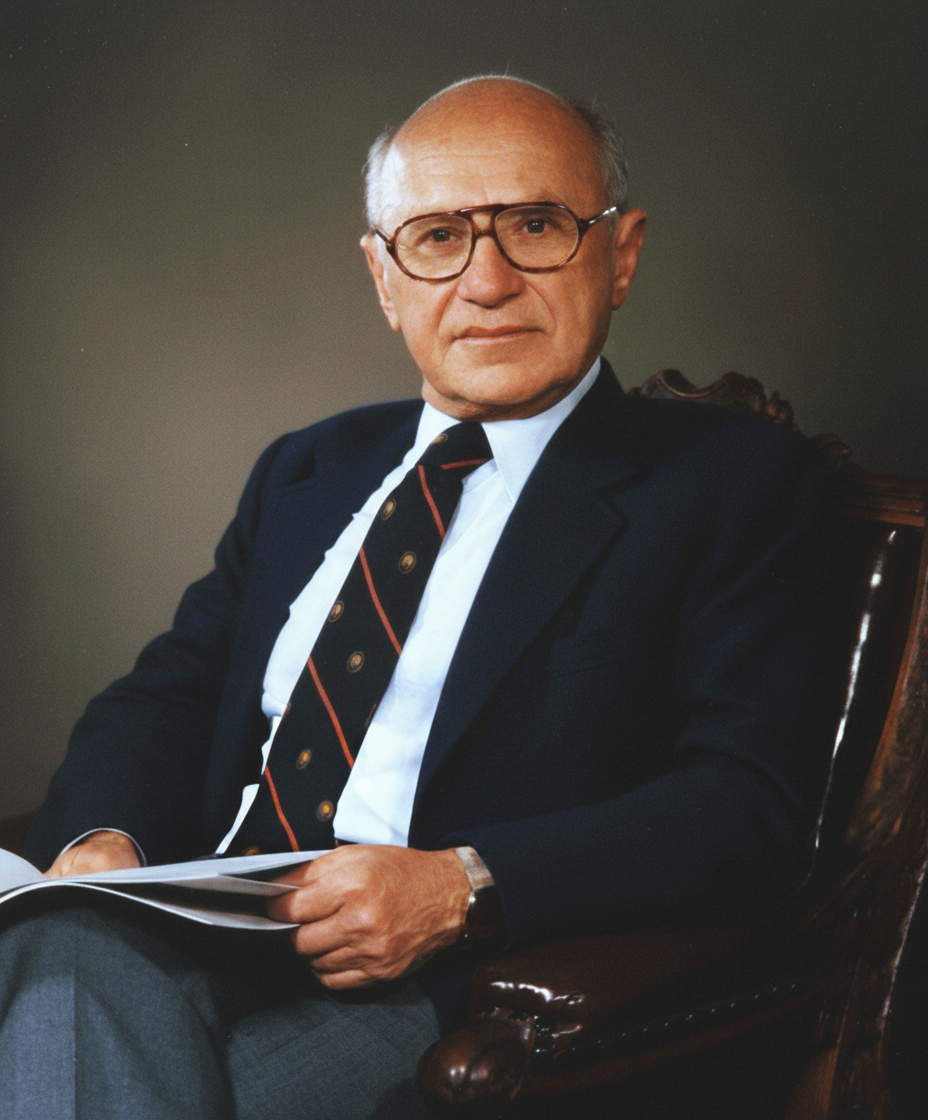
Milton Friedman
Architect of Modern Monetarism and Advocate for Free Markets.
Milton Friedman was an American economist and statistician who received the Nobel Memorial Prize in Economic Sciences in 1976 for his achievements in the fields of consumption analysis, monetary history and theory, and for his demonstration of the complexity of stabilization policy. A leader of the Chicago school of economic thought, he profoundly influenced economic theory and public policy, advocating for free markets, limited government, and a stable monetary policy.
Biography
Accomplishments
- 01Nobel Memorial Prize in Economic Sciences (1976) for his work on consumption analysis, monetary history and theory, and stabilization policy.
- 02Authored 'A Monetary History of the United States, 1867–1960' (with Anna Schwartz), which redefined the understanding of the Great Depression and the role of monetary policy.
- 03Developed and popularized Monetarism, asserting that control of the money supply is critical for economic stability and combating inflation.
- 04Influenced U.S. economic policy during the Nixon and Reagan administrations, advocating for deregulation, privatization, and anti-inflationary measures.
- 05Authored 'Capitalism and Freedom' (1962) and 'Free to Choose' (1980), widely read works that popularized free-market economic principles globally.
- 06Formulated the permanent income hypothesis, explaining consumer behavior based on long-term income expectations rather than current income.
Lessons for Operators
Key Takeaways
Practical lessons distilled for operators, investors, C-levels, and capital allocators.
Monetary Discipline is Paramount
Friedman's central tenet was that inflation is a monetary phenomenon. For investors and operators, this means closely observing central bank policy and money supply data, as these are critical indicators for future inflation and economic stability. Businesses should hedge against inflationary risks and operate with financial discipline.
Markets Work Best When Free
His advocacy for free markets, deregulation, and minimal government intervention highlights that competitive environments often lead to greater efficiency, innovation, and consumer welfare. Operators should seek to identify and capitalize on opportunities in less regulated or newly deregulated sectors, while investors should favor companies that thrive in competitive landscapes without relying on government protection.
Long-Term Expectations Drive Behavior
The permanent income hypothesis suggests that consumers and businesses base decisions on expected long-term income rather than short-term fluctuations. This implies that marketing, product development, and investment strategies should appeal to the long-term perceived value and stability, not just immediate trends or temporary economic boosts.
Understanding Business Cycles
Friedman and Schwartz's work on monetary history demonstrated how monetary policy errors can exacerbate economic downturns. Leaders should analyze historical economic cycles, pay attention to monetary indicators, and build resilient business models that can withstand potential policy missteps or shifts in the economic environment.
The Dangers of Discretionary Policy
Friedman argued against discretionary fiscal and monetary policy, advocating for rules-based approaches. For businesses, this means recognizing that government attempts to 'fine-tune' the economy can introduce instability. Focus on robust internal planning and scenario analysis, rather than relying on or predicting constant government interventions.
Frameworks & Principles
Named frameworks and strategic principles they popularized or embodied.
Monetarism (Quantity Theory of Money)
This framework posits that the general price level is directly proportional to the money supply. The fundamental equation is MV = PQ, where M is the money supply, V is the velocity of money, P is the aggregate price level, and Q is the quantity of goods and services produced. Friedman argued that V and Q are relatively stable in the short run, meaning changes in M primarily affect P.
When to useApplicable for assessing inflationary pressures, forecasting economic stability based on central bank actions, and understanding the long-term impact of monetary policy on purchasing power and asset values. Businesses can use this to anticipate input cost inflation and consumer price sensitivity.
Permanent Income Hypothesis (PIH)
Developed by Friedman, the PIH states that consumption smoothing occurs over an individual's lifetime. People's consumption decisions are based on their 'permanent income' (their expected average long-term income) rather than their current income. Temporary changes in income have a much smaller effect on consumption than permanent changes.
When to useUseful for businesses in understanding long-term consumer spending patterns, product demand elasticity, and the impact of temporary economic stimuli versus structural changes. Marketers and product developers can use PIH to design offerings that align with consumers' long-term financial expectations and perceived value.
Natural Rate of Unemployment (Non-Accelerating Inflation Rate of Unemployment - NAIRU)
Friedman introduced the concept of the natural rate of unemployment, arguing that there is a minimum level of unemployment in an economy below which inflation will accelerate. Attempts by governments to reduce unemployment below this 'natural rate' using expansionary monetary or fiscal policies will only lead to higher inflation without a lasting reduction in unemployment.
When to useValuable for HR strategists, labor market analysts, and business leaders in understanding wage pressures and inflation risk in tight labor markets. Helps in setting realistic expectations for labor costs and informing hiring and compensation strategies during different phases of the business cycle.
Recent Appearances
Latest interviews, keynotes, and press from the past half year.
 youtube.com
 youtube.comyoutube.com
 youtube.com
![Milton Friedman: What is Greed? [The Donahue Show Full Interview]](https://i.ytimg.com/vi/4ivicdwgIiE/hqdefault.jpg) youtube.com
youtube.com youtube.com
 youtube.com
 youtube.com
 youtube.com
 youtube.com
 youtube.com
 youtube.com
 youtube.com
 youtube.com
 youtube.com
 youtube.com
 youtube.com
 youtube.com
 youtube.com
 youtube.com
 youtube.com
 youtube.com
 youtube.com
 youtube.com
 youtube.com
Sources & Further Reading
Profiles, interviews, podcasts, and articles used to compile and verify this entry. Each link opens at the original publisher.
Explore Related Titans
Other figures in the archive who share Milton Friedman's domain, geography, or era.
More in Other





From United States





Contemporaries — 20th century