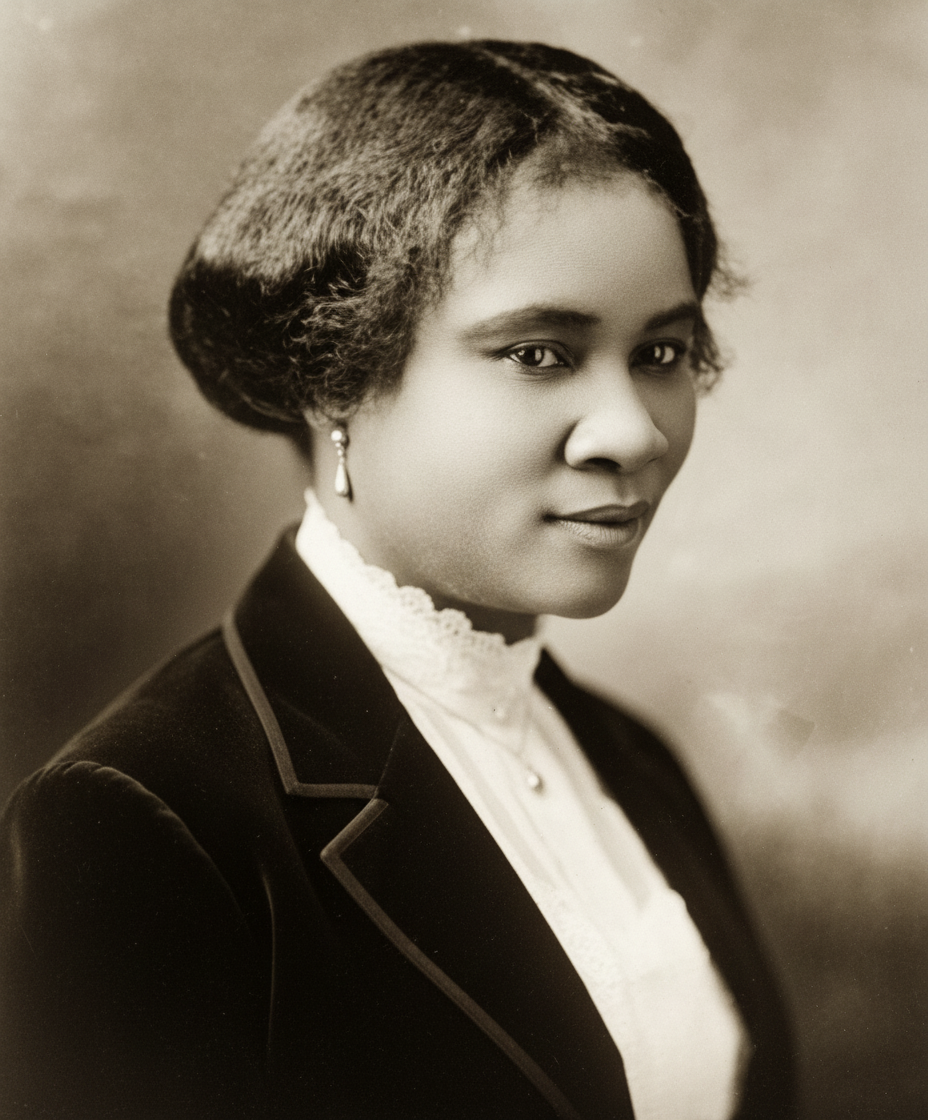
C. J. Walker
Built a beauty empire, becoming one of America's first self-made female millionaires.
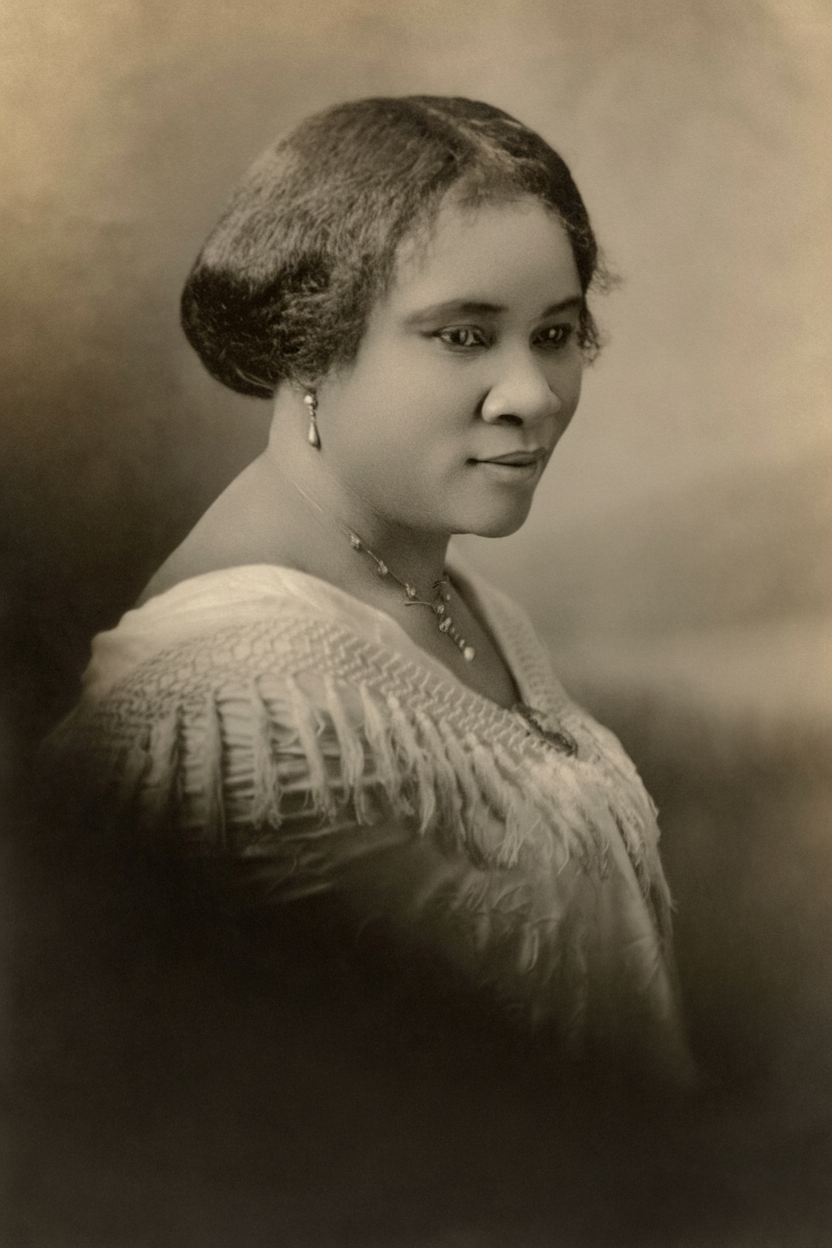
Sarah Breedlove, known as Madam C. J. Walker, transformed her personal struggle with hair loss into a pioneering beauty enterprise. Starting in 1906, she developed and marketed a line of hair care products specifically for Black women, establishing a direct-selling model that empowered thousands of agents. Her business acumen, product innovation, and social consciousness made her one of America's first self-made female millionaires and a significant figure in early 20th-century philanthropy and civil rights advocacy.
Biography
Accomplishments
- 01Founded the Madam C. J. Walker Manufacturing Company, a pioneering beauty enterprise for Black women, achieving widespread commercial success.
- 02Developed and patented 'Madam C. J. Walker's Wonderful Hair Grower' and a comprehensive 'Walker haircare system,' addressing a specific market need.
- 03Established a highly effective direct-selling distribution network of over 20,000 'Walker Agents,' providing economic opportunities for thousands of Black women.
- 04Achieved millionaire status through her own entrepreneurial endeavors, becoming one of America's first self-made female millionaires.
- 05Leveraged business success for significant philanthropic contributions, supporting education and civil rights organizations including the NAACP and various Historically Black Colleges and Universities.
- 06Built a substantial manufacturing facility and corporate headquarters in Indianapolis, demonstrating operational scaling and strategic investment.
- 07Expanded product distribution internationally to the Caribbean, proving early global market reach for an African American-owned business.
- 08Inspired subsequent generations of Black entrepreneurs and beauty industry innovators through her model of economic self-sufficiency and community empowerment.
Lessons for Operators
Key Takeaways
Practical lessons distilled for operators, investors, C-levels, and capital allocators.
Market Niche & Product Innovation
Walker's success stemmed from identifying a neglected consumer segment (Black women) and developing proprietary products (Madam C. J. Walker's Wonderful Hair Grower) and a comprehensive system ('Walker haircare system') to address their unique needs. This demonstrates the power of niche market focus combined with tailored solutions.
Empowered Direct Sales Model
Her creation of a network of 'Walker Agents' (20,000+), primarily Black women, was not just a distribution strategy but a community empowerment initiative. These agents were trained, provided with economic opportunities, and became brand ambassadors, illustrating how a motivated sales force can be a powerful competitive advantage and social engine.
Strategic Brand Building & Advertising
Walker extensively used her personal story and image in advertising, building trust and aspirational value around her brand. She understood the importance of marketing and consistent brand messaging, investing in newspapers and magazines to reach her target audience effectively.
Operational Scalability & Investment
Establishing a centralized manufacturing plant and headquarters in Indianapolis in 1910 was a pivotal operational decision. This investment allowed for mass production, quality control, and efficient distribution, transitioning from a small-scale operation to a robust enterprise capable of national and international reach.
Philanthropy and Social Impact as Core Values
Walker integrated philanthropy and civil rights advocacy into her business model, viewing economic empowerment as intertwined with social justice. Her substantial donations and activism demonstrated that business success could be a powerful platform for societal change, influencing public perception and employee engagement.
Resilience in Adversity
Overcoming extreme personal hardship, racial discrimination, and gender barriers, Walker's journey exemplifies profound resilience. Her ability to pivot from laundress to entrepreneur underscores the importance of tenacity and adaptability in the face of systemic obstacles.
Education and Training for Economic Mobility
Walker not only sold products but also provided extensive training to her agents in business practices, hygiene, and product application. This educational component fostered skill development and upward economic mobility for thousands of women, demonstrating the long-term value of investing in human capital within a business ecosystem.
Innovation in Business Model
Her direct-selling model, combined with product demonstrations and agent training, was an innovative approach to market penetration and customer engagement, particularly effective in a segregated society where traditional retail channels might have been less accessible or welcoming to her target demographic.
Frameworks & Principles
Named frameworks and strategic principles they popularized or embodied.
Niche Market Segmentation
Identifying and serving a specific, often overlooked, segment of the market with tailored products and services.
When to useWhen launching a new product, entering a competitive market, or seeking to maximize impact with limited resources by focusing on high-potential, underserved customer groups.
Direct-to-Consumer (DTC) Sales & Network Marketing
Bypassing traditional retail channels to sell products directly to consumers, often through independent distributors or agents who also recruit others. Madam Walker's model predates modern network marketing but shares foundational principles.
When to useWhen building strong customer relationships, empowering independent sales forces, or seeking cost-effective distribution for specialized products that benefit from personal demonstration and explanation.
Value Chain Integration
Owning and managing multiple stages of the production and distribution process, from manufacturing to direct sales, to enhance efficiency, quality control, and responsiveness.
When to useWhen seeking to reduce reliance on third-party suppliers/distributors, ensure consistent quality, gain better control over costs, or differentiate products through a unique customer experience.
Social Enterprise Model
A business model that prioritizes social or environmental impact alongside financial returns, often using profits to fund social causes or create opportunities for marginalized communities.
When to useWhen a company aims to integrate philanthropy and community development into its core mission, appeal to socially conscious consumers, or empower its workforce through economic opportunity and education.
Explore Related Titans
Other figures in the archive who share C. J. Walker's domain, geography, or era.
More in Transportation & Logistics








From United States








Contemporaries — 19th century