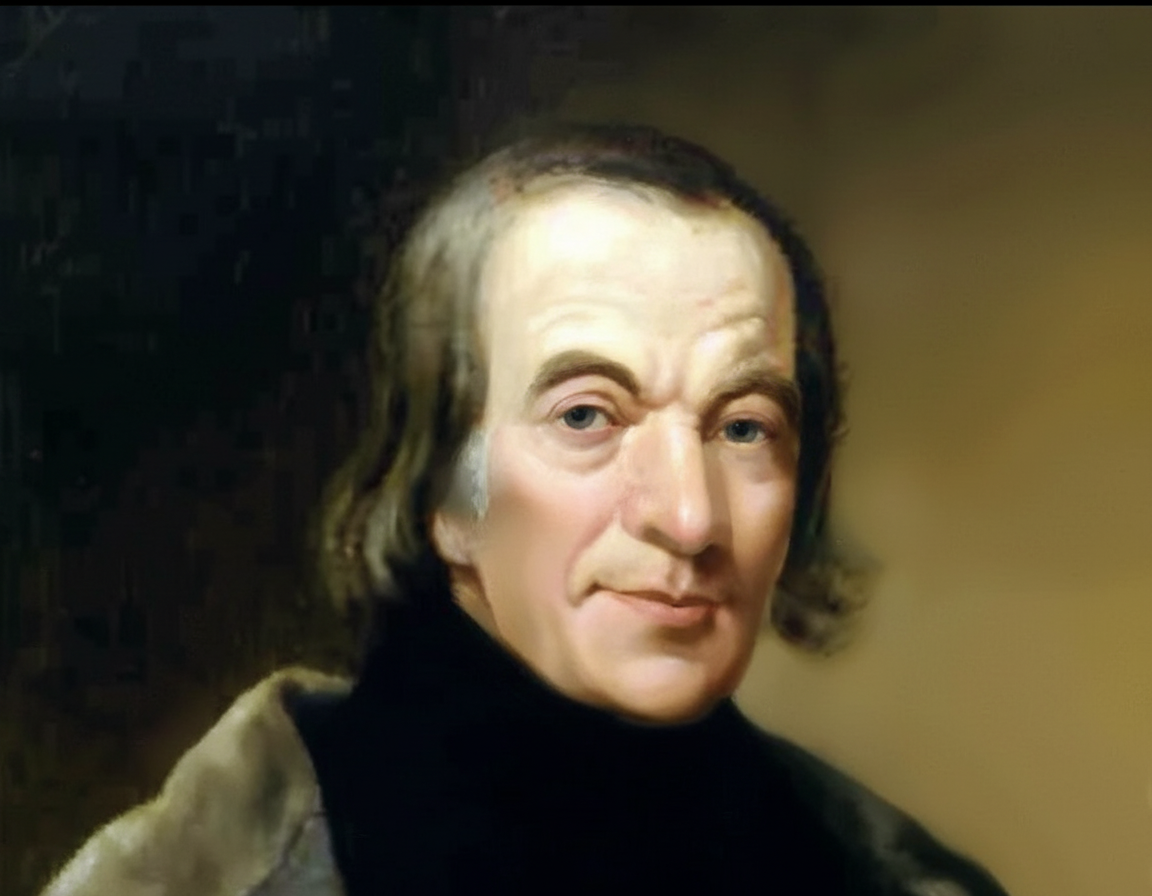
Portrait of Robert Owen
Historical Mind · 1771 — 1858

Robert Owen

Architect of human-capital-driven industrial efficiency, capped-return enterprise financing, and modern workforce welfare.

Country
United Kingdom
Continent
Europe
Industry
Textiles & Manufacturing
Role
Industrialist & Social Reformer

Robert Owen transformed industrial manufacturing by proving that superior employee working conditions, comprehensive education, and aligned community incentives generate sustainable operational productivity and alpha over unconstrained exploitation.

Biography

Born in Newtown, Montgomeryshire, Wales in 1771, Robert Owen entered the textile trade as an apprentice before establishing himself as a precocious mill manager in Manchester by age twenty-one at Peter Drinkwater's Piccadilly Mill. In 1799, Owen and his business partners purchased the New Lanark cotton mills on the River Clyde from David Dale for £60,000. Under Owen's operational leadership from 1800 to 1825, New Lanark became the premier model of industrial efficiency and social reform in Europe. While competitors maximized margins via extreme labor extraction, Owen banned child labor under age ten, reduced the workday from fourteen to ten and a half hours, eliminated corporal punishment, and built the world's first infant school and the Institute for the Formation of Character in 1816. To align capital with operations, Owen bought out dissident, short-termist partners in 1813, establishing a revolutionary capital structure with philosopher Jeremy Bentham and Quaker philanthropist William Allen that capped shareholder dividends at 5% per annum, reinvesting surplus profits into facility upgrades, worker housing, and subsidized healthcare. Despite massive capital outlays on social infrastructure, New Lanark generated superior financial returns and higher quality yarn, disproving the prevailing economic orthodoxy that worker suppression was necessary for industrial profitability. In the 1820s, Owen broadened his focus to macroeconomic and utopian ventures. In 1825, he invested roughly £30,000 (the majority of his personal fortune) to acquire the 20,000-acre settlement of New Harmony, Indiana, attempting to build a communal society devoid of private property. Plagued by an absence of skilled agrarian labor, structural free-rider problems, and ideological factionalism, New Harmony collapsed financially by 1828. Returning to the UK, Owen channeled his operational philosophy into the cooperative movement, establishing the National Equitable Labour Exchange in 1832 and organizing the Grand National Consolidated Trades Union in 1834. Owen's career provides institutional leaders with a foundational case study in the power of corporate human-capital investment balanced against the systemic risks of misaligned property rights and unvetted utopian governance.

Accomplishments

  • 01Turned the New Lanark cotton mills into one of the largest and most profitable textile manufacturing operations in Great Britain between 1800 and 1825.
  • 02Formed an investment syndicate in 1813 with Jeremy Bentham and William Allen that capped shareholder dividends at 5%, pioneering early corporate social enterprise structures.
  • 03Created the first nursery and workplace infant school in 1816, establishing the business case for employer-sponsored childcare to increase workforce retention and productivity.
  • 04Introduced the 'silent monitor' performance management system, replacing physical discipline with objective, transparent peer-level accountability in industrial manufacturing.
  • 05Drafted and campaigned for progressive industrial labor legislation, directly influencing the UK Cotton Mills and Factories Act of 1819.
  • 06Founded the National Equitable Labour Exchange in 1832, pioneering alternative currency models based on labor-time value.

Lessons for Operators

Human capital enhancements compound operational output; upgrading physical working environments directly reduces waste, absenteeism, and inventory shrinkage.
Capital partner alignment is existential; managing progressive or long-horizon capital requires partners who explicitly accept capped or patient financial yields.
Accountability systems perform better when transparent and non-punitive; behavioral tracking via public visual metrics drives alignment faster than coercive discipline.
Social infrastructure creates competitive moats; company-sponsored housing, retail goods at cost, and education insulate factories from labor market volatility.
Communal property structures fail without rigorous labor selection and strict property rights; removing individual economic incentives without operational accountability creates catastrophic free-rider failure modes.
The Operator's Playbook

Key Takeaways

Practical lessons distilled for operators, investors, C-levels, and capital allocators.

Lesson 01

Human Capital as a Production Multiplier

Owen proved that treating workers as delicate, high-value machinery ('vital machines') yielded higher return on invested capital than neglecting them, as healthy, educated workers achieved lower error rates and higher throughput.

Lesson 02

The Necessity of Partner-Capital Thesis Alignment

When commercial partners challenged his social spending, Owen aggressively bought them out, restructuring equity under a contractual 5% dividend cap to ensure investors could not dismantle enterprise reinvestment.

Lesson 03

Incentive Alignment Over Moral Exhortation

At New Lanark, operational success was rooted in structured incentives, bulk-purchased subsidized food, and objective feedback; by contrast, New Harmony relied on ideological goodwill and collapsed within thirty-six months.

Lesson 04

Supply Chain Integration and Retail Arbitrage

Owen eliminated predatory company-store markups by creating village cooperative stores that bought staple goods at wholesale scale, selling them at cost plus operating expenses, increasing real wages without increasing nominal payroll.

Mental Models

Frameworks & Principles

Named frameworks and strategic principles they popularized or embodied.

01

The Silent Monitor Performance Matrix

An objective, four-sided visual indicator (colored blocks representing excellent, good, indifferent, and poor conduct) placed above each worker station, recorded daily in management logs without verbal abuse or punitive pay cuts.

When to useDeploy in high-throughput industrial, manufacturing, or operations environments to establish low-friction, peer-visible quality and behavioral benchmarks without breeding adversarial management dynamics.

02

Capped-Yield Patient Capital Structure

A financing model where external equity investors receive a preferred, legally capped annual return (e.g., 5%), with all operational surplus capital mandated for reinvestment into employee welfare, community assets, and reserve equity.

When to useDeploy when raising growth capital for dual-mandate corporate enterprises, B-corps, or asset-heavy industrial models where excessive short-term dividend extraction threatens continuous balance sheet and operational health.

03

Closed-Loop Workforce Social Infrastructure

An operating model that bundles primary compensation with proprietary social services—subsidized housing, primary healthcare, zero-margin consumer goods, and institutional childcare—effectively lowering employee turnover while boosting localized real purchasing power.

When to useApply in geographically concentrated manufacturing plants, remote operational hubs, or resource extraction sites facing high worker churn, regional wage inflation, or localized talent scarcity.

Citations

Sources & Further Reading

Profiles, interviews, podcasts, and articles used to compile and verify this entry. Each link opens at the original publisher.

Adjacent Minds

Explore Related Titans

Other figures in the archive who share Robert Owen's domain, geography, or era.

Industrial & Manufacturing

More in Industrial & Manufacturing
Browse all →
Portrait of Mukesh Ambani
INDIA / CONGLOMERATE
Mukesh Ambani
India's transformative conglomerate architect, driving digital and retail revolutions.
Portrait of Richard Branson
UNITED KINGDOM / CONGLOMERATE
Richard Branson
The Maverick Billionaire: Pioneering and Proliferating the Virgin Brand Across Diverse Sectors.
Portrait of Marcus Aurelius
ROMAN EMPIRE / GOVERNMENT & DEFENSE
Marcus Aurelius
Stoic statesman who navigated pandemic, frontier warfare, and fiscal shocks through disciplined governance and ethical restraint.
Portrait of Charles Koch
UNITED STATES / DIVERSIFIED CONGLOMERATE
Charles Koch
Architect of Koch Industries' diversified growth and proponent of market-based management.
Portrait of Mohammed Dewji
TANZANIA / DIVERSIFIED CONGLOMERATES
Mohammed Dewji
Architect of East African industrialization who scaled MeTL from a $30M merchant into a $2B+ vertically integrated manufacturing powerhouse.
Portrait of Natarajan Chandrasekaran
INDIA / CONGLOMERATE MANAGEMENT
Natarajan Chandrasekaran
Architect of Tata Group's digital transformation and strategic consolidation.
Portrait of Ruth Handler
UNITED STATES / TOY MANUFACTURING, BUSINESS MANAGEMENT, ENTREPRENEURSHIP
Ruth Handler
Ruth Handler revolutionized the toy industry as co-founder of Mattel and the visionary creator of the Barbie doll, transforming play patterns and consumer markets.
Portrait of Li Ka-shing
HONG KONG / CONGLOMERATE (DIVERSIFIED)
Li Ka-shing
From plastics to global ports, infrastructure, and telecoms: A master of diversified conglomerate building and strategic asset allocation.
Portrait of S. P. Lohia
INDIA (BY ORIGIN), INDONESIA (BY OPERATIONS) / PETROCHEMICALS, TEXTILES, FERTILIZERS, POLYMERS
S. P. Lohia
The architect of a global petrochemical and textile conglomerate built on strategic acquisitions and vertical integration.
Portrait of Mohammed Al-Mady
SAUDI ARABIA / CHEMICALS & PETROCHEMICALS
Mohammed Al-Mady
Architect of Global Petrochemical Expansion and Diversification.
United Kingdom

From United Kingdom

Browse all →
Portrait of Richard Branson
UNITED KINGDOM / CONGLOMERATE
Richard Branson
The Maverick Billionaire: Pioneering and Proliferating the Virgin Brand Across Diverse Sectors.
Portrait of Queen Victoria
UNITED KINGDOM / GOVERNMENT & EMPIRE MANAGEMENT
Queen Victoria
The enduring matriarch who presided over an era of unparalleled imperial expansion and industrial transformation.
Portrait of Kate Bingham
UNITED KINGDOM / BIOTECHNOLOGY, VENTURE CAPITAL, PUBLIC HEALTH
Kate Bingham
Architect of vaccine procurement strategies, venture capital pioneer in life sciences, and influential biotech board leader.
Portrait of Sir Martin Sorrell
UNITED KINGDOM / MARKETING & ADVERTISING
Sir Martin Sorrell
The architect of WPP, transforming a wire-basket manufacturer into the world's largest advertising and marketing services company.
Portrait of Rupert Hillhouse
UNITED KINGDOM / PRIVATE EQUITY, TECHNOLOGY INVESTMENT
Rupert Hillhouse
Rupert Hillhouse is a pivotal figure in European technology private equity, known for identifying and scaling growth-oriented software and tech-enabled services companies.
Portrait of Blythe Masters
UNITED KINGDOM / FINANCIAL SERVICES, ENTERPRISE TECHNOLOGY
Blythe Masters
The architect of modern credit derivatives and a blockchain enterprise pioneer.
Portrait of Michael Platt
UNITED KINGDOM / FINANCE
Michael Platt
Michael Platt: The relentless arbitrageur who built a quantitative trading powerhouse by identifying and scaling exceptional talent.
Portrait of Antonia Romeo
UNITED KINGDOM / PUBLIC ADMINISTRATION, INTERNATIONAL RELATIONS, INVESTMENT MANAGEMENT
Antonia Romeo
A British civil servant who rose to the highest echelons of public service, leading critical government departments and representing national economic interests globally.
Portrait of David Ricardo
UNITED KINGDOM / FINANCE, ECONOMICS, GOVERNMENT
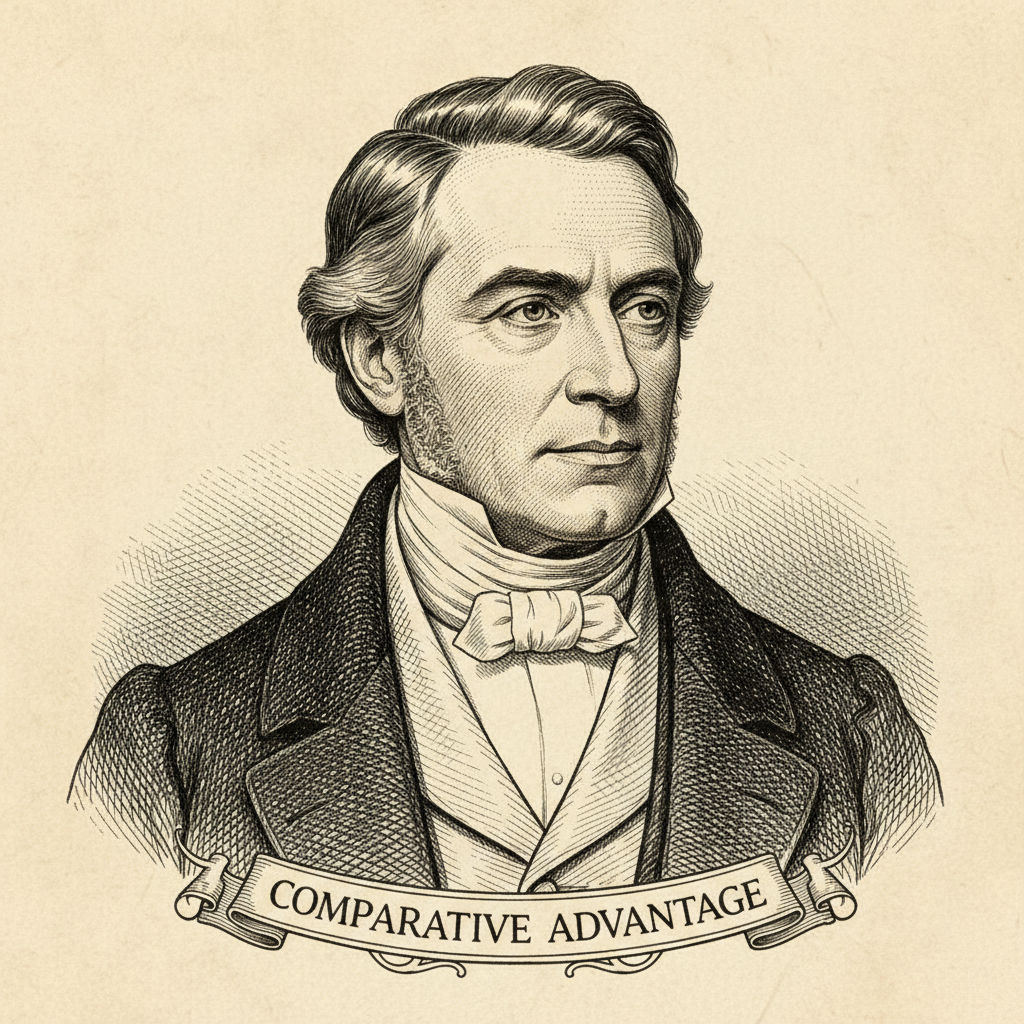
David Ricardo
The architect of comparative advantage and a transformative figure in classical economics and finance.
Portrait of Clara Furse
UNITED KINGDOM / FINANCIAL SERVICES
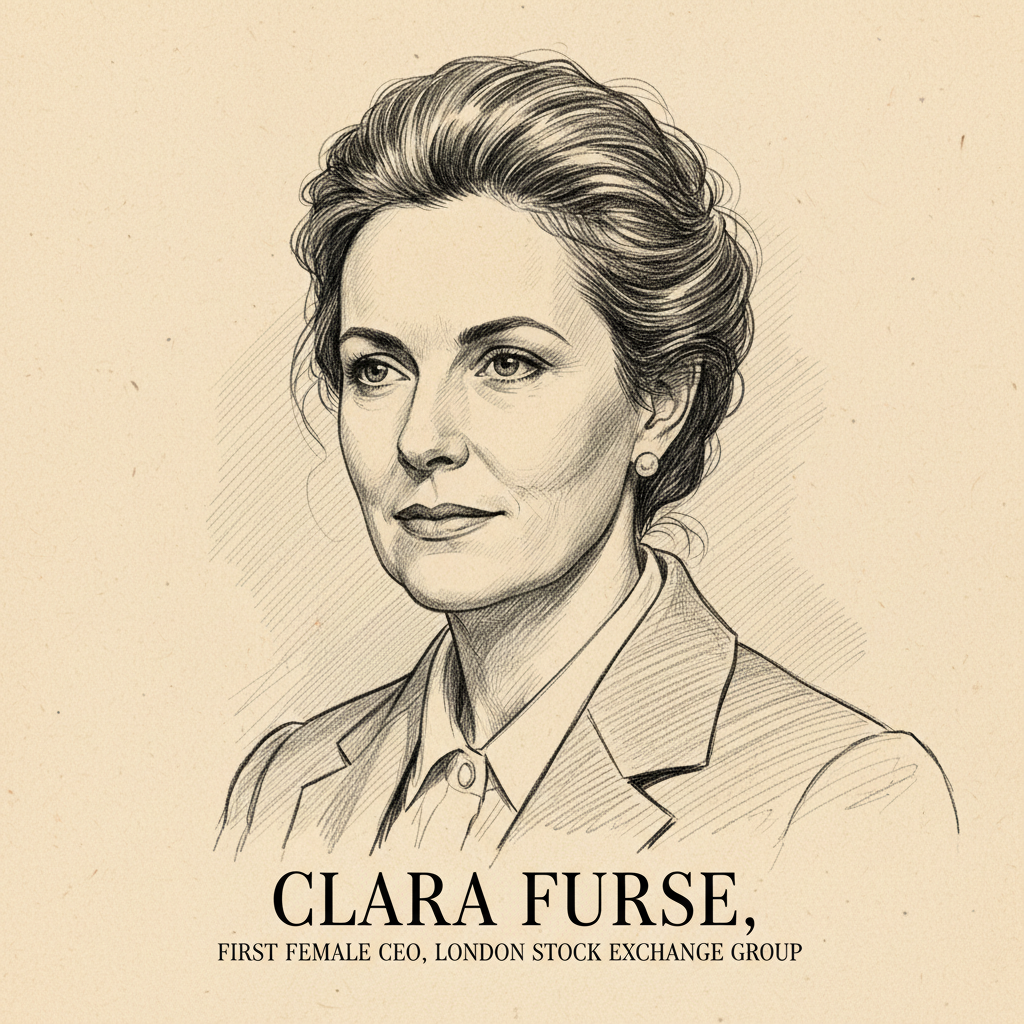
Clara Furse
Architect of Modern Exchange: Clara Furse's stewardship transformed the London Stock Exchange Group into a globally competitive financial infrastructure powerhouse.
Same Era

Contemporaries — 18th century
Browse all →
Portrait of Cornelius Vanderbilt
UNITED STATES / TRANSPORTATION (SHIPPING, RAILROADS)
Cornelius Vanderbilt
The 'Commodore' who built an empire in shipping and railroads through aggressive competition, vertical integration, and strategic acquisitions.
Portrait of Napoleon Bonaparte
FRANCE / GOVERNMENT/MILITARY
Napoleon Bonaparte
The architect of modern warfare and statecraft, defining the 19th-century European landscape through ambition and organizational prowess.
Portrait of Catherine the Great
RUSSIA / STATECRAFT, EMPIRE MANAGEMENT, GEOPOLITICS
Catherine the Great
Architect of Modern Russia: A study in geopolitical expansion, economic reform, and centralized state-building.
Portrait of Andrew Jackson
UNITED STATES / GOVERNMENT
Andrew Jackson
The architect of modern presidential power and a relentless executor of policy.
Portrait of David Ricardo
UNITED KINGDOM / FINANCE, ECONOMICS, GOVERNMENT
David Ricardo
The architect of comparative advantage and a transformative figure in classical economics and finance.
Portrait of Jean-Baptiste Say
FRANCE / ECONOMICS, TEXTILES
Jean-Baptiste Say
The French Economist and Entrepreneur who articulated the fundamental principle that production, not money, is the source of demand.
Portrait of Adam Smith
SCOTLAND / ECONOMIC PHILOSOPHY
Adam Smith
The father of modern economics, whose articulation of free markets, self-interest, and the 'invisible hand' laid the theoretical groundwork for capitalism.
Portrait of Josiah Wedgwood
UNITED KINGDOM / MANUFACTURING & LUXURY CONSUMER GOODS
Josiah Wedgwood
Industrial Revolution pioneer who revolutionized ceramic manufacturing, invented modern luxury branding, and codified standard industrial cost accounting.
Portrait of Nathan Mayer Rothschild
UNITED KINGDOM / BANKING & SOVEREIGN FINANCE
Nathan Mayer Rothschild
Architect of modern sovereign bond syndication and financier of the allied victory over Napoleon.
Portrait of Mayer Amschel Rothschild
GERMANY / BANKING & FINANCE
Mayer Amschel Rothschild
Architect of the multi-jurisdiction merchant banking syndicate and pioneer of modern sovereign debt financing.