Marc Merrill
Marc Merrill is a co-founder of Riot Games, known for co-creating 'League of Legends' and pioneering the 'games as a service' model, transforming competitive online gaming into a global esport.
Marc Merrill co-founded Riot Games with Brandon Beck in 2006, envisioning a company deeply connected to its player base. He played a pivotal role in the design and development of 'League of Legends,' which became one of the world's most played PC games and a cornerstone of the modern esports industry. Merrill served as Co-CEO for over a decade, guiding Riot's growth, strategic direction, and player-centric philosophy. He transitioned to a strategic advisory role as Co-Chairman in 2017, continuing to influence Riot's long-term vision and culture.
Biography
Accomplishments
- 01Co-founded Riot Games in 2006, establishing one of the most successful video game developers globally.
- 02Co-created 'League of Legends,' launching in 2009, which became the world's most-played PC game for many years and a multi-billion dollar franchise.
- 03Pioneered the 'games as a service' and 'free-to-play with cosmetic microtransactions' business model, influencing the entire gaming industry.
- 04Orchestrated the growth of 'League of Legends' into a premier global esport, establishing the League of Legends Championship Series (LCS) and World Championship.
- 05Cultivated a player-centric company culture emphasizing long-term engagement, direct feedback, and continuous iteration.
- 06Guided Riot Games' expansion from a single-game developer to a multi-product entertainment company under Tencent's ownership.
- 07Successfully transitioned from Co-CEO to Co-Chairman in 2017, ensuring leadership continuity and focusing on strategic oversight.
- 08Oversaw the development of successful new titles and ventures within Riot, including 'Valorant' and the Emmy-winning animated series 'Arcane'.
Lessons for Operators
Key Takeaways
Practical lessons distilled for operators, investors, C-levels, and capital allocators.
Player-Centric Development
Riot Games built its empire by putting the player experience at the core of every decision, from game design to business model. This 'player empathy' meant treating 'League of Legends' as an evolving service, not a one-off product. For operators, this means deeply understanding user needs, iterating based on feedback, and fostering long-term engagement over short-term gains.
The Power of Live Services
Merrill's vision for 'games as a service' transformed the industry. Instead of relying on sequential releases, Riot continuously updated 'League of Legends' with new champions, features, and balance changes. Investors and C-levels should recognize the recurring revenue potential and sustained user engagement of service-based models across various industries, emphasizing continuous value delivery.
Esports as a Growth Engine
Riot didn't just make a game; it built an entire ecosystem around professional competition. Investing heavily in esports infrastructure, broadcasting, and competitive events turned 'League of Legends' into a global spectacle. Enterprise leaders can apply this by identifying adjacent markets or communities that amplify their core product, turning users into evangelists and creating powerful network effects.
Culture as a Strategic Asset
Merrill and Beck meticulously crafted Riot's culture, emphasizing long-term thinking, direct feedback, and passionate dedication. This strong internal alignment was crucial during rapid scaling and competitive challenges. Fund managers should assess a company's cultural strength as a key indicator of its resilience and ability to execute complex strategies.
Strategic Leadership Evolution
Merrill's transition from Co-CEO to Co-Chairman was a deliberate move to ensure Riot's long-term health, allowing new leadership to manage day-to-day operations while co-founders focused on strategic vision and mentorship. This demonstrates the importance of planned succession and evolving leadership roles as a company matures, avoiding founder burnout and ensuring organizational continuity.
Scalable Monetization through Value
'League of Legends' succeeded with a free-to-play model monetized through optional cosmetic microtransactions. This allowed for massive user acquisition while rewarding engagement without creating pay-to-win dynamics. Operators should consider business models that provide high intrinsic value freely, then monetize through premium experiences or customization, ensuring a broad user base and ethical revenue generation.
Community-Driven Innovation
Riot actively engaged with its community, from early beta feedback to continuous patch cycles. This collaborative approach led to features and content that resonated deeply with players. Leaders should foster mechanisms for direct community or customer input, turning users into co-creators and ensuring product development remains aligned with market demands.
Visionary Long-Term Planning
From day one, Merrill and Beck had a long-term vision for Riot, prioritizing sustainable growth and player relationships over quick profits. This patient, strategic outlook allowed them to weather challenges and build an enduring franchise. Capital allocators should seek founders and teams demonstrating clear, resilient long-term vision, capable of navigating market volatility and building lasting value.
Frameworks & Principles
Named frameworks and strategic principles they popularized or embodied.
Games as a Service (GaaS)
A business model where video games are delivered as ongoing online services rather than static, one-time purchases. This involves continuous updates, new content, community engagement, and typically recurring monetization (e.g., subscriptions, battle passes, cosmetic microtransactions).
When to useApplicable for any digital product or service where continuous engagement, recurring revenue, and evolving user needs are critical. Ideal for software, online platforms, and content services aiming for long-term customer relationships.
Player Empathy Model
A design and business philosophy that places the player's experience and long-term satisfaction at the forefront of all decisions. It involves deep understanding of player motivations, pain points, and desires, leading to responsive development and community-centric strategies.
When to useEssential for any consumer-facing business, especially those in entertainment, social media, or service industries. Use when designing products, refining user interfaces, or crafting marketing strategies where user trust and loyalty are paramount.
Esports Ecosystem Development
The strategic construction of a competitive gaming infrastructure around a product. This includes professional leagues, broadcast production, player development, and community-driven events, transforming a game into a spectator sport and cultural phenomenon.
When to useRelevant for products with inherent competitive elements or high skill ceilings. Can be adapted for any industry seeking to create a highly engaged, aspirational community around their offering, leveraging competitive achievements for marketing and brand building.
Free-to-Play (F2P) with Cosmetic Monetization
A business model where the core product is offered for free, allowing for massive user acquisition, while revenue is generated through optional purchases of non-gameplay-affecting items (e.g., skins, emotes, visual upgrades).
When to useSuitable for digital products or services where a large user base is desirable for network effects or ad revenue, and where perceived fairness is crucial. Effective when monetization can be decoupled from core functionality to avoid pay-to-win perceptions.
Two-Pizza Team Philosophy
While not exclusively Riot's, Merrill advocated for small, autonomous teams (small enough to be fed by two pizzas) within the larger organization. This fosters agility, accountability, and faster decision-making, even as the company scales.
When to useApplicable to large organizations seeking to maintain startup agility and innovation. Ideal for project-based work, R&D, or when breaking down complex problems into manageable, empowered units to accelerate execution and ownership.
Recent Appearances
Latest interviews, keynotes, and press from the past half year.
 youtube.com
 m.youtube.com
 youtube.com
 youtube.com
 youtube.com
 youtube.com
 youtube.com
 youtube.com
 youtube.com
 youtube.com
 youtube.com
 youtube.com
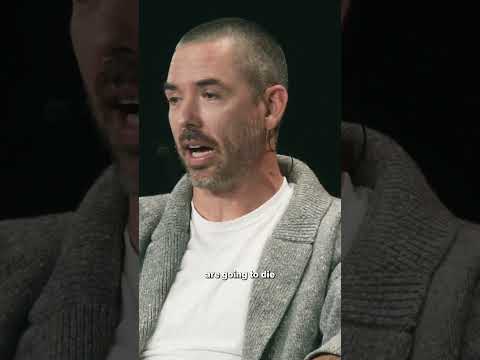 youtube.com
 m.youtube.comm.youtube.com
 youtube.com
 youtube.com
 youtube.com
Sources & Further Reading
Profiles, interviews, podcasts, and articles used to compile and verify this entry. Each link opens at the original publisher.
Explore Related Titans
Other figures in the archive who share Marc Merrill's domain, geography, or era.
More in Other
From United States


Contemporaries — born 1980s