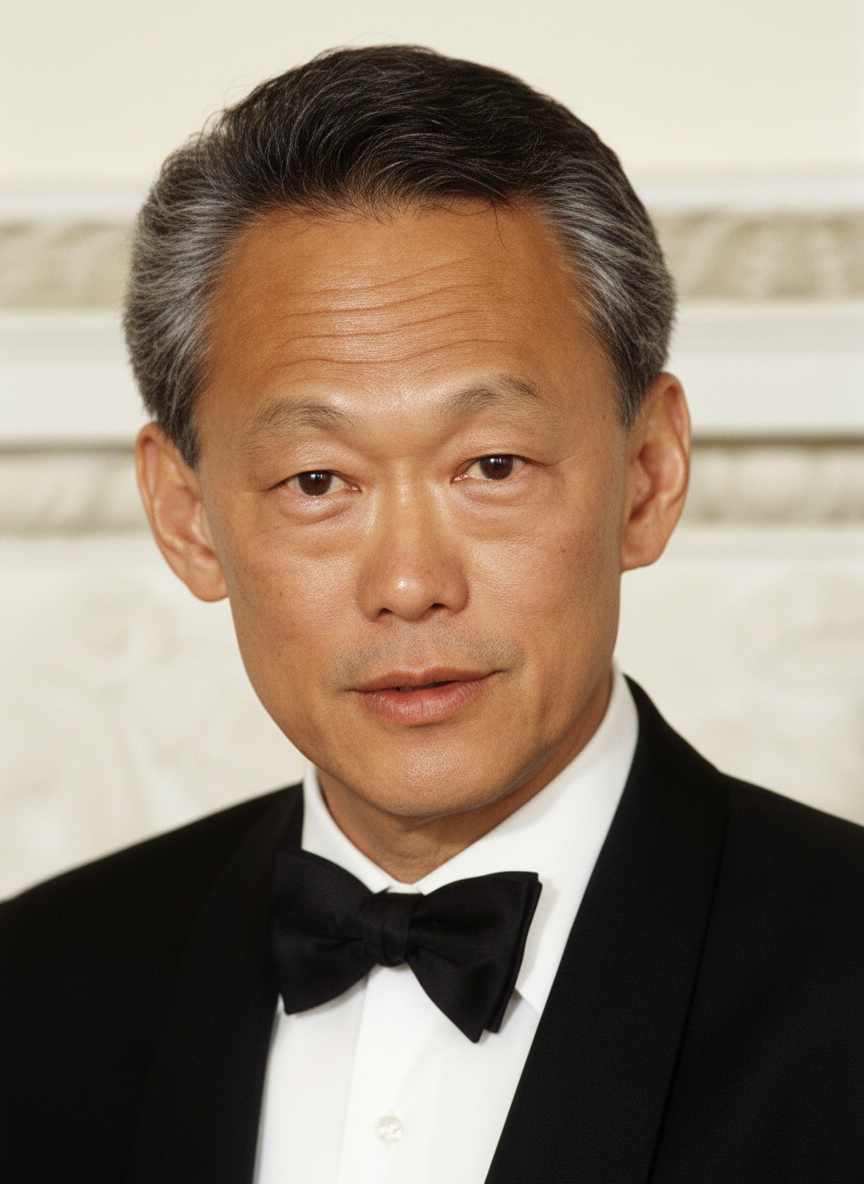
Lee Kuan Yew
Architect of Modern Singapore: From Third World to First.
Lee Kuan Yew, as Singapore's first Prime Minister from 1959 to 1990, transformed the resource-poor island nation into a global economic powerhouse through strategic long-term planning, meritocratic governance, and a steadfast commitment to pragmatism.
Biography
Accomplishments
- 01Orchestrated Singapore's independence and improbable survival after separation from Malaysia in 1965.
- 02Transformed Singapore from a developing port city into a first-world economy with a GDP per capita comparable to advanced Western nations by the end of his premiership.
- 03Established a highly effective public service, largely free of corruption, and implemented meritocratic systems across government and state-linked enterprises.
- 04Successfully attracted significant foreign direct investment (FDI) from multinational corporations, leveraging Singapore's strategic location and stable operating environment.
- 05Developed world-class infrastructure, including Changi Airport and PSA (Port of Singapore Authority), crucial for global trade and logistics.
- 06Implemented a comprehensive public housing program, ensuring widespread home ownership and social stability.
- 07Cultivated a national identity and maintained social harmony among diverse ethnic groups (Chinese, Malay, Indian) through multicultural policies and English as a working language.
Lessons for Operators
Key Takeaways
Practical lessons distilled for operators, investors, C-levels, and capital allocators.
Visionary Leadership Forges Pathways Where None Exist
Lee Kuan Yew demonstrated that a bold and sustained long-term vision can overcome severe disadvantages. His ability to articulate a compelling future for Singapore, coupled with the political will to execute it, transformed a vulnerable city-state into a global model of development. Operators should cultivate a 20-30 year outlook, not just quarterly, to identify disruptive opportunities and build enduring value.
Invest in Human Capital Relentlessly
Singapore's primary resource was its people. Lee prioritized education, healthcare, and skills development from primary school to tertiary levels. This created a highly capable workforce that attracted advanced industries. Businesses must view talent development as their most critical long-term investment, ensuring continuous learning and a pipeline of skilled professionals.
Governance as a Strategic Asset
A stable, predictable, and corruption-free government was a non-negotiable for Lee. This enabled Singapore to attract and retain significant foreign investment, as companies sought reliable operating environments. Investors and C-levels should prioritize investing in countries or companies with strong governance structures, transparent regulations, and reliable legal frameworks, as these reduce operational risk and foster long-term growth.
Data-Driven Pragmatism Over Ideology
Lee's decisions were driven by practical outcomes and factual analysis, not rigid political dogma. If a policy wasn't working, it was adjusted or abandoned. This allowed Singapore to adopt novel approaches and adapt quickly to changing global dynamics. Leaders should foster a culture of evidence-based decision-making, encouraging experimentation and a willingness to pivot strategies when data indicates a better path.
Strategic Partnerships are Foundational
Understanding Singapore's limitations, Lee actively sought partnerships with multinational corporations, international organizations, and key global powers. This provided access to capital, technology, and markets. For enterprise leaders, this means actively pursuing strategic alliances, M&A, and joint ventures that complement capabilities and expand market reach, rather than relying solely on internal resources.
Frameworks & Principles
Named frameworks and strategic principles they popularized or embodied.
The 'Vulnerability-Driven Development' Model
This framework posits that existential threats (lack of resources, small size, geopolitical instability) can be powerful motivators for hyper-efficient governance, strategic foresight, and relentless pursuit of competitive advantage. Singapore's early vulnerability forced innovative policy solutions.
When to useApplicable when an organization or nation faces significant existential threats or resource constraints. It encourages leveraging these challenges to innovate, streamline operations, and develop unique capabilities that create a competitive edge.
The 'Meritocratic Technocracy' Model
Focuses on building a highly competent and ethical public service and leadership based strictly on merit. Decisions are made by skilled experts, and performance is rigorously measured. This ensures effective policy design and implementation.
When to useRelevant for organizations looking to optimize performance and reduce inefficiencies. Implement rigorous recruitment, ongoing training, performance-based compensation, and a culture that attracts and retains top-tier talent in all roles, particularly leadership.
The 'Deliberate Economic Diversification' Strategy
An approach where a small economy, initially reliant on a few sectors, consciously and strategically invests in new, high-value industries to continuously evolve its economic base and reduce single-point dependencies. Examples include Singapore's shift from port services to manufacturing, then to advanced tech, biomedical sciences, and fintech.
When to useApplicable for businesses or economies seeking to mitigate market risks, capture new growth opportunities, and ensure long-term resilience by systematically exploring and developing new revenue streams and capabilities beyond their traditional core.
Sources & Further Reading
Profiles, interviews, podcasts, and articles used to compile and verify this entry. Each link opens at the original publisher.
Explore Related Titans
Other figures in the archive who share Lee Kuan Yew's domain, geography, or era.
More in Other



From Singapore
Contemporaries — 20th century