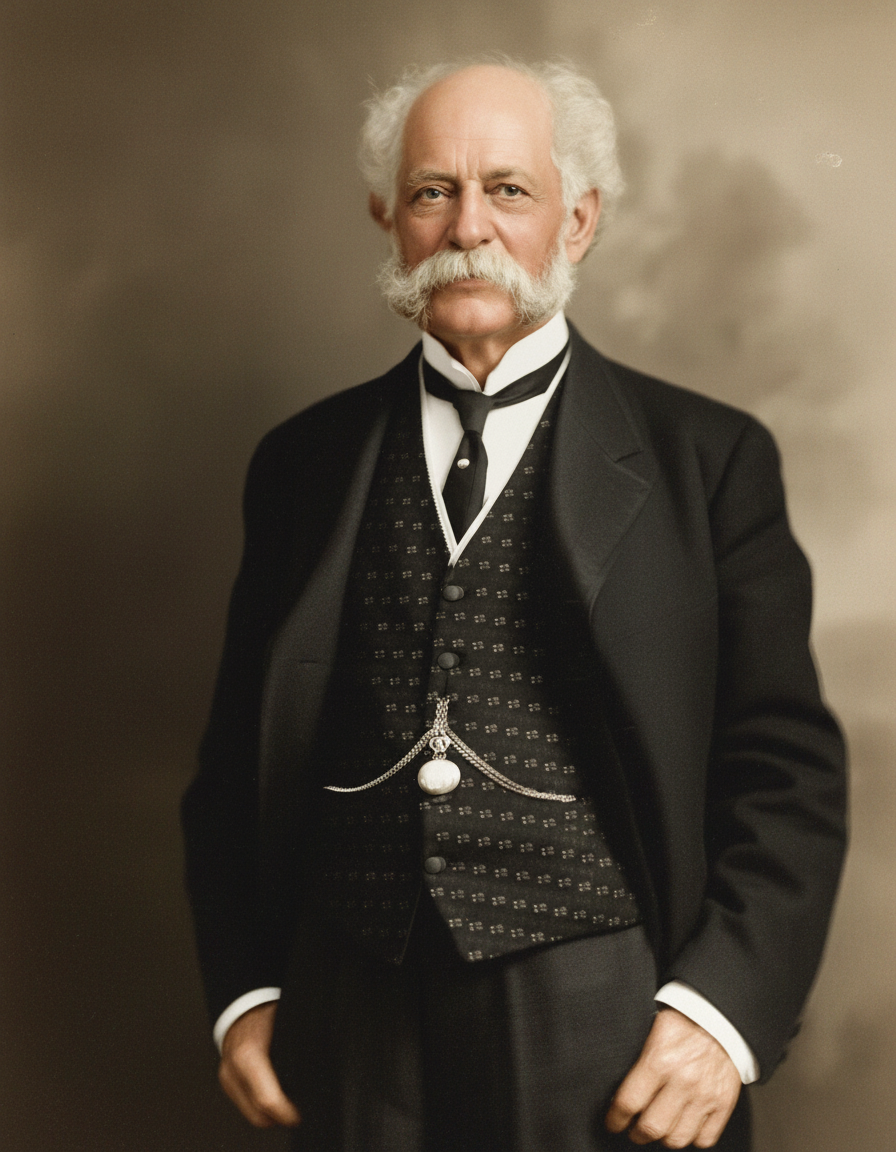
Karl Marx
Theorist of historical materialism and critic of capitalism. Co-author of 'The Communist Manifesto' and author of 'Das Kapital'.
Karl Marx was a Prussian-born philosopher, economist, historian, sociologist, political theorist, journalist, and socialist revolutionary. His most famous works are the 1848 pamphlet 'The Communist Manifesto' and the three-volume 'Das Kapital'. Marx's theories, known as Marxism, hold that human societies develop through class struggle. He was a vocal critic of capitalism, predicting its eventual downfall and replacement by communism.
Biography
Accomplishments
- 01Co-authored 'The Communist Manifesto' (1848) with Friedrich Engels, a foundational text arguing for the historical inevitability of proletarian revolution and advocating for a classless society.
- 02Authored 'Das Kapital' (Volume I, 1867; Volumes II & III, posthumous), providing a comprehensive critical analysis of capitalism, its internal dynamics, and its mechanisms of surplus value extraction.
- 03Developed the theory of Historical Materialism, positing that societal development is driven by the material conditions of existence and the organization of production.
- 04Formulated the Labor Theory of Value, arguing that the value of a commodity is determined by the socially necessary labor time required for its production.
- 05Co-founded the International Workingmen's Association (First International) in 1864, an organization dedicated to uniting diverse left-wing socialist, communist, and anarchist groups and trade unions.
- 06Introduced concepts like 'alienation' and 'commodity fetishism' to describe the dehumanizing aspects of capitalist production on workers and consumer culture.
Lessons for Operators
Key Takeaways
Practical lessons distilled for operators, investors, C-levels, and capital allocators.
The Dominance of Material Conditions
Marx's Historical Materialism asserts that the economic structure of society (modes of production) forms the base upon which the legal and political superstructure is built. Investors and strategists should analyze prevailing economic conditions and relationships of production as primary drivers of societal change, policy, and market dynamics.
The Dialectic Nature of Capitalism
Capitalism, according to Marx, is characterized by inherent contradictions (e.g., between capital and labor, or between forces of production and relations of production). Operators must recognize these internal tensions as sources of both innovation and potential crisis, requiring adaptable strategies and risk mitigation.
Labor as the Source of Value and Exploitation
The Labor Theory of Value, central to Marx's work, posits that the value of commodities derives from human labor. Profit (surplus value) is generated by paying workers less than the value they create. This highlights the ongoing tension in labor relations and the fundamental role of human capital in value creation for any enterprise.
The Inevitability of Crisis and Transformation
Marx believed that capitalism's internal contradictions would lead to periodic crises and ultimately its revolutionary overthrow. While direct revolution may seem dated, the lesson for enterprise leaders is to anticipate cyclical crises, technological disruptions, and socio-political pressures that can fundamentally alter market structures and require significant strategic pivots.
The Concentrative Tendency of Capital
Capitalism naturally leads to the concentration of wealth and ownership into fewer hands, creating larger enterprises and monopolies. Fund managers and investors should understand these dynamics, identifying opportunities in economies of scale and market consolidation, while also being aware of the regulatory risks associated with excessive market power.
Ideology and Class Consciousness
Marx argued that the ruling class's ideas become the ruling ideas of society, shaping perception and justifying the existing order. For marketers and leaders, this emphasizes the power of narrative, branding, and culture in influencing consumer behavior, employee motivation, and public acceptance of business practices.
Frameworks & Principles
Named frameworks and strategic principles they popularized or embodied.
Historical Materialism
A theory that posits that the economic organization of society (the modes of production) is the primary determinant of its social, political, and intellectual life. History progresses through the struggle between different social classes, driven by changes in material conditions.
When to useApplicable when analyzing long-term economic trends, industrial shifts, and the underlying socio-economic drivers of political decisions or market changes. Useful for strategic forecasting and understanding systemic transformations rather than mere tactical adjustments.
Labor Theory of Value (Marxian perspective)
States that the value of a commodity is objectively determined by the average amount of socially necessary labor time required to produce it. Profit (surplus value) arises from paying workers less than the value they create.
When to useUseful for deep dives into cost structures, understanding wage negotiations, and evaluating the ethical considerations of supply chain management. Provides a lens for analyzing the fundamental sources of profit and the potential for labor-related costs or disputes.
Alienation (Entfremdung)
Describes the estrangement of individuals from the product of their labor, the act of labor itself, their species-being (human essence), and from other human beings, primarily within capitalist forms of production.
When to useValuable for HR and organizational development leaders to assess employee satisfaction, engagement, and potential sources of disaffection. Helps in designing work environments that foster connection and purpose, particularly in highly specialized or repetitive production lines.
Class Struggle Analysis
The idea that societal existence is defined by the conflict between different social classes (e.g., bourgeoisie and proletariat) over resources, power, and control of the means of production.
When to useEssential for understanding socio-political stability, regulatory pressures, and market sentiment, especially during periods of high inequality or labor unrest. Helps in anticipating policy shifts related to wealth redistribution, unionization, or social welfare programs.
Sources & Further Reading
Profiles, interviews, podcasts, and articles used to compile and verify this entry. Each link opens at the original publisher.
Explore Related Titans
Other figures in the archive who share Karl Marx's domain, geography, or era.
More in Other









Contemporaries — 19th century