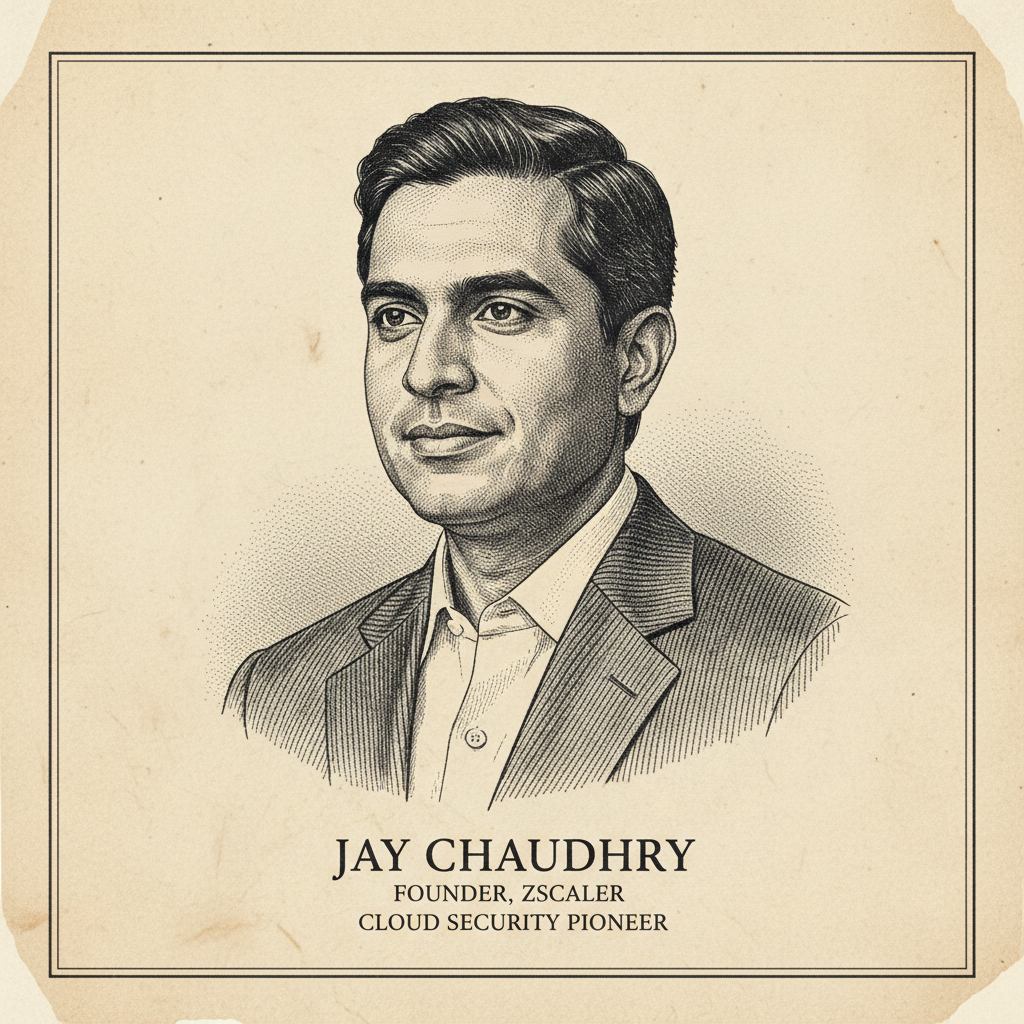
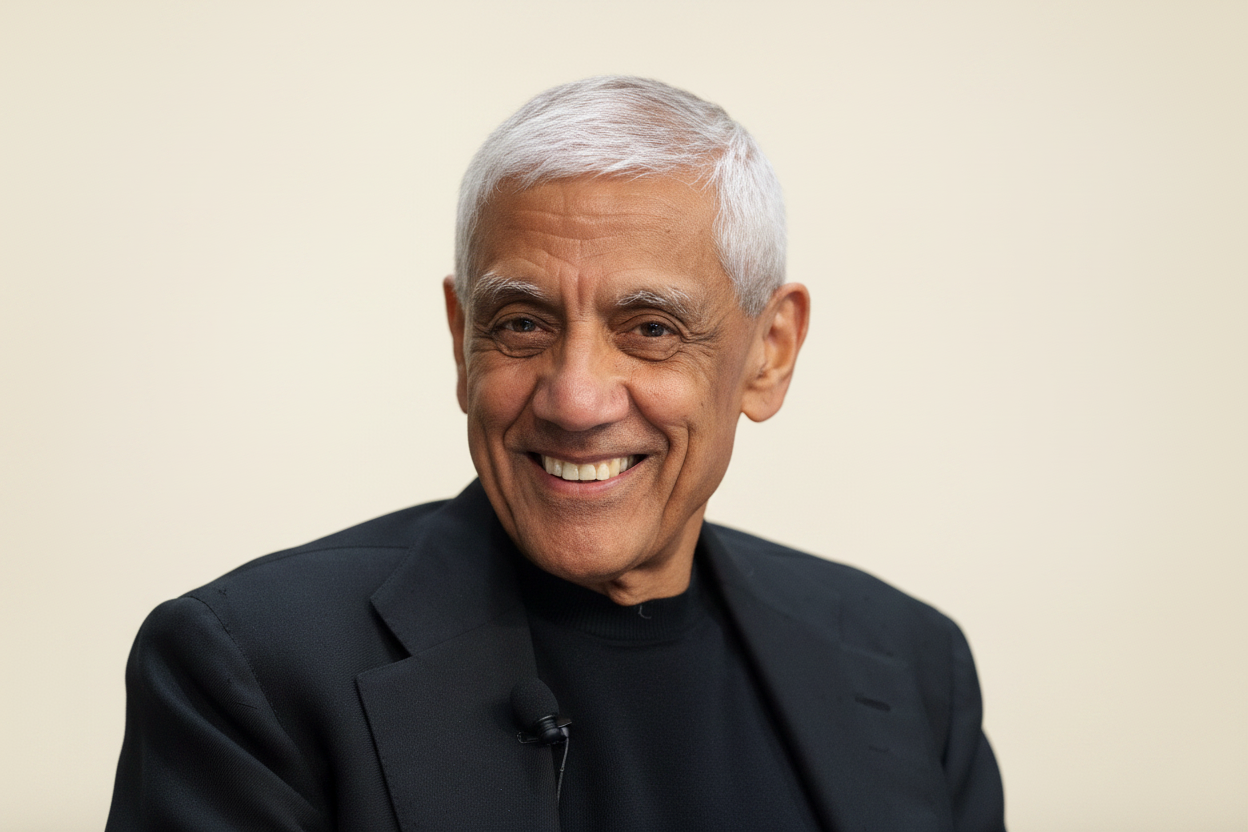
Jay Chaudhry
Jay Chaudhry: The serial entrepreneur who built multiple successful cybersecurity ventures, culminating in Zscaler's cloud-native security dominance.
Jay Chaudhry is an Indian-American billionaire businessman and serial entrepreneur. He is best known as the founder, CEO, and chairman of Zscaler, a leading cloud security company. Prior to Zscaler, Chaudhry founded and led multiple successful cybersecurity and networking companies, including SecureIT, CoreHarbor, CipherTrust, and AirDefense.
Biography
Accomplishments
- 01Founded SecureIT in 1996, selling it to VeriSign in 1998 for $61 million.
- 02Founded CipherTrust in 2000, selling it to McAfee in 2006 for $290 million.
- 03Founded AirDefense in 2001, selling it to Motorola in 2007 for over $70 million.
- 04Founded Zscaler in 2007, leading it to a successful NASDAQ IPO (ZS) in March 2018 with a market cap exceeding $30 billion by 2021, pioneering cloud-native security.
- 05Holds over 25 patents in security, networking, and cloud technologies.
- 06Built five successful cybersecurity and networking companies, with Zscaler being the most prominent and impactful.
- 07Scaled Zscaler to serve over 400 of the Forbes Global 2000 companies, demonstrating significant market penetration and enterprise adoption.
Lessons for Operators
Key Takeaways
Practical lessons distilled for operators, investors, C-levels, and capital allocators.
Visionary Market Foresight
Chaudhry consistently anticipated major shifts in computing and networking (internet adoption, cloud, mobile) and built security solutions tailored for the future, rather than just optimizing the past.
Serial Entrepreneurship with Depth
His pattern is not just starting companies, but building them to significant scale, achieving successful exits, and applying learned lessons and accumulated capital to progressively more ambitious ventures, culminating in Zscaler.
Product-Led Growth through Innovation
Zscaler's success is rooted in its differentiated, cloud-native architecture that fundamentally solves a complex problem (secure access in a distributed world) better than traditional methods, demonstrating the power of a superior technological approach.
Long-Term Value Creation
Unlike some entrepreneurs who seek quick flips, Chaudhry has demonstrated a commitment to building enduring companies that dominate their respective niches, maintaining leadership roles and significant ownership for sustained impact.
Strategic Capital Allocation and Timing
His ability to raise capital, build robust teams, and time exits effectively across multiple companies highlights a strong understanding of both product development and market dynamics.
Frameworks & Principles
Named frameworks and strategic principles they popularized or embodied.
Anticipatory Product Development
Develop products and services not just for current market needs, but for anticipated future states of technology and user behavior. Requires deep industry insight and a willingness to invest in nascent areas.
When to useWhen operating in rapidly evolving technological sectors (e.g., AI, cybersecurity, biotech) where current solutions may soon become obsolete. Crucial for long-term strategic planning and R&D investment.
Cloud-Native Transformation
Re-architect and re-platform existing solutions or build new ones from the ground up to leverage the scalable, distributed, and agile characteristics of cloud computing, moving away from appliance-based or on-premise models.
When to useApplicable for enterprises with legacy IT infrastructure seeking to modernize, or startups building services that benefit from the inherent advantages of cloud scalability, elasticity, and global reach (e.g., SaaS, cybersecurity, data analytics).
Serial Entrepreneurial Progression
A strategy where an entrepreneur builds multiple ventures sequentially, often within the same industry domain, leveraging capital, networks, and lessons learned from previous successes to fund and scale subsequent, often larger, undertakings.
When to useFor experienced entrepreneurs seeking to maximize impact and wealth creation over a career, particularly when domain expertise and capital can be iteratively applied to solve increasingly complex problems within an evolving industry.
Recent Appearances
Latest interviews, keynotes, and press from the past half year.
 youtube.com
 youtube.com
 youtube.com
 youtube.com
 youtube.com
 youtube.com
 youtube.com
 youtube.com
 youtube.com
 youtube.com
 youtube.com
 youtube.com
 youtube.com
 youtube.com
 youtube.com
 youtube.com
 youtube.com
 youtube.com
 youtube.com
 youtube.com
 youtube.com
 youtube.com
 youtube.com
 youtube.com
 youtube.com
Sources & Further Reading
Profiles, interviews, podcasts, and articles used to compile and verify this entry. Each link opens at the original publisher.
Explore Related Titans
Other figures in the archive who share Jay Chaudhry's domain, geography, or era.
More in Other







From India




Contemporaries — born 1950s